Search This Blog

Showing posts with label Newcastle Upon Tyne. Show all posts

Monday, 16 January 2023

DEEP DOWN IT MAKES SENSE

Looking back, it seems that although I never actually served in a submarine, my life has been connected to the Silent Service for quite a number of years, in the Senior Service and also civilian life. 

Leaving my parental home in Whitley Bay, I joined the Royal Navy on 18 October, 1965, after taking a long train journey (about 14 hours) from Newcastle upon Tyne mainline station via London to Torpoint, Cornwall. I was reading the science fiction novel Childhood’s End by Arthur C Clarke). I was inducted in HMS Raleigh, one of several RN training establishments, where I learned to march, tie knots, tackle obstacle courses, pass the swimming test wearing overalls, and many other nautical things that comprised Part I Training. From here the ratings were dispersed to a variety of establishments for specialist training, depending on their allocated branch. My branch was Supply and Secretariat (S&S): I was a Writer, which seemed appropriate since I’d written a novel when I was sixteen.

After specialist training in Chatham (Part II Training) I was drafted to the brick ship HMS St Vincent, Gosport, Hants, working in the Captain’s office. [This establishment has since been converted into a school]. My Service Certificate attests that I volunteered for the Submarine Service – though there were not many billets for writers; the branch only served on the larger submarines, not the conventional diesel vessels.

My first seagoing ship was the tribal-class frigate HMS Zulu (F124) which I joined on 27 April 1967 at Rosyth. Our office comprised a staff of two writers and a petty officer writer. Unfortunately in May, while the ship was exercising off Scotland, I developed a resistant cough which alarmed the Sick Berth medic so I had to be landed at HMS Neptune, Faslane – the Clyde Submarine Base. I was diagnosed with urti (upper respiratory tract infection). The shore-based sick bay was my first encounter with submariners.

I was fortunate to have a room to myself – the coughing was quite horrendous and disturbing to anyone else in the vicinity; for me, it was just painful. On the left-hand side of the bed was a bookcase crammed with books. Hitherto, my reading material at the time was spy novels and thrillers, science fiction, Edgar Rice Burroughs, Conan Doyle and Wilbur Smith adventures. In the bookcase, however, I found a good number of books by Agatha Christie, Raymond Chandler, and Georges Simenon, which I read voraciously.

A couple of hospitalised old salts popped in to see me – they’d heard my coughing, no doubt, since it was quite alarming and pronounced – and introduced themselves and asked me if I was on a boat. I said, ‘Yes. HMS Zulu.’

‘That’s not a boat,’ I was told most firmly, ‘it’s a ship. A boat is a submarine.’

‘Oh.’ Well, you live and learn.

When I finished my first seagoing deployment on Zulu – flying from Singapore to UK – I was drafted to the brick ship HMS Dolphin on the staff of Flag Officer Submarines (FOSM) in Gosport on 1 December 1969. Dolphin was the base for the First SM Squadron, comprising conventional submarines and here also was sited the distinctive Tower for training submariners, the SETT – Submarine Escape Training Tank. The SETT was commissioned in 1954 and continued pressurised submarine escape training until 2009.

I worked in the Drafting Office for submariners, an office above Alecto Colonnade. The whole office was transferred to a new building, HMS Centurion, Gosport in May 1970; other drafting office personnel (responsible for surface ship postings) – Commodore Naval Drafting – joined us from Haslemere, Lythe Hill, Surrey. Centurion was ‘commissioned’ 16 October 1970 as the RN pay and records establishment; its computers then were ICL machines.

While there I drafted Supply & Secretariat and Medical personnel to Nuclear, Polaris and conventional submarines. At that time, the squadrons consisted of: First – conventional based at Dolphin; Second – conventional and also Valiant-class submarines based at Devonport; Third – conventional based at Faslane; Seventh – conventional, based at Singapore, though disbanded in 1971; Tenth – the Polaris ‘bombers’ also based at Faslane.

Better to appreciate the living conditions I was assigning the men to endure, I requested a trip on a submarine. Happily, I identified the conventional submarine HMS Artemis which was scheduled for exercise off the Bay of Biscay followed by a brief visit to Newcastle upon Tyne. I joined Artemis alongside at Dolphin and sailed with her for a week or so. As it was a conventional boat, space was limited, the crew hot-bunking – one man on duty, the off-duty man in his bunk, and then vice versa. My bunk was different; it was in the fore-ends, among the torpedoes, with a polythene sheet stretched above me to catch the odd drip from the pipes that snaked along the deck-head. Lying there, I could hear the water rushing against the boat’s hull. For a brief watch period I steered the craft, used the periscope, and later climbed up into the conning tower, where the fresh air was most welcome; while up there, I participated in the excitement of ‘dive, dive, dive’, shutting the hatch on the way down. Needless to say, the rough seas of Biscay did not bother us. At the end of the exercise I thanked the crew and disembarked when the boat moored at the Tyne quayside; and I went home to Whitley Bay to see my parents for the weekend! Then I rejoined the office, greatly appreciative of the confined conditions the submariners lived and worked in.

Out of this experience I wrote my first short story sale, ‘Hover-Jack’ for the weekly magazine, Parade published in 1971: a spy story featuring a Soviet submarine and the Isle of Wight hovercraft!

The Navy News published two of my articles on the mechanics of drafting to submarines: ‘Giving deep thought to submarines’ and ‘How they filled Cornucopia’.  I created the fictional HMS Cornucopia for illustration purposes. At the time – I cannot speak for the present – there were never enough volunteers for submarines. Naturally, drafting officers would accept those who volunteered – providing they passed what was termed Part III Training, which entailed classes in the Submarine School in Dolphin, which included safety procedures and undergoing the Escape Training in the SETT. To fill the SM quota, certain personnel would be drafted into submarines who had not volunteered; their initial draft was for five years, after which they would be returned to the surface fleet. However, when the five years were due to expire the vast majority of those non-volunteers elected to remain in boats – around 90% –  partly due to the additional pay but also by then they were well-versed in the ethos of the Silent Service, which was essentially a small navy within the Royal Navy.

Every RN rating completed a drafting preference card (DPC), asking for a preferred base – in those days there were a lot more bases than nowadays. Every individual’s personal card showing current draft and previous billets, together with his DPC and was held in a whirligig (see photo below; I'm at the end of the office, with beard).


The idea was to balance sea-time with a certain amount of shore-time; this would vary depending on the particular branch. Submarine squadrons also had a ‘spare crew’, men drafted here who still might have more sea-time to clock up before being sent for a longer stay in a shore base. This spare crew was available at short notice to plug gaps due to illnesses and other absences; it was popular for some who preferred going to sea, but not for everyone, as they found it unsettling.

Several of the FOSM staff visited Barrow-in-Furness to give talks about the process of determining who to draft. While there we descended into the dry dock of HMS Conqueror. The words iceberg and surface sprang to mind; the screws were huge, gleaming, almost like gold, like something out of science fiction.

My time with submarine drafting ended in 1974 when I was drafted to RNH Mtarfa, a RN hospital in Malta near Rabat three months after marriage. On return in 1975 I underwent the Leadership Course at HMS Royal Arthur, Wiltshire, and then joined HMS Mermaid (F76) in March 1976, a few days after our daughter was born.  

In June 1977 I was reacquainted with submariners, being drafted to HMS Neptune, the Clyde Submarine Base; it was the day before my birthday, great timing! This was the home of four Resolution-class Ballistic missile Polaris submarines – below is a photo of one in the 1970s.


I was in charge of the Central Records Office, staff comprising seven naval personnel (male and female) and I also had the responsibility for several civilians, such as messengers, the typing pool, and the print room. The Head Messenger was a mine of information, since he’d been there a long time; he was due to retire and join his family in Canada so was not averse to apprising me of certain civil service goings-on.

For example: Every civilian was entitled to a certain number of days per year sick leave without the requirement of a doctor’s note; they made sure they took their ‘sickies’ – effectively looking on them as additional leave entitlement.

Before my time there, during a mail strike, two Glaswegian messengers were tasked with taking the RN van into the nearby town of Helensburgh and picking up the mail – and regularly popping into the local hostelry for a couple of bevvies before returning to the base with the mail sacks. No problem. However, after the strike ended, they continued doing this for well over a year.

Thus apprised, I pointed out to the pair that there was no longer any need for them to make the journey and taxpayers’ money was being wasted. They objected and brought in their union representative. The Commodore was not best pleased as this business was about to be blown out of all proportion, with a strike being threatened. I was told to sort it out, and arranged for a meeting with the union representative and the two messengers. That weekend at home I didn’t sleep too well. Fortunately, on the Monday, after I put my reasoned argument, the union man admitted that the two guys in question had enjoyed a good run but it must come to an end; we agreed on a compromise, giving them until the end of the month to desist.    

I left Neptune 9 October 1979, and returned to HMS Centurion until my draft to the Leander-class frigate HMS Diomede (F16) and had no further involvement with submarines whilst serving in the RN.

During our fifteen years living in Spain, Jen and I visited Cartagena a few times and saw the submarine Peral on display in the harbour. The craft was the first successful full electric battery-powered submarine. It was built by the Spanish engineer Isaac Peral for the Spanish Navy and launched in 1888. She was armed with two torpedoes. Yet, after two years of successful tests, the project was terminated.

Near our home in Spain is the town of Torrevieja. Here, in the harbour, is a submarine tourist attraction – S61 Delfín – Spanish for Dolphin.

Returning from our family’s lengthy sojourn in Spain, we moved to Blyth, Northumberland, which had been a submarine training base over many years.  During the First World War Blyth was the base for the depot ship Titania and submarines of the Eleventh Flotilla that were to support the Grand Fleet. Apparently, at the battle of Jutland, a Blyth-based submarine took part in the engagement and was credited with sinking a German warship.

At the time of the Second World War the Blyth base was named HMS Elfin and became a training base for about 200 officers. There is now a blue plaque signifying the position of the submarine base (see photo below); near the Blyth Boathouse and Caboose restaurant.


The S-class submarine HMS Seahorse was a member of the 2nd Submarine Flotilla whose wartime base was Dundee. After a number of unsuccessful patrols in the north-sea, the boat would often stop at Blyth, as the base was nearer its patrol area. On the night of 25 December 1939, before Seahorse would depart for her sixth war patrol off Heligoland Bight, seven submariners visited the Astley Arms, Seaton Sluice. Tickets for a raffle were being sold for a bottle of Johnny Walker Whisky. By the time of the draw, the submarine was at sea. As luck would have it, the submariners had won the bottle, but it was not collected. Seahorse’s orders were to initially patrol off Heligoland and then move to the mouth of the Elbe on 30 December. She was expected to return to Blyth on 9 January 1940. It was assumed that she was struck by a mine but after examining German records at the end of hostilities it was considered possible that she could have been sunk by the German First Minesweeper Flotilla which reported carrying out a prolonged depth charge attack on an unknown submarine on 7 January. Another possibility is that she was rammed and sunk by the German Sperrbrecher IV/Oakland southeast of Heligoland on 29 December. Seahorse was the first British submarine lost to enemy action. The whisky bottle remained untouched at the Astley Arms for many years until it was eventually transferred for display at the RN Submarine Museum in Gosport, Hants.

On display in the Blyth Community Hospital is the name-plate of HMS Onslaught. (I used to draft personnel to this Oberon-class boat). On the boat’s visit to Blyth in 1979 the officers and crew were given the Freedom of the Borough of Blyth. Onslaught was decommissioned in 1990, having served for twenty-eight years, and eventually scrapped at Aliga, Turkey in 1991.

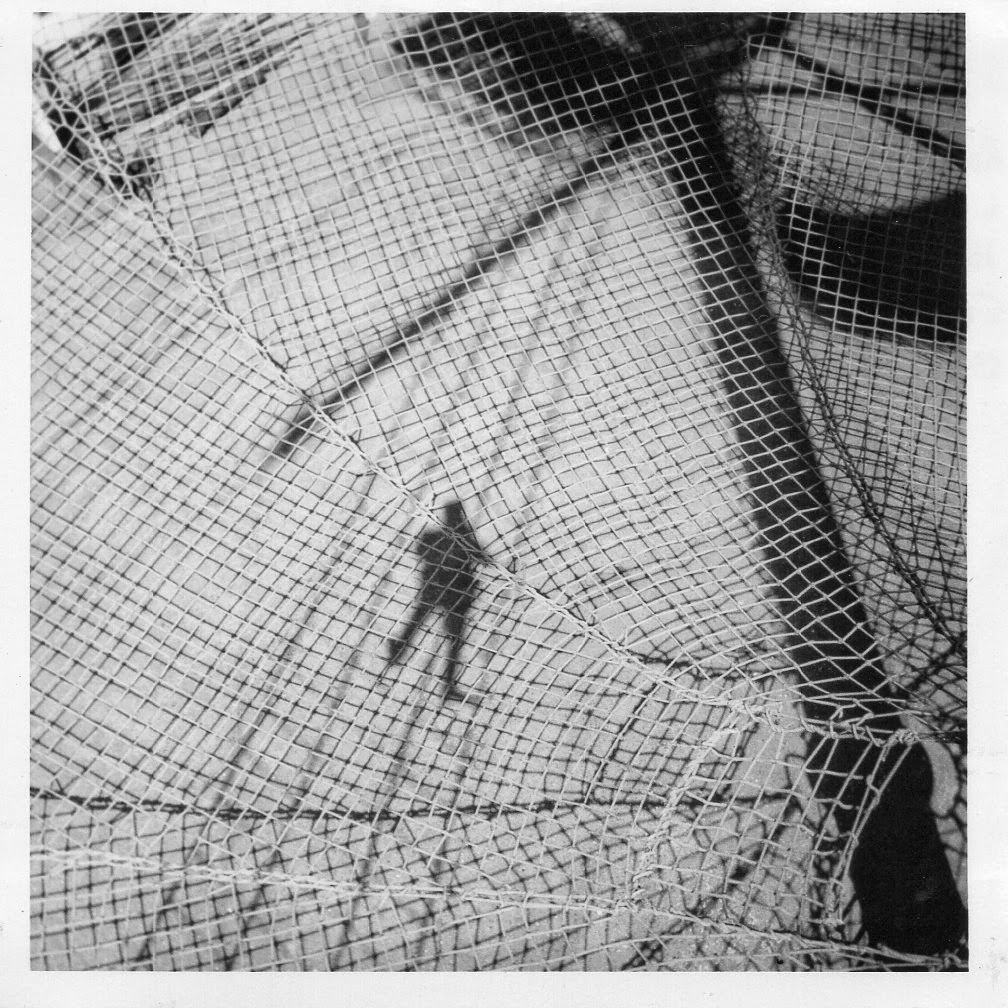
Not far from the hospital, outside St Mary’s Church alongside Blyth’s regenerated town square, is a memorial and an anchor. The anchor (seen below through the silhouette) belonged to the T-class submarine HMS Tiptoe. She was named by Winston Churchill, implying that the boat could approach the enemy silently as if on tiptoe. The Royal Navy naming committee was against the name, arguing that ‘it was derogatory to one of His Majesty's ships’, but the Prime Minister had his way. The vessel had links with the Royal Ballet and Moira Shearer; its crest features a ballet dancer.


So far, that seems to be my involvement with submarines and submariners. I think it is quite apt that I should settle in a town that honours the Silent Service.

***

Jargon:

Boat: Submarine

Branch: Specialisation, such as Seaman, Communications, Medical, S&S, and Weapons.

Draft: Soldiers and airmen are posted but naval personnel are drafted.

Deck-head: ceiling in a ship or submarine

Fore-ends: the front of a submarine

Target: any enemy surface vessel

Sunday, 18 March 2018

'A must read for all mystery/thriller readers...'

THE BREAD OF TEARS

A 5-star review on Amazon UK from Eileen M. Thornton:
 
Sister Rose runs a hostel for the homeless in London. One day, returning from an engagement, she is horrified to find the body of Angela, someone she had helped in the past, outside the hostel. The girl had been murdered; the sign of the cross carved into her chest. Inside the hostel she finds two other bodies, both brutally murdered. The police are called and an investigation into the deaths begins.
 

As the story unfolds, we learn that Sister Rose had been a policewoman in Newcastle upon Tyne, where she had been attacked while working on a case...  So traumatized by the events, she spent some time in a convent to help her forget the horror she had been through. It was during her stay at the convent that she turned to God.
 

... Sister Rose soon begins to help the DCI investigate the murders. But, she also finds herself being drawn to the man himself.

I really enjoyed this novel. There are several twists and turns as it slowly leads the reader to a nail-biting climax. 


A must read for all mystery/thriller readers.

Thank you, Eileen! 


Available as a paperback and e-book here

Saturday, 13 January 2018

'One tough nun!'

A 5-star review on Amazon from a US reader of The Bread of Tears, part of which reads:

'There are several stories going on: the new murders in the hostel are connected to her past, the dead girl in the alley belongs to another murderer, and then there is the criminal empire involved in drugs and prostitution of young girls, and they will kill her if she intervenes. And add to these problems, she may be having certain feelings for one of the investigators.

'Wow, I found Maggie Weaver, aka Sister Rose, one tough Nun. The author weaves the three stories together into a neat pattern, dropping Sister Rose into traps that she must escape or suffer a horrible death, yet she holds to her Faith as she struggles against great odds. In the end she isn’t afraid to send evil to Hell a little early. ... Highly recommended.'


Thank you, Virginia!

The Bread of Tears is available as an e-book and a paperback here


A Sister Rose crime thriller When she was a cop, she made their life hell. Now she’s a nun, God help them! 

Before taking her vows, Sister Rose was Maggie Weaver, a Newcastle policewoman. While uncovering a serial killer, she suffered severe trauma, and after being nursed back to health she becomes a nun. In her new calling she is sent to London to run a hostel for the homeless. Here, she does good works, and also combats prejudice and crime. 

As she attempts to save a homeless woman from a local gang boss, events crystallise, taking her back to Newcastle, the scene of her nightmares, to play out the final confrontation against drug traffickers, murderers and old enemies in the police. 

She finds her spiritual self and a new identity. She is healed through faith and forgiveness. It’s also about her surviving trauma and grief – a triumph of the human spirit, of good over evil. 

'All the characters and horrific events in this crime thriller are extremely visual and well-drawn, making this a riveting read. It would make a brilliant TV series!' – Jan Warburton, author of The Secret, A Face to Die For

Thursday, 19 October 2017

‘See the world’ – naval reminiscences


Fifty-two years ago today, I joined the Royal Navy.

I was seventeen-and-a-half and had been working in Newcastle Upon Tyne as a Junior Clerk (an office boy) for a shipping and transport firm; handling bills of lading, calculating charges, traipsing from dockside offices to the bank to the airport. The managing director, whose office was down the corridor, lived in my home town of Whitley Bay; I remember my mum saying, “Why don’t you ask him if he’ll give you a lift to work?” I didn’t, of course. I did ask for a pay rise when everyone else received one, but I was told I hadn’t been there long enough. The job was “dead man’s shoes”, so I looked around for an alternative place of employment.

I applied for a creative artist job with a Newcastle firm, but although my samples of artwork were highly praised in the interview, I didn’t have appropriate qualifications or experience. At the time I left school with two GCE O levels, the University changed the admission requirements for their course in Art & Design; I didn’t have enough GCEs, even though one of them was Art (distinction). The other GCE was Geography. Yes, I failed English!* (Perhaps I spent too much time writing a novel instead of studying or learning to pass exams…)

One lunch time, I walked past the Naval Recruiting Office near the main rail station, and then popped in on the off-chance, out of curiosity. Two of my cousins were in the RN, and my uncle had been in the Merchant Navy during the war. I lived close to the sea. Maybe some of that brine was in my blood.

My parents were naturally ambivalent about my joining the navy. It meant leaving home. But it offered what was then considered a secure career. And all the adverts said I’d ‘see the world’. I applied, sat the fairly basic exams in the Newcastle recruitment office and within a short while was accepted and given notice when to join.

I joined HMS Raleigh (Torpoint, Cornwall) on 19 October, along with several other raw recruits. I was a Junior Writer. Thus began my six weeks’ basic training – Part I training. Part II training entailed going to HMS Pembroke in Chatham, Kent . Here, I trained in secretarial (my score: 96%) and Pay (96.5%) disciplines; I also learning to touch-type (96.5%, 25wpm). I passed out from there to join HMS St Vincent in Gosport, Hampshire as ship’s company and on my birthday became a Writer. The latter establishment is now a college.  The touch typing has certainly been useful! Incidentally, part III training is reserved for submarine recruits.

As the adverts predicted, I was fortunate to see quite a bit of the world in my time. I believe that is no longer the case for RN recruits these days. They get to see the sea, mostly. There aren’t enough ships…

Here's a picture of me with a couple of Arab horses in Bahrain in the late 1960s, just before a race. Camel racing followed...

Fifty-two years. Blimey. Where’d the time go?


* I subsequently passed several GCE O and A levels and obtained an OU degree.


Friday, 26 August 2016

Film review - Song for Marion


This is a ‘feel-good’ movie with accolades such as ‘Wonderful and heart-warming’ and ‘A film to fall in love with’.

Song for Marion is a small British film that’s all about character.

Grumpy pensioner Arthur (Terence Stamp!) is distressed by the ailing condition of his wife Marion (Vanessa Redgrave). One of Marion’s outlets is performing in the local choir, the OAPz,  run by Elizabeth (Gemma Arterton). It’s not really a spoiler, since the title gives it away: Marion is determined to perform in a choir competition, but unfortunately she dies before that can happen. Arthur shuts himself off from the world, won’t talk to his estranged son (Christopher Eccleston), and wants to grieve in his own way.

Stamp shows in his minimalist acting how to deliver a character with a broken heart who is incapable of seeking solace. Elizabeth subtly worms her way into Arthur’s orbit and through guile and charm, she begins Arthur’s life affirming journey, a journey that is at times amusing, often poignant, and beautifully told.  The acting honours are shared equally by Redgrave, Arterton and Stamp; he’s a revelation.

This could so easily have been Hollywood schmaltz, but instead it’s grounded and sensitive. Music is the international language, the language of love, indeed.

Worth keeping a tissue or two to hand.

Footnote: revealed in the credits: surprisingly, although the film is set in London, it was mainly filmed in Newcastle upon Tyne and Durham.

Released 2013, 90 minutes run-time

Tuesday, 17 November 2015

Crime Tyne


CRIME ON TYNE

If you're in the Newcastle Upon Tyne area on 23 November, it would be a crime to miss this evening event. [If you can't make it, you can still enjoy the books!]
 
Crime-thriller author Frank Westworth will host an evening’s discussion about telling the truth through lies, as part of the Books On Tyne literary festival this month.

Crime writers have always used fiction to tell the truth and Frank Westworth, author of the Killing Sisters novels and JJ Stoner short stories, is no exception. His gritty, no-holds-barred neo-noir books feature hard as nails hitmen, ice cold killers, intimate encounters on sleazy backstreets, manipulated men and bewildering women.

Surely it’s all made up? Then again, maybe it isn't…

'A Last Act Of Charity' is the first book in the Killing Sisters series and received widespread critical approval when it was published last year. 'Charity' was selected by crime genre guru Maxim Jakubowski for his end-of-year recommended reads, and was short-listed by Wordery for their Best Independent Books of 2014. (Paperback and e-book)

 
'The Corruption Of Chastity' was published in September and already has 10 good reviews (how did he do that?) 'The story explodes into life with astonishingly graphic violence and an almost surreal eroticism,' said Crime Fiction Lover. 'The writing is stylish, clever, razor-sharp and we are left in awe of the Killing Sisters, with all their murderous skills and their sexual savagery.'
 
Confessions Of A Reviewer said 'Frank Westworth has an undeniable talent for writing thrillers and packing a story full of all the punches it needs.'

Author Simon Duke commented; 'stylistically, the book’s certainly got something cool going on,' while author Eden Sharp applauded Westworth's 'true talent for creating a rich cast of characters who genuinely pique the interest; an original set of henchmen, Chastity the assassin plying her tradecraft like a badass, and JJ Stoner himself, an aging, whisky-soaked, blues-loving alpha male rendered all the more interesting because of his maturing years.'

The  JJ Stoner short stories are published as e-books.

‘True Lies’ with Frank Westworth starts at 6pm on Monday 23rd November 2015 at the City Library, Newcastle Upon Tyne. Tickets £3 from:


The Corruption of Chastity is available as an ebook or paperback, along with Frank’s other Stoner stories and the Killing Sisters series: www.amazon.co.uk/Frank-Westworth/e/B001K89ITA/

Tuesday, 10 November 2015

Newcastle - 'boisterous self-confidence of a chosen people'

Our recent visit to the UK entailed a trip to Newcastle upon Tyne to gain an unusual perspective on that city, a place close to my birth, a place that is familiar yet has transformed remarkably over the last couple of decades.

First, we drove a short way past the city centre down to the riverside, and viewed the mud-flats – redolent of Dickens and Victorian fiction rather than the twenty-first century, despite the renovated paved walk.

 
Low tide, mud...
 
Next, we went beneath a trio of bridges where we found the city’s farm. Again, some unusual views. Ouseburn farm is in the Lower Ouseburn Valley, about a mile from the city centre, and has been established here as a charity since 1976. Originally called Byker City Farm, it was created by local people to encourage youngsters to work with farm animals. It was closed in 2002 and reopened and renamed in 2009. The farm is a charity and its website is http://www.bykerbridge.org.uk/farm/aboutus.html


Ouseburn farm, Newcastle

This time last year, Newcastle was voted by the readers of the Guardian ‘the UK’s favourite city’, an accolade handed out at that newspaper’s annual Travel Awards. Which city will take the award this year? Maybe it will be Edinburgh yet again; particularly since it has won more than 12 UK best city awards in the last eight years. Though there’s no reason why Newcastle can’t do it this year too.

Newcastle has excellent shopping facilities, a wide choice of restaurants, bars and hotels and then there’s their attractive quayside and cityscape. Not forgetting the legendary warmth and personality of the people.

Pulitzer prize-winning author Jane Smiley visited Durham and Northumberland and in a travel item in the New York Times, she was effusive about Newcastle’s Grey Street, commending its graceful elegance and blend of old and new.

A quotation from the Guardian of last November sums up the place, perhaps: “Newcastle’s atmosphere of almost pathological friendliness and good humour stems from one simple thing: all Geordies believe themselves blessed to have been born here. Theirs is the boisterous self-confidence of a chosen people.”

And since almost twenty million people now visit Newcastle and Gateshead annually, quite a few would seem to concur.

Wednesday, 22 January 2014

Reminiscences, Naval-01 – ‘Journey of 16 hours’

When I joined the navy, I’d already succumbed to the writing bug, having written two spy novels (still unpublished). So it seemed logical for me to write down any impressions and events I encountered. As life and work intruded, these notes became thinner… and stopped after a couple of years; though my letters home did contain certain impressions and memories for some years afterwards.

It was October, 1965, and I was a few months over seventeen. Dressed very smartly, my parents saw me onto the train at the Newcastle upon Tyne platform, pleased to learn that I was travelling with other young men destined to join the Royal Navy at HMS Raleigh. My two fellow travellers were Michael (Mick) Siddle and Thomas (Tom) Gibbon.
Newcastle upon Tyne central railway station
 
We waved our good-byes as the train departed at 7:05a.m from the old Victorian station and settled down. We were so polite – would you like an apple, an orange? Sure? Would you like some chocolate? Oh, it’s melted… We buried our noses in our respective if not wholly respectable periodicals.

Even a short while afterwards, when I first jotted down these reminiscences, I found it difficult to recall the entire journey. Most of the time, for me, it seemed somewhere between wakefulness and sleep, and I always felt I was on the borderlines.

Even then, Tom was pretty tall, about 5ft 7 and he masterfully contorted himself into positions unimaginable to sleep in: legs on one side seat, body on the other, his midriff sagging in between; yet, he slept. He was about sixteen. Mick remained silent most of the journey, alternating between reading and sleeping, being on the same seat as Tom. He was seventeen and a half, a few inches taller than my 5ft 6.

We all had long haircuts. And we were thoroughly bored.

I ploughed through my book, prophetically Childhood’s End by Arthur C. Clarke, until my eyes became bleary and the words on the page floated away, far away. Then I would stretch awkwardly the length of my seat and sleep lightly, using my overcoat as a pillow.

At one station, well into the night, the train stopped. Tom and Mick left the carriage for some milk from a vending machine on the platform. I finished off my portion of Tom’s pomegranate.

Another time I was on the verge of sleep when our speed decreased, and we shunted into a station which glared out of the black night. This brightness was eye-watering to sleep-laden eyes. The place was undergoing modernisation – neon lights everywhere, cold white concrete, men’s badinage and hammering reaching our ears. Steam sifted from somewhere on the track. The train stopped there a while, then a shrill whistle and we left the raucous place behind, slid into the black night again, and the train’s motion encouraged sleep.

I felt a hand shaking my shoulder shortly after I had finished Childhood’s End, about 4:30a.m. Sluggishly, I climbed out of oblivion, reflexively but probably ineffectually chopped out at the disturbance, and checked my blow in time. Mick had awoken me as we were pulling into Bristol shortly. [In later training, all men were warned to have a care when waking someone to go on watch – many a black eye has been sustained as the sleeper jerks awake!]
 
At 5a.m. we alighted from the train onto a deserted station, which speedily filled up with sailors and airmen in uniform. Mail-trolley wheels rumbled, echoing. Doors banged. A porter was whistling somewhere. In the British Rail café, while we ‘partook of a light refreshment’ – I used to write like that, then – we looked about, at a couple of sailors and civilians. We must have appeared a woebegone sight, lost to our mothers if they could have seen us.
 
Around 5:30 we boarded the train for Penzance via Plymouth. As the train pulled out, a cock crowed and a Petty Officer in our carriage exclaimed, ‘Bloody hell!’ at realising he hadn’t returned the BR café’s cup.
 
A little later on, we glimpsed the red sunrise.
 
The second half of our journey was as tedious as the first. My stomach was in knots and I was just waiting to be sick, it seemed inevitable, but just then, as we passed through Teignmouth I was surprised to see phosphorescent breakers. The sea was angry, a brownish-blue, the cliffs coloured red. I ducked my head out the window and the wind thrashed my hair; it was exhilarating and quelled my roiling stomach.
 
We slept, if restively.
 
About forty-five minutes out of Plymouth, I glanced out to see a thick seething mist that meandered about skeletons of trees. Shortly afterwards, we pulled into Plymouth station, an ultra-modern building of glass panes and light brickwork. Outside the large glass doors, the three of us met up with a group of new recruits. It was easy to identify them; we all looked about the same, lost and all-in. Lads of all sizes, from towns and cities, from Scotland and Ireland, even Rhodesia, we gathered outside the RTO office to the left of the station entrance. A large well-built lad (we later learned his name was Mick Deering) collected the forms we’d brought with us.
 
Tired, in a cold station, surrounded by strangers, my first impression was resignation: I’d come this far, I wasn’t turning back now. I was blessed – or cursed – with a good imagination and it was tempting for it to go on overtime, but I decided to leave my mind open, prepared to meet anything. Those who had been in the Scouts were probably better prepared than most. Maybe my time in the Sea Scouts would serve me in good stead.
 
We clambered onto an RN bus which drove us down to the River Tamar, where we boarded the Torpoint Ferry, which was pulled across on chains. On the other side, we were herded into another bus, and some of us by then broke out into song, started up by Mick and Tom in typical Geordie fashion. Already, new friendships were being forged. What seemed like fifteen minutes’ later, the bus turned into the gateway of HMS Raleigh, our home for the next few weeks.
HMS Raleigh
 
We were in, almost beyond the point of no return. Silence fell then.
 
This was our journey’s end – at least as far as those who stayed were concerned.
 
Next reminiscence: New Entry

Saturday, 19 October 2013

Years before, the mast! - how I became a Writer

Today, October 19, marks forty-eight years to the day since I joined the Royal Navy. I served for twenty-four years. Before signing on, I’d written two (unpublished) novels and felt I needed to see the world – nowadays, you’re more likely to see the sea rather than much of the world, since the navy has shrunk and its commitments haven’t.

My parents waved goodbye to me at Newcastle upon Tyne’s railway station, tears in Mum’s eyes. I was sharing a carriage with two other fellow Geordie* lads, Tom and Mick, who were also travelling to Plymouth to join the Andrew. It was a long and tedious journey in those days, changing trains en route; it lasted about fourteen hours. Intermittently, I read a novel – Arthur C. Clarke’s Childhood’s End.
The final part of our journey entailed crossing the river Tamar on a chain-link ferry. I joined at HMS Raleigh, Torpoint, Cornwall where we went through a six week course of basic training – learning to march, fire weapons, tie knots, wash and iron our kit, use polishing machines (!) and generally adapt to teamwork.
First section of my Service Certificate

From there we split up to go to our various specialist establishments – HMS Collingwood for electrical training, for example. I joined HMS Pembroke, Chatham, Kent to learn the trade of Writer – handling ship’s correspondence, personnel records and pay.[Chatham barracks closed in 1984.]

Me - at Plymouth
 
Christmas occurred in the middle of this training, so I went on leave, carrying my enormous heavy kitbag, travelling in uniform. My proud parents welcomed me home for a too brief sojourn.
After about four months, I passed out as a Junior Writer and was drafted to HMS St Vincent, Gosport, Hants as ship’s company. St Vincent was a boys’ naval training establishment; it closed in 1968. Initially, I worked in the Captain’s Office, handling correspondence; later, I’d move into the Cash Office to deal with the trainees’ and ship’s company’s pay. Then, payment was almost entirely in cash, fortnightly, dispensed in a small brown packet at pay parade. The recipient marched to the pay table, removed his cap, and the pay packet was put into the hat. In retrospect, a lot of time was wasted on the pay routine.

While in training, I was not permitted to go ashore (termed such even when serving in a brick ship, a training establishment) in civilian clothing, only uniform. One Saturday, I travelled on the train from Chatham to London in uniform to see two movies – The Spy Who Came in from the Cold and then Thunderball. While walking from one cinema to the other, I was accosted by a posh gent in his swish car; I declined his offer of a lift and went on to watch James Bond’s fourth escapade. I still managed to catch the return train to get back to base in time.
Now, as ship’s company, I could wear civvies when not working. Problem – I had none; they were posted home when we joined Raleigh. With my post office savings in my pocket, I caught the bus into Gosport and bought an entire wardrobe of jacket, trousers, shoes, shirts, socks and tie; that was quite a good feeling.

One Sunday afternoon, I approached the Officer of the Day of St Vincent and got permission to climb the mast at St Vincent to take photographs. I don’t know if anyone in civvies had ever done this before; he couldn’t see any regulations against it, so I started to climb the mast. Unlike the much younger recruits, who joined at HMS Ganges, Ipswich, I had never manned a mast. This was my first time. Close up, the ropes are quite thick. And, thankfully, firm, with only a slight bounce. I clung on and took my photos; I could only afford black and white film in those days.

My feet up the mast
 
Eventually, I climbed up to the crow’s nest. I wasn’t going to attempt the acme, the button, no, thanks. I did wonder if the net below would save me or make chips out of me...
In civvies up the mast
 
While there, I noticed a trainee in uniform climbing up. We got chatting; he couldn't understand why I'd willingly climb up, since I didn't have to. He was practising as he would soon have to man the mast with his mates. As it happened, he was a fellow Geordie. Small world.
Fellow Geordie up the mast
This is not the only occasion when I’ve met a Geordie in an unusual place – but that’s another tale.
-*-
*Geordie is someone who hails from the northeast of England, though purists might say Newcastle. In the wide world, northeast seems just fine to me!

Thursday, 10 October 2013

Blog guest - Nancy Wood - 'books with meat on their bones'

Today, my blog guest is Nancy Wood. Nancy is the author of Due Date (nothing to do with the Robert Downey Jr movie of the same name). Nancy grew up in various locations on the east coast and now lives in Santa Cruz, California, with her wonderful family. She continually refines her writing chops with her day job as a writing and editing consultant.


Due Date: Surrogate mother Shelby McDougall just fell for the biggest con of all—a scam that risks her life and the lives of her unborn twins.

Shelby McDougall, recent college graduate, is facing a mountain of student debt and carting a burden she'd like to exorcise. A Rolling Stone ad for a surrogate mother offers her a way to erase the loans and right her karmic place in the cosmos. Within a month, she's signed a contract with intended parents Jackson and Diane Entwistle, relocated to Santa Cruz, California, and started fertility treatments.

But Jackson and Diane have their own secret agenda, one that has nothing to do with diapers and lullabies. With her due date looming and the clues piling up, Shelby must save herself and her twins, and outwit those who wish her ill... She learns the real meaning of the word “family.”


The Kindle Book Review (excerpt): This is not only one great suspense novel that has it all-mystery, action, adventure, and romance, but it also gets you to thinking about surrogacy with all the possible pros and cons. Is surrogacy a loving, caring, noble, self-sacrificing act... a precious gift to give or is it all about the self-interest, selfishness, and greediness of making money off of and taking advantage of the innocents? Nancy W. Wood has written one great book that offers something for everyone's taste. Due Date is well written, well researched, and very entertaining. Even though this is a work of fiction, it could very well have been ripped from the headlines. If you enjoy your books with a little more meat on their bones then Due Date is the book for you. Ms. Wood is a talented writer from whom you can expect more great books in the future.

Q & A

Due Date has been very successful. Congratulations on getting so many high-scoring stars on Amazon! What was the initial inspiration for the book?

Thanks Nik. First, I’d like to thank you for hosting me. And thank you again for accepting my book for publication when you were the Solstice Editor-in-chief! I was prepared for rejection and can’t tell you happy I was when I received a positive email from you. I have been so surprised and happily amazed by the number of people who are leaving reviews for Due Date. I know that it takes effort to leave a review and I appreciate each and every one.

Before I started Due Date, I had written a novel that explored the relationship between a birth mother and the family who adopted her baby. I took this manuscript to a commercial fiction publication workshop, where the leader and participants suggested I turn it into a mystery. At first, the suggestion seemed crazy. How could I possibly piece together a mystery or thriller that made sense? But by the time I left the conference, I had a 200-word pitch for Due Date that I pretty much stuck to the whole time I was writing it.

Most debut novels take a long time to gestate. How long did you work on Due Date?

It took me just about five years from the day I started to the day I finished. It was funny; I knew exactly when I was “done.” I’d been working with my writing teacher, Mary Caroll Moore, for about three years, emailing chapters and comments back and forth at the slow rate of about one or two chapters a month. When I completed my edits on the last chapter, read the book through a zillion times hunting for typos and errors, then finessed the first chapter until I couldn’t read it anymore (!), I knew I’d reached the conclusion. I couldn’t see anything else I wanted to change. Now of course, I look back at it and see lots of places I could tighten things up or move the plot along differently.

You’ve got to resist those urges, Nancy. Someone once said, a book is never finished, it’s abandoned. You abandon it and move on. In many ways, second novels are easier, because you’ve learned a lot from the first. (Some feel cursed by the expectations implicit in a second novel after a successful first one, however). Are you writing another novel now?

I am working on the continuation of Shelby’s story. In this book, Shelby is living in Santa Cruz, attending a local community college, and working on a degree in criminal justice. She fully intends to become a private investigator. But when toddler Justin Boyd, one of the twins she put up for adoption two years ago is abducted, Shelby is pulled right back in. This novel takes place over the course of a week, instead of several months, so I’m having fun with figuring out transitions and the timing of events. I’ve also learned a few things from the first, including awareness of the beginning—making sure I get the story started right away, and being very conscious of word-use and language! Plus, I’m working on the tension and very mindful of keeping up the suspense.

How long have you been writing?

Year and years! I think I took my first creative writing class about thirty years ago, when I started in as a technical writer. I wanted an antidote to writing help bubbles and software installation guides.

In your acknowledgements, you mention that you played about with the topography of Santa Cruz for the purposes of the story. Sometimes, writers find this is inevitable. (I’ve done it myself for some scenes in Newcastle Upon Tyne!) Did it take any soul searching or did you just get on with it?

Well, I have to confess during the editing process, I second-guessed myself. I had submitted the book with the names of actual businesses in Santa Cruz. But I went back through the book and changed all the names of small local business to fictitious business names, although I kept the names of large chain stores. I didn’t know the protocol and felt it was better to stick to fiction. I think local readers like the puzzle of figuring out what businesses are what.

You definitely gave Due Date a sense of place. Do you think this is important in fiction, and why?

It’s critical. I think the setting can make a novel come alive and really sparkle. If it’s missing, the novel feels a bit flat, like it’s missing something. For crime fiction, the series that resonate the most with me are those with a strong sense of place: Donna Leon and Venice; Nevada Barr and the US national parks; Tony Hillerman and the US Southwest; Laura Lippman and Baltimore, Maryland; Camilla Lackberg and Fjallbacka, Sweden; Cara Black and Paris. And of course, the Inspector Lynley series by Elizabeth George, set in London.

How do your family/friends feel about your writing?

They are very supportive. My family is very generous in terms of my writing time, which I very much appreciate. The one thing about this line of work is that it does take time! And my friends and extended family always ask how it’s going and are just as pleased with the success of Due Date as I am.

Do you intend to stick with the crime genre or switch to other genres?

I have come to really enjoy crime fiction. Before I started writing in this genre, I rarely read it. Now, it’s all I read. I find that the genre can go as far as an author wants to take it in terms of characters, plot, setting, themes, and contemporary social issues. After I complete Shelby’s story, possibly just the two volumes or even a trilogy, I’ll most likely continue with this genre.

A tall order, I know, but what is your favourite book? And why?

This is a tough one. A really tough one! But I know exactly what book I’ll pick: A Field of Darkness, by Cornelia Read. It’s a book that really opened my eyes to the complexities and nuances of crime fiction. When I decided I was going to write crime fiction, I decided I had to start reading it. I began with recent Edgar nominees for first books. Wow, was I impressed. Every book I read was amazing. But A Field of Darkness stood out. It’s set in Syracuse, New York, an unlikely setting. In the first few pages the reader gets an immediate sense of the place and the main character’s relationship to that place. The writing is witty and animated, the characters are credible and funny, and the setting is alive. I actually studied the first chapter of this book, backward and forward, when I was working on Chapter 1 of Due Date.

Where do you hope to be in 5 years?

I would love to be retired, travelling, and still writing crime fiction!

You’re generous with giving space and time to other authors on your blog. Can you tell us how this came about?

I started this because I really enjoyed meeting and talking to other authors. I love reading all kinds of crime fiction—self-published, indie-published, big house publishing--and love learning about the people behind the books. How authors came up with their ideas and names, how they feel about swearing (a topic near and dear to my heart!), how they fit writing into already full lives. I decided to develop a standard set of questions to ask everyone. To date I’ve interviewed 44 authors (including you: http://nancywood-books.com/7/post/2013/09/nik-morton.html). At some point, it’d be fun to look back at all of the interviews and try to figure out what we all have in common!

Where can readers find you?

Email:  nancy@nancywood-books.com

Website:  nancywood-books.com

Blog:  nancywood-books.com/blog.html

Twitter: @NancyWoodAuthor

Facebook: facebook.com/NancyWoodAuthor

Amazon:  http://www.amazon.com/Due-Date-ebook/dp/B00876174M/ref=sr_1_1?s=books&ie=UTF8&qid=1381101900&sr=1-1&keywords=due+date

Thank you, Nancy for popping in. Best of luck with your next book.