Search This Blog

Thursday, 9 May 2013

THE MAKING OF PRIDE AND PREJUDICE


THE MAKING OF PRIDE AND PREJUDICE

Sue Birtwistle & Susie Conklin, 1995
 

This BBC/Penguin book accompanied the TV series starring Colin Firth and Jennifer Ehle. It is lavishly illustrated with photographs, drawings, design notes and sample music scores. The authors are the producer and script editor. 

Adapting a treasured book is always going to be difficult. Andrew Davies was well aware that he wanted the story to be more visual – a lot in the book happens off-stage, is reported. So he purposefully created scenes that did not contain Elizabeth. He observes that ‘the central motor which drives the story forward is Darcy’s sexual attraction to Elizabeth. He doesn’t particularly like her, he’s appalled by the rest of her family, her general circumstances, the vulgarity of her mother and some of her sisters and he fights desperately against this attraction…’ All this is perceived between the lines in the book. Here, in the dramatization, it’s made flesh (in the nicest possible way). In the book, several quite lengthy letters are pertinent – again, Davies re-imagines these visually, to good effect.

There’s a section on casting, which posed a problem as the production was planned to take five months, so actors had to be available for a lengthy time. Another section relates the difficulties of location hunting – ideally finding villages and homes within easy reach of each other – with a map. For example, Angela Horn, owner of Luckington Court, which served as Longbourn, the Bennetts’ house. The crew virtually took over the place and Mrs Horn cried when they left, though was consoled by the thought that she would ‘now have enough money to re-roof the west wing.’ The Wiltshire village of Lacock, owned by the National Trust, became Meryton. Five months of negotiation, then preparations, consultation with the residents, traffic diversions, security etc – all for a week’s filming…

The entire process takes months in the planning stages – more like a military campaign, assembling all the tactical, technical, personnel, and logistics for the duration.

Other chapters cover production design – from furniture to wallpaper, creating the right ambience; costumes, make-up and hair designs; the music and the dancing, both integral to the visual and dramatic scenes; the lighting, where there were practical problems in the old, historic and protected houses.

A section describes a typical filming day, which can last up to twelve hours. Finally, there’s a chapter that covers post-production, including editing, sound dialogue, the effects and dubbing.

This is an excellent book which provides insight into the making of a film and goes some way to explain why such productions are expensive to stage. It's also of help to budding scriptwriters.

Saturday, 4 May 2013

The Far Pavilions - an epic novel


First published in 1978, this monumental epic sold ¼-million in hardback alone; paperback sales, especially after the TV series, soared. Justifiably, despite the less than attractive cover from Penguin.  Though written in a completely different style, I feel it can be set alongside Paul Scott’s magisterial Raj Quartet. Set in India during the time of the British Raj, M.M. Kaye's The Far Pavilions tells the story of Englishman Ashton Pelham-Martyn from birth in the 1850s, through the Indian Mutiny until the Second Afghan War, 1879.

Due to its scale, the story has to be told from an omniscient point of view. Yet individuals are strongly drawn and felt. This book has been likened to the Gone with the Wind of the North-West Frontier, and the comparison isn’t far off the mark. Although it’s a love story, it’s much more besides. It doesn’t pull any punches where brutality in all forms is encountered during these violent times. It depicts bravery, generosity, cruelty, honour, devoutness, passion, heroism and self-sacrifice.

The title comes from the Dur Khaima mountains, the Far Pavilions, with Tarakalas, the ‘Star Tower’, catching the first rays of the sunrise. Somewhere near was a fabulous valley dreamed of by Ashton’s surrogate mother, Sita, somewhere to live in peace and contentment without violence, prejudice and greed…

We know that politicians don’t seem to read history or learn from it. A year after this book was published, the USSR effectively invaded Afghanistan.  Ashton says, ‘The Afghans may be a murderous lot of ruffians with an unenviable reputation for treachery and ruthlessness, but no one has ever denied their courage; or been able to make them do anything they don’t like doing. And they don’t like being dictated to or ruled by foreigners – any foreigners!’ It applied in 1979 and, to all intents and purposes, it applies now.

It was fascinating to read of places such as Murree, Jamrud fort, Peshawar, Islamabad – all part of India at the time. In 1969, I went to these places when they were in West Pakistan, as well as the Khyber Pass, from where we looked over the plain of Kabul. (See my reminiscences of that visit ‘The Navy Lark up the Khyber’ pp142-151 in Under the Queen’s Colours, ‘voices from the Forces 1952-2012’ by Penny Legg).
 
In places, Kaye’s writing is exquisite, as are the sentiments and characterisations. A few brief examples: As an old sage remarks, ‘I know well that hearts are not like hired servants who can be hidden to do what we desire of them. They stay or go as they will, and we can neither hold nor prevent them. The gods know that I have lost and regained mine a dozen times. For which I have cause to be grateful, for my father lost his once only: to my mother. After she died he was never more than the shell of a man.’

‘The black stallion’s body and his own were one, and his blood sang in rhythm with the pounding hooves as the air fled past them and the ground flowed away beneath them as smoothly as a river.’

‘Below him a belt of scree fell steeply away down a gully that was bright with moonlight, and on either hand the bare hillsides swept upwards to shoulder a sky like a sheet of tarnished steel.’

An observer’s description of Ashton – ‘…the vulnerability of that thin, reckless face, the sensitive mouth that accorded so ill with the firm obstinate chin, and the purposeful line of the black eyebrows that were at odds with a brow and temples that would have better fitted a poet or a dreamer than a soldier.’  Whoever cast Ben Cross in the role got it very right indeed.
 
Here's a bookmark I made for the book...
 

When I closed this tome of 960 pages of tightly packed text, I felt slightly bereft. I seemed to live with many of these characters, and watched them grow older, live – and die – and now it was over, finished.

At the back, there are two pages of author’s notes providing relevant real-life happenings used in the narrative plus a useful 2-page glossary of Indian words and phrases.

Monday, 15 April 2013

On perfection - flat notes and writing typos

Last evening my wife Jennifer sang as part of the combined choirs of Vivace and Chorale Mendelssohn’s Elijah in a gorgeous Spanish theatre. Jen was one of seven soloists. The choirs acquitted themselves well; it’s a difficult and rather long work. Needless to say, while the audience was very enthusiastic and impressed with the performance, a few perfectionists in the choirs beat themselves up over the occasional sour or flat note. This is only natural, as artists should always strive for perfection, and it reflects on their professionalism that they try to attain it.
Still, in the real world, perhaps perfectionists should gain perspective.
This choral work was sung by a combination of British, Russian, Dutch and Scandinavian men and women, accompanied by a Spanish pianist, singing in English to a Spanish, British, Scandinavian, Dutch and German audience. The ticket money from the performance goes towards a project to construct a rural school in Southern India, for 575 children aged five to eleven. The project’s target is 65,492 euros and they already have in excess of 40,000. That, alone, is pretty amazing, the coming together of different nationalities to give pleasure and work towards a good cause.
There may be a few off notes, but the entire performance impressed, and that’s what’s important.
The same applies to writers and their critics. Yes, there may be a few typos missed by author, editor, and proof-reader – and the author is often the first to beat herself up when these are found, after the book goes to print, rarely at the galley/proof stage. That’s good, striving for perfection. Self-edit, self-edit, self-edit is a good mantra to follow, but there comes a time when you have to let it go – and that applies to the publisher as well as the author.
Again, a little perspective is required.
Maybe 80,000 or more words are strung together to create characters and a fictional world for the reader, and there’s nothing wrong with over 99.9999% of those words! Fine, if the book has clearly not been adequately edited, fair criticism – usually reserved for self-published work, I suspect. But complaining about the occasional glitch is simply petty and uncharitable. If the story does what is intended, then judge it on those merits, not on a few typos.

Friday, 12 April 2013

FFB - Pride and Prejudice - Jane Austen


It’s many years since I read this. I rarely have the opportunity to re-read books, even favourites, as I own so many I still have to read even once. It was a pleasure to reacquaint myself with Elizabeth, Jane, Lydia, Mr & Mrs Bennett and of course Darcy. I made a point of re-reading this after viewing the BBC television series featuring Jennifer Ehle and Colin Firth as the star-crossed lovers (filmed in 1995). There have been many versions before and since, but in my view this – perhaps due to its generous length – captures the book most perfectly.
 
            It isn’t surprising that the book has been popular ever since its publication in 1813, as the wit and spirit of Elizabeth captivates readers of all ages. Typical of its period, the book uses the omniscient point of view, but it works thanks to the easy style and humour of Austen. The title of the book originally was First Impressions but was changed to reflect a quotation from Fanny Burney’s novel Cecilia, when the lovers are united and the author declares that ‘the whole of this unfortunate business has been the result of pride and prejudice.’
            Considering her small output, Austen’s works have been dramatized a remarkable number of times and have been forever in print and in the hearts of romantics worldwide.
            The first paragraph of Pride and Prejudice has been quoted time and again and is certainly one of the most famous beginnings of any novel: ‘It is a truth universally acknowledged, that a single man in possession of a good fortune, must be in want of a wife.’ That, in a nutshell, is what the book’s plot is about – Mrs Bennett finding suitable men for her daughters to marry. Well, on the surface, of course. It’s more subversive than that, however. It reveals Elizabeth as a strong-willed woman of independent mind if not means. And it’s a book about the enigmatic Darcy, too – a man who is tired of the artifice of his female acquaintances and finds himself stirred by the alarmingly refreshing Elizabeth Bennett.
            All of the characters spring alive, thanks to Elizabeth’s acute observations, whether they be her scatter-brained mother, detached father, the odious Mr Collins or the dreadful Lady Catherine de Bourgh. In the main, their characters are conveyed by their speech, and it’s masterfully done.
            This book (1995) also features stills from the TV episodes.

Editor’s note: even classics can suffer from typos – and I don’t mean the old spellings of ancles (ankles), chuse (choose), your's (yours) and the like. There are at least twenty to be found in this copy. Whether they’ve been around since 1813 or introduced at subsequent reprinting, when books were typeset, I cannot say. Regardless, the typos don’t interfere with the reading enjoyment.

Wednesday, 10 April 2013

Storyteller's Seven - Tom Rizzo


Tom Rizzo kindly asked me to answers seven questions for his regular Tuesday spot on his blog - Story Teller’s Seven


That interview is here:
 
 
Now,  I reckoned I should return the favour, so these were my seven questions.

 1.            Heroes and Rogues looks like a fascinating book, judging by the entries on your website. You obviously had great fun collecting and writing the varied articles. I’d like to add it to my collection. When is it appearing on Amazon and elsewhere?

TR: I did have great fun putting that together. I find characters from frontier America as fascinating as fictional characters. At the moment Heroes & Rogues is available only from my website as an incentive to sign up for a newsletter. But, I'm in the process of expanding it with additional snapshot profiles. Then I'll make it available on Amazon in digital form, and replace the newsletter "incentive" with something else. 

2.           Whereabouts in Great Britain did you live – and for how long? Any memories of your stay? (I know: that’s sort of 3 questions in one!)

TR: I lived in Southwest England, the Cotswolds for four years--Gloucestershire County. I have lots of memories of my time there. At the time, there were no freeways; the country had just started to build its first one--the M1, I think. Before I had a car, I used to hitchhike quite a bit and met the most interesting characters. It was an educational experience.  One night, in the rain, I hitched a ride with a lorry (truck) driver. While we were sliding and bouncing along, I asked him what he was transporting. "Explosives, mate." I rode the rest of the way with my fist curled around the door handle in case I had to manage a quick escape.


 3.           Your western Last Stand at Bitter Creek features a black officer, David Webster. I’ve come across very few black main characters in westerns – DM Harrison’s The Buffalo Soldier, Frank Roderus’ The Outsider, Brian Garfield’s Tripwire, and the Cash Laramie adventures featuring Gideon Miles spring to mind... What prompted you to use a black protagonist?

TR: I learned that about 190,000 or so black soldiers served in the Union Army and Union Navy, but still endured discrimination and segregation, even though they made significant contributions in the war and put their lives on the line as much as anyone else. The army was reluctant to commission black officers, which numbered between 90 and 120. The Lincoln administration initially worried that recruiting black troops would alienate border states and give them a reason to secede. The idea of a black soldier serving as a Union spy intrigued me. Making him an integral part of the plot, and equipping him with skills perhaps not normally associated with black soldiers, I think, gave the story a broader appeal. At least that was my intent.

4.           Can you describe where you’re going with your latest book?

TR: I'm in the process of outlining the next novel, which will feature both Bonner and Webster. I had such good feedback on both, I wanted to create a storyline where they'll be paired again, this time in search of another stolen treasure. 

 
5.       You’re keen on the importance of research and have warned about the danger of doing too much. Have you now evolved a method of handling research so it doesn’t take over timewise, and have you any fascinating nugget that has jumped out recently?

TR: Too much research, of course, sucks the time from actual storytelling. But the research I did for Last Stand At Bitter Creek was important because it enabled me to get a solid sense of time and place for the last half of the 19th century. Since I have the "background" information in place, most of my research involves connecting the dots, so to speak, in terms of the actual character and events that parallel the time frame I use for my story. 

 
6.            Okay, you're in a small café, huddling with three of your favorite writers (living or dead). One specializes in Westerns; another in Thrillers; the third in Short Stories. Who would they be, and what one – and different – question would you ask each of them?

TR:  Raymond Carver who, in his day, revitalized American short story telling. Carver focused on ordinary people who find themselves in ordinary - and sometimes bizarre - emotional conflicts. My question: "In what ways does real life reflect the untidy endings you write about in your stories?"  

Louis L'Amour -- because (1) the way he was able to bring the characters and the landscape of the American frontier to life, and (2) for his passion at treating the Western as history. I'd ask: "What role, and in what ways, did the American frontier shape the American character?"

David Morrell -- I'd ask him, "As backgrounding for your stories, you've become a private pilot, been trained in firearms, hostage negotiation, executive protection, expert driving strategies, assuming identities, and other things. Obviously, this all helps in creating reality in storytelling. But what advice would you give to a writer who has neither the time nor money to learn such things, but wants to write as compelling a story as you do?"

 7.            How would you finish this statement: "I bet my readers didn't know (this about me) …”?
TR: I once had lunch with Elvis Presley's manager, Col. Tom Parker, in Las Vegas.

Thanks, Tom.

Tuesday, 2 April 2013

Maxwell cleverly weaves her tale


JANE – The woman who loved Tarzan
by Robin Maxwell

This book’s release, authorised by the estate of Edgar Rice Burroughs, the creator of Tarzan, coincided with the centenary of the publication of Tarzan of the Apes. It’s a fitting re-invention.
            Many years ago, I read and re-read all two dozen of the Tarzan books and also the John Carter series. Like fans worldwide, I’ve always felt that the films never did Lord Greystoke justice. So, it was with a little trepidation that I tackled this book.
            What many film-makers neglected but this novel recognizes, ‘There is no Tarzan without Jane’, to quote John R Burroughs. As I became immersed in the tale, all fears for the treatment of the lord of the jungle evaporated. It was obvious that this was a work of love and respect for the original, a worthy homage.
            The book begins in 1912 Chicago where Jane Porter is giving a talk about the missing link she found in Africa. Her claims cause heated controversy among several academic and scientific attendees and, ultimately, a Mr E.R. Burroughs, a young author, takes her aside and expresses an interest in her tale about an ape man. Sequestered together, Jane tells all to Burroughs. This is Jane’s first person narrative we’re about to read, beginning in 1905.
            Maxwell cleverly weaves her tale, using the basic elements of the original but grafting on much that is new and intriguing. Seeing this tale from Jane’s perspective works exceedingly well for me. The period and character are beautifully captured – perhaps I should have expected nothing less from an accredited author of historical fiction.
            There is much that is familiar – the story of Tarzan’s origin, though shifted by date for purposes of realism, the Waziri, d’Arnot, Jane’s father, and the Mangani. The vain and dashing explorer Ral Conrath makes a suitable bad guy, but the real villain is Kerchak, the killer ape. Yet they’re given slight twists to fit this retelling; to stick to the original in every respect would have been a creative straitjacket and unworthy, and fortunately both Jim Sullos, custodian of the legend, and grandson John R Burroughs agreed. In his works, Burroughs did a lot of research for his books, and Maxwell has emulated him with a sure touch, delving into the paleo-anthropological details, the descriptions of the Dark Continent and even the history of Cambridge University, yet at no times imposing swathes of mind-numbing information on the reader.
            There are several poignant moments – not least the reading of Alice’s diary, the vaguely recalled past of young Tarzan and the erotic yet tasteful relationship between the ape man and his mate, Jane.
            You don’t have to have read any Tarzan book to appreciate this wonderful novel. If you have read some of the ape man’s adventures, then you’ll find much to please you in this retelling, bringing the lord of the jungle back to an adult readership, Burroughs’ intended audience.

Sunday, 31 March 2013

Bullets gets a new cover

Same story, new cover.

I was pleased with the latest review on Amazon.co.uk from Annie from Aberdeenshire, which in part goes like this:

This Cash Laramie outing, by yet another author, is about 119 pages long, and every one of them is full of action, following the twists and turns of what appears to be a straightforward tale of a corrupt mayor running for re-election, using every dastardly trick and opportunity for bribery that his immensely deep wallet makes easy. Oddly enough, the worst corruption comes from someone else.

The various authors of this series all seem to have at least one skill in common: they can each portray their characters with a very few words, and still give them distinctive identities. At the same time, both Cash and Gideon remain constant, regardless of who is describing them. In this book, a fresh piece of Cash's history is revealed, together with its consequences, and my only real criticism is that the author does not seem to make any effort to show the impact this would have on the Cash we already know. Anything more would be a spoiler, but see what you think.

There's a rather clever literary touch, in that the first and last sentence of the story are the same, but there's a gap of 16 years, and it's not necessarily referring to the same individual, nor true in both cases: read it and judge for yourself.
 
I'm pleased that little touch got noticed. It actually echoes someone else's last words in a book of 1953...

Saturday, 30 March 2013

Tarzan - centennial

It was just over a hundred years ago, October 1912, that Tarzan first appeared in print and since then he has become one of the most iconic fictional characters ever created. This large and quite weighty tome celebrates Tarzan in text, celluloid and comics, among other media, over that century.
            Perhaps it’s unnecessary, but I’ll briefly outline his story. John Clayton, Lord Greystoke and his young pregnant wife Alice were abandoned on the east coast of Africa in 1872 when the crew of the Fuwalda mutinied and set them ashore. They were left with two crates of belongings, a rifle and some ammunition. Bravely facing up to the terrors of a strange primitive land, Clayton built a small hut among the trees and there they retired to relative safety, frightened by the jungle noises. Alice gave birth to a boy, John. Nearby, huge apes congregated, issuing terrible grunts and growls: these creatures had their own language and called themselves mangani; they were more hominid than gorilla.
            Shortly after John’s birth, a great ape, Kerchak, attacked the couple and they barely escaped with their lives. However, a blow to the head permanently affected Alice: while she cared for her baby, she did not step outside the hut again. Some weeks later, she died while the infant slept. At about this time a female great ape, Kala, had lost her own infant, falling to its death from the emerald canopy of the rainforest. Hearing the wailing sound of John Clayton mourning the death of his wife, the apes approached the hut. Kerchak barged in and killed Clayton. But in that same instant Kala snatched up the baby from its makeshift crib, dropped her dead infant in John’s place, and rushed out with baby John clutched to her breast. Acting as John’s mother, Kala called him Whiteskin, ‘Tarzan’ in the mangani language.
            Little Tarzan survived by chance rather than his prowess, though his young mind quickly outstripped the mental capacity of his fellow apes. A child of nature, Tarzan discovered the world was not an Eden. It was harsh, filled with threat and danger from many sources. When he was about nineteen, he met Jane Porter and they eventually married and had many dangerous and bloody adventures.
            This book is lavishly illustrated throughout with colourful artwork and stills from the films. It’s a mine of information about the creation of all the books, with a brief storyline of the twenty-four novels. Hollywood never really did the ape-man justice – he wasn’t a monosyllabic tree-swinging hero; in fact, Tarzan became fluent in many languages, among them French, German and Russian.
Ron Ely, one of the many screen Tarzans, provides a Foreword in which he rightly states that he believes most of the films and TV productions misplaced the ape-man by putting him into contemporary society when the basic allure is the period he was created, the 1920s, an age when communication and travel were protracted and challenging; though the film Greystoke came close. It’s about time this great character was restored to his former glory, not as an adventurer in children’s fiction but as an exciting pulse-pounding adult hero, which was the original creation.
            Indeed, the books were considered inappropriate by the Soviet and Nazi regimes as Tarzan represented bold individualism, so the books were banned or burned. Burning didn’t have much effect, of course: over 100 million books by the author, Edgar Rice Burroughs, have been sold, in 37 languages, including Braille and Esperanto.
            Scott Tracy Griffin, a foremost expert on Edgar Rice Burroughs, has amassed a wealth of information about the ape man and his creator and provides insight into the creation of the novels.
            This is a book to enjoy and treasure, a slice of cultural history.

Monday, 24 December 2012

Wishing you a happy and peaceful Christmas!

Dateline Friday, December 14 – Town Hall square, Torrevieja, Costa Blanca, Spain


This was the tenth annual Christmas Carols in the Square event.

My wife Jennifer and I, along with many members of her choir, Cantabile (above), joined other choirs and citizens from the area to sing thirteen carols in front of the floodlit church and next to the splendid Belen diorama. Included were two Spanish carols, ‘Campana Sobre Campana’ and ‘Fum, fum, fum’. The music was provided by The Phoenix Concert Band.

Lots of Christmas hats and antlers were in evidence! A census wasn’t taken, but we reckon there were Spanish, English, Welsh, Scottish, Belgian, German, Dutch, Ukranian, Swedish, Danish, and Norwegian in attendance to celebrate the nativity. Also present, representatives from the town hall and the Salt Queen and her Dama, Nuria Zaragoza and Elsa Martinez respectively (below).


The collection amassed €985 for the local charity Alimentos Solidarios, which provides meals for those in need.


There was no religious message, save that implicit in the nativity; Mass followed for those who wished to attend.

The international community of Torrevieja and environs is a beacon for co-existence among all peoples. Yet again it was wonderful to be a part of this event. The world is a better place than we sometimes wonder when we learn about the horrors and destruction, natural and man-made.


Sunday, 9 December 2012

Louise Clarke – R.I.P.

Louise Clarke, 38, was a reporter for the local English language paper Round Town News for a number of years, a familiar face known to hundreds in the area. Louise & Lee lived in Edgeley in Stockport before emigrating to Spain, where they have been living for the past five years. An ebullient and friendly person, she commented on and fought on behalf of the local community on a number of issues, from dodgy housing developers, poor sewerage, intransigent politicians, to the provision of the Coastal Nursery school. She was a lovely people person and thrived on news, in particular political infighting and even took a year’s sabbatical to work at the Playa Flamenca town hall.


Last month she was hospitalised after unexpectedly collapsing. She hadn’t been ill and the cause of her serious illness baffled the medical fraternity and she remained unconscious ... Those who knew her were shocked at the suddenness of it all – especially when she was known to be so active and full of vitality.

Tragically, Louise died yesterday, still a young woman with much to give, leaving behind her husband Lee, daughter Lilly and son Charlie.

A good person, taken too soon.

Note: Before Louise’s demise, a fundraising effort was started, to help her family over the Christmas, as Lee has not been able to work while juggling hospital visits and looking after the children. A ‘Christmas Glitter Ball for Lou’ event was arranged to be held at The Emerald Isle, La Florida, on Wednesday 12th December from 7.30pm, organised by media friends and colleagues; the entertainers giving their time for free. It is now going to be a sombre occasion; all the more poignant as so many who have already donated wished Lou a speedy recovery… In three days 24 people have already donated £1,230.

http://www.gofundme.com/1muzd8

Friday, 2 November 2012

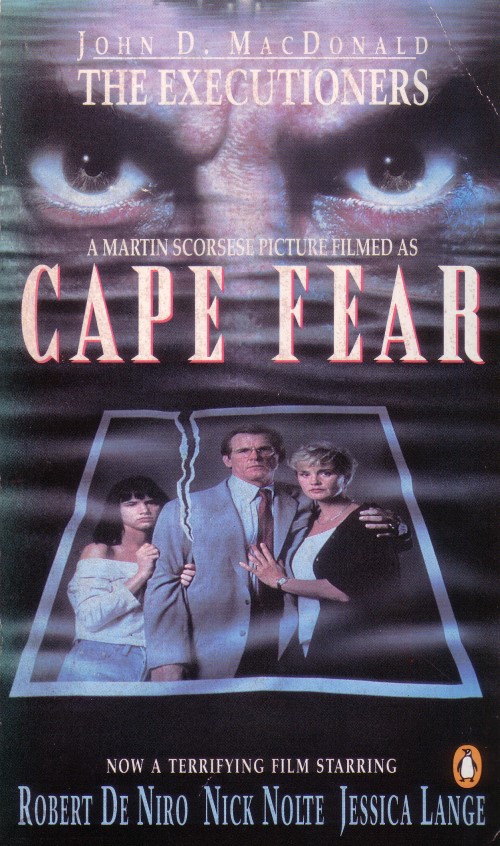
CAPE FEAR – The book of the films

Written in 1957 by John D. MacDonald, The Executioners has the distinction of being filmed twice – in 1962 and 1991. MacDonald died in 1986 so didn’t get to see the Scorsese remake. The title was changed to Cape Fear by Gregory Peck, who produced and starred in the first film. I have to agree with Peck, The Executioners is not really an appropriate title for the book and its theme. (The Executioner series featuring Mack Bolan by Don Pendleton didn’t appear until 1969).


It’s 1956 and Sam Bowden is a dedicated lawyer, a happily married man with a lovely wife, Carol, and three children, Jamie, Bucky and Nancy. Way back in 1943, Bowden was a First Lieutenant on the Judge Advocate General’s Department and became a prime witness in the trial and conviction of staff sergeant Max Cady for the assault on a young woman in an alley. Significant memory – ‘I hard a whimpering in an alley. I thought it was a puppy or a kitten. But it was a girl. She was fourteen.’

Cady got life, but was let out after thirteen years. And Cady began stalking Bowden.

There was no law of harassment in those days. The law seemed helpless, as did Bowden. ‘He swam out with furious energy, but he could not swim away from the sticky little tentacle of fear that had just fastened itself around his heart.’ MacDonald’s prose is littered with gems like this. Another: ‘He could have been a broker, insurance agent, advertising man – until he looked directly at you. Then you saw the cop eyes and the cop look – direct, sceptical and full of a hard and weary wisdom.’

All of the characters are deftly drawn, particularly Bowden’s wife. Although there’s a pall of incipient doom hovering in the absent guise of Cady, there’s humour too. ‘Carol was a good but emotional cook. She talked to the ingredients and the utensils. When something did not work out, it was not her fault. It was an act of deliberate rebellion. The darn beets decided to boil dry. The stupid chicken wouldn’t relax.’

Cady issues veiled threats, but never in anybody else’s hearing. Even when the Bowdens’ dog Marilyn is poisoned, there’s no evidence that it was Cady. In order to protect his family – ‘his four incredibly precious hostages to fortune’, Bowden arrives at the unpalatable conclusion that he must go outside the law to deal with Cady.

‘There are black things loose in the world. Cady is one of them. A patch of ice on a curve can be one of them. A germ can be one of them.’

Near the denouement, MacDonald returns to that significant memory. ‘… heard a faint mewling sound, a hopeless sound of fright and pain and heartbreak so like the unforgettable sound he heard long ago in an alley…’

The book begins and ends with the family on their boat, but unlike the movies the vessel doesn’t play any notable or dramatic part in the story. The beginning is a slow fuse, not recommended in modern thrillers. But it works because MacDonald paints a happy family, creating characters you’re going to care for and worry about. The ending, while realistic, is quite tame by modern standards and much of the action occurs off-screen, which adds to the psychological concern but diminishes the graphic assault on the senses. The ending lingers and perhaps shouldn’t – the screenwriter’s axiom is ‘enter late, leave early’ – and yet it’s a satisfying ending, the calm after the storm. Both Mitchum and De Niro bring suitable menace to a villain who doesn’t have to be in every scene to yet dominate the entire film. As Max Cady does in the book.

Sunday, 30 September 2012

Bob Jenkins – ink in his veins


A native of Portsmouth, England, Bob died on the evening of 24 September as a result of bone and prostate cancer. I first got to know him when he was publishing a short story magazine, Ad Lib in the late 1980s. He was an ex market stallholder, an ex journalist and could turn his hand to almost anything. This was before the computer and the Internet would dominate publishing. I illustrated a few editions of Ad Lib before it folded, among them stories by Arthur C Clarke and Jeffrey Archer. After that, we met infrequently, usually at his market stall in Portsmouth, where he sold second-hand books, or the nearby pub. My career in the navy took me away and we lost touch. Then he hit upon his money-changing concept and Intercash was born in 1993. Rumour has it that he soon became a millionaire. True or not, he employed a number of staff and Intercash expanded over the years. The origins can be read here, http://intercashuk.com/newsite/aboutus.php, written in Bob’s inimitable style.

Some years later, while I was redundant and looking for a change in direction, away from IT, I stumbled on a copy of the Portsmouth Post magazine and realized that Bob was not only the editor but publisher. He was looking for a sub editor so I got in touch and the job was mine. It was a popular monthly magazine, and great fun to work on. Incredibly, workaholic Bob handled the magazine and also his Intercash empire at the same time, no mean feat. He fought the weed and demon drink, two accessories that seemed appropriate for his journalist personality. He was quick witted and sharp as a knife where puns and article headlines were concerned. His DIY articles were written under the pseudonym of Matt Black, gardening tips by Daisy Cheyne and general articles by Doug Deepdown. He wrote short stories and novels under several names, too. His output was literate and prodigious. Recently he was working on the final draft of a 200,000-word Victorian crime novel set in Portsmouth.

When I moved to Spain, Bob kept me on at the Portsmouth Post and we worked on the magazine remotely. However, he flew me back to UK once a month for a week to get the magazine finished and ready for print. I still remember those bacon butties we’d enjoy of a Saturday morning, just the two of us, while beavering away in the office.

Above all, Bob was a people person. He seemed to be known by people from all walks of life, a genuine character. He didn’t suffer fools gladly but he repaid loyalty with trust, help, his time and advice, and was very protective about his staff. He championed local causes in his magazine, from the victims of illegal car clampers to the local hospice. He loved cricket, dog racing, radio and history, writing about all of them with great flare and passion. His great loves were Portsmouth city and Pompey soccer team and the former is enshrined in the website he created: http://nowportsmouth.co.uk/about-2.html

He thought the world of his extended family, and wasn’t averse to a little nepotism from time to time, putting family members on his magazine’s cover. The Christmas 2004 issue featured his grandchildren, nephews, nieces. Bob Jenkins was a very generous soul and he will be greatly missed.

Funeral at Portchester crematorium, October 10, 3pm. I’ll be there in spirit. R.I.P., Bob, old mate.