
My guest today is British journalist Jack Owen
who transplanted himself to the colonies – that is, North America, the United
States. He’s been writing for a long time (we won’t ask how long!) Most but not
all of his writing has to do with historical – mostly nautical – events.
He says that his books, anthologies, articles and short-stories are available online in ‘E and Tree’ versions, adding that ‘in the course of seeking information for stories about everything from Mushroom Growing to Murder, he has sailed oceans, climbed mountains and bent the ear of many bartenders. Cops and crooks have shoved guns in his face, society dames have hired him to ghost-write their life-stories. Editors have hired, fired and hired him again.’
Jack has written for publications as diverse as the National Enquirer to the National Fisherman and Sports Digest to Modern Maturity, ‘while playing many roles Upstairs and Downstairs to get the story.’
In a parallel life, sometimes serendipitously merging one with the other, he has fostered a second love and livelihood in antiquarian and contemporary books. As an active bookseller and appraiser in the late 1970s he has been a charter member, officer and former president of the FABA (Florida Antiquarian Booksellers Association).

Jack's 'Old Book Shop'
Welcome, Jack!
As a fellow Brit, I’m interested to know where
you originated – doubtless some seaside resort?
London, but raised
in the deep south at Eastbourne at war's end. It is promoted by PR people as
the 'Suntrap of the South'. They are far less keen to record nearby Beachy
Head, which shelters use from Atlantic storms from the west, as the Suicide
Leap Site of the World. A fun place to scramble around as a child. Also, while
every schoolboy can tell you the date of the Battle of Hastings. 1066, its
location close by where Pevensey Castle ruins still stand to the east, was a
playground too.
I served in the Royal Navy and I understand
you did too. Tell us about that, please!
My time in the
service came to an abrupt end shortly after the incident of the chipping hammer
which broached the hull of a very famous frigate. She had been instrumental in
sinking six U-Boats on one sortie. Honest, it was an accident.

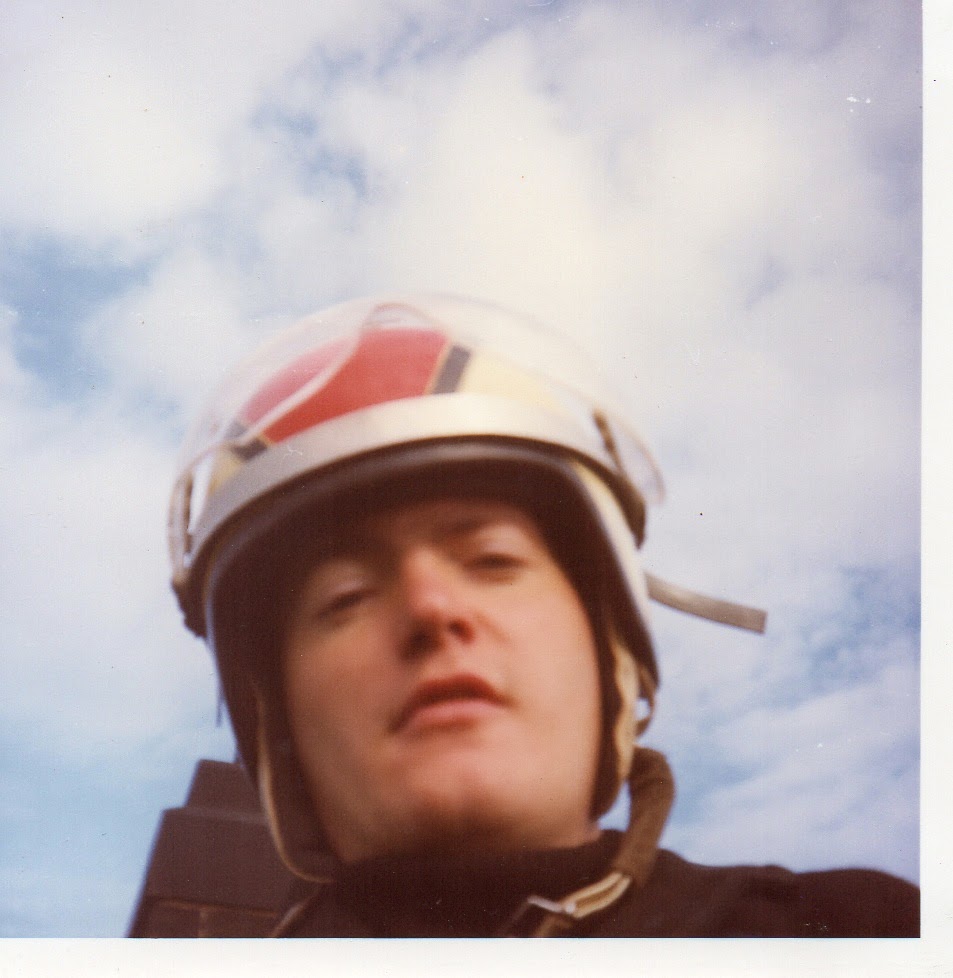
Jack buried in a book en route to Suez...
Presumably, when you left ‘the Andrew’, you
became a journalist. Or did you tackle lots of other writerly-useful jobs
before that?
While on one
Christmas leave out of Pompey (Portsmouth, UK – Ed) the editor of the Eastbourne Gazette allowed me to
accompany staff reporters working court cases, council meetings, fires,
accidents, and sob-stories. It also exposed me to the news-room hierarchy, and
how to prop up a bar until my round had been bought in. (I wonder if any of my
tankards still exist?) It made a change from being a temp at the Post Office
sorting greeting cards and filling the coffers of local pubs with the cash
money earned.
BTW, my first published
news story was a three-paragraph squib about a UXB I found at the foot of
Beachy Head, while beachcombing.
You were an investigative crime reporter and
boating columnist in south Florida for half a century. Any tales you can tell
about that? How did you get those jobs?
Working as a general
reporter at the Camberley News when I
got out of the service introduced me to the crime beat. My area included
Broadmoor Institute for the Criminally Insane, and Sandhurst Military Academy,
where the Windsor Royals and Hussein of Jordan did their square-bashing and got
into trouble. Neither place readily doled out information, so tipsters were
imperative. My expense accounts were sometimes a tad beer-stained and
inventive. I broke several 'Stop Press' stories for Fleet Street evening
papers, ahead of staff and freelance reporters, despite the Union edicts.
My greatest
challenge was extracting a civil word from the spokesman for Scotland Yard, a
Scot. He once acknowledged I would have to haul a multi-stabbed body across his
threshold before he'd confirm foul play to any query I posed
America, with its
'Freedom of the Press' mantra in the early 1960s, was like happy hour for an
alcoholic, for anyone working the police beat.


Jack on the job...
I’m about to start reading your first Porter
saga, Midshipman Porter – In Harm’s Way. Is the Porter family based on actual
persons?
Very much so. He's been my naval hero since I
discovered him in the mid-1970s and accumulated quite a collection of and by
him. His stepson was David Glasgow Farragut, of 'Damn the Torpedoes' legend,
and his son David Dixon Porter was the second American Admiral (after his
stepbrother) and Superintendent of the newly-created U.S. Naval Academy at
Annapolis. He also was gung-ho writer of boys’ adventure stories.

Have
you been tempted to use fictional and real characters in your Porter saga?
Family members percolated through the navy and
political scene at a time when it was a very small pond and, seemingly,
everyone knew everyone of consequence. The kid who became commodore was no
squeaky-clean character, got into plenty of physical and political scrapes, but
had more chutzpah than Horatio Hornblower and John Paul Jones combined.
I see that you like delving into so-called
faction. And I take it that The Jekyll Island Enigma is
a case in point. Can you tell us about that?

Jekyll Island as a winter resort for society
was a precursor to Palm Beach by half a century. The 19th century
clientele preferred solitude among their own kind. The 20th
century generation, which faced, fought in and survived the First World War,
tried to squeeze as much life out of every day – and night – as it could. Both
upper levels of society, at home and abroad, were highly motivated to make the
most, and keep it, as they could. Cutting corners, at the risk of other
people's lives was part of the cost of doing business. Patriotism was fine and
dandy, providing it didn't interfere with profits.
Wow. That sounds like today's breaking news!
There are plenty of examples on file of
businessmen dealing with the enemy. In the Jekyll Island Club, the primary
character of the story is a living example of a bygone era,. So are the menus
and mores of an affluent, structured society where wealth, not accent,
separated Americans.
On a more general note, it is said that ‘A
life without books isn’t a life.’ As a book-seller, you’re bound to endorse
that, I think. Do you know how many books on average you read in a year?
Maybe 30-40 fiction, but hit-skip, rummage, note,
copy, post-it, hundreds of non-fiction books, manuscripts, files, ledgers,
whatever in research. I prefer hard-copy versions to on-line cut and paste. I
can have a semi-circle of books open to the appropriate place, ready to pounce
on, instantly, several layers down a pile. I still don't trust computers. They
too often get hiccups, freeze and die.
What are you reading at present?
Have three Kindle high-octane (shoot 'em up –
sai 'em down) books on the go, at various stages. Have just read hard copy of
J.K. Rowling's play The Cursed Child. Good luck with that. It seemed
forced and recycled, but as a play for a night out in the West End, on a par
with 'Peter Pan' in panto.
Currently on the coffee table: John Le Carré's
The Night Manager; Stephan Talty's Empire of Blue Water (Henry
Morgan's pirate army) and e. john robinson's(cq) Paint the Sea and Shoreline
in Watercolors Using Special Effects. So far, I've spent the past two days
painting the roof!
The Night Manager is one of my favourite
books, Jack. I hope all that roof-painting won’t be affected by Hurricane
Matthew!
As you clearly have a nautical bent, the
prospect of being stranded on a desert island must have occurred to you before. What
book would you take to a desert island?
Can you recall what book gave you the reading
bug?
Probably Nicholas Monsarrat’s The Cruel
Sea, or C.S. Forester's The African Queen for pleasure, and any Mother
Earth Catalog from the 60s for survival..
Ah, Monsarrat. I read quite a few of his, and
particularly enjoyed The Cruel Sea and The Kappillan of Malta. I was fascinated
how Forester’s book and the film differed, too.
What book left you cold?
James Joyce's
Ulysses.
Say no more… In most cases, writers are also
avid readers. Some readers stick to a particular genre of fiction, or even
eschew fiction and prefer non-fiction. Besides local history and nautical
fiction, what other books do you gravitate towards reading?
Basically, if it’s a book, I'll dip into it.
As a former bookseller I had to get the gist lodged in my brain box for
inquisitive customers posing inane questions like. 'Have you read every book in
here?'
'Only the ones written from left to right',
was my stock response.
In real life I have an eclectic range of
interests and an interest in what makes other people tick, so I can pass it on
in stories or articles.
Writers were readers first. Then they decide
to write. Your naval career probably didn’t draw you to writing; if so, then
what did?
Frustration, possibly. When I'd run through
all my favourite authors’ books and nothing fulfilled my need, I began writing
what I wanted to read.
Can you describe your writing process? What
comes first, for example – the character, the plot, or a central theme or idea?
It’s taken a while to wean away from the
reportage and journalism formal formula and the 'crop to the top' pyramid where
the essence of the story is contained in the first paragraph. I always thought
that was an evil plot schemed up by headline writers to make it so much easier
for them to absorb the essence to conjure up the type font to fit the column
count.
The bridge from newspaper stories and articles
based on fact, to readable entertainments built upon figments of my
imagination, was creating short stories. Fact and fiction is the difference
between a judge recording the specs to choose a fishing tournament winner; or
measuring the applause for the same story as told by the fisherman - after a
few pints.
My previous non-fiction transition to faction
books have been built around real, but embellished, incidents. Currently I'm twenty-three
chapters into a 'pantser', and I'm having a blast. Nothing is planned. When it’s
finished and I read it I'll find out whether its worthwhile putting into print.
In the past people asked: “What’s your
motivation?”
My response has been: “The mortgage payment,
works for me.”
Today it would be: “I can’t not write.”
I’d agree there, Jack. Many writers are driven
to write. Who is your favourite character from one of your books and why?
Ballsy people who survive and inspire despite
the odds. The much married Millie Talmadge in The Jekyll Island Enigma
and the stowaway kid and his cat – Sammy Taylor and Bambino aboard The Yacht
America in Florida's Civil War play second fiddle in the story, but remain
admirable characters in my heart.
Where do you find inspiration?
Wherever and whenever a 'What if?' question
comes to mind.
Some can be quite mundane; conjecturing about
the mom in the check-out line using food stamps: are the kids a burden or a
bonus? Others might be: Does all the Florida Lottery Money really go
toward education? Or: Why do dogs chase squirrels?
When pitching for reporting jobs, freelance
working around the USA, I’d offer to find a story before the editor finished
his/her cigarette. Just a look around the newsroom was inspiring enough: the
little guy in the sports section, the overweight gal working the Women's
Department; the retired Veteran newsman writing daily obits. Never had to leave
the heat/AC to make a point.
We’re not talking Pulitzer stuff here.
Although I may be one of few newsmen to get a tummy-rub from Roxanne Pulitzer –
on record (see pic below).


Yes they are. One scornful columnist lauded Palm
Beach – An Irreverent Guide, adding the caveat 'though, ineptly illustrated
by the author'. It sold 1,000 copies per season for a decade on The Island,
before Palm Beach Scandals – the First 100 Years was launched on the Joan Rivers Show. No illustrations – it
died after a year or so in print.


Launch of Palm Beach Scandals on Joan Rivers' Show
Do you have a favourite quotation?
“They Also Serve Who Only Stand and Wait”, a
Noel Coward patriotic slogan meant for non-combatants during WWII. But it also
worked for me undercover, if you added “And Listen.”
And it was a pleasure listening to you, Jack. Thanks
for taking the time to talk to me.

Jack's author-page on Amazon is here







.jpg)


