Search This Blog

Wednesday, 16 September 2015

Writing – what’s easy and hard to write?

Today, I popped in to the local Writers’ Circle. The chairman Ian had set a writing exercise, asking each of the fourteen attendees to write what they found hard and easy to write about.


This is a complex question.

Poetic
For those who don’t write poetry, this was certainly found to be hard to tackle – whether rhyming or not. 

That’s the idea!
Getting the idea was often elusive for the writer. That’s difficult to resolve. You have to have an inquisitive mind that is always asking ‘what if?’ A word, phrase or event can trigger an idea. If you can’t waylay ideas to generate in your writing, then you’re probably not destined to be a writer.

Muse, where art thou?
Wait for the muse? It can work, but it can also take a long time. As one famous author put it, ‘I wait for the muse each day. It arrives at 9am when I sit at my desk.’ In other words, he enforces discipline in his writing because he sees it as a job.

Oh, the pressure!
A few found they could write better when under some time constraint. That’s what journalists find – they have to deliver to a deadline. That deadline won’t shift. It has to be met. Writing to a self-imposed deadline can help you to train yourself to write regularly.

Excuses, excuses!
Then there was the question of motivation. How to get into a writerly mode. The basic answer is to sit down and write. Of course writers are very good at procrastinating. Anything rather than actually write; there are umpteen excuses. See a reference to this in my Friday’s forgotten book blog here.

Even for writers who find it easy to write, it still requires effort. That is allocating time to write, ensuring that you do write, spilling words onto the page or screen.

Point of view
Deciding on a point of view for the story can prove difficult for some. Determining this will affect the story. If it’s first person, then the narrator (presumably) survives any threat, so the danger must be faced by others possibly close to the narrator.

Voice over
Attaining a ‘voice’ for the story proves difficult for others. ‘Know your character’ can help here. Immersing yourself in the story with your characters will gradually bring out the appropriate ‘voice’; different professions have different ways of doing and saying things; but don’t overdo this, either.

Slang etc
When to use vernacular – and how to check its authenticity. Recommendation – don’t use it. Writers of Oor Wullie and the Broons comic strips are proficient; most aren’t. Try reading Mary Webb’s Gone to Earth – a good book but hard going!

Not enough words!
Some find it hard to write a lot – often too busy thinking about the right word to write. Get the thing written first, and then you can find the best words in the self-edit stage. Immerse yourself in the scene, using all the character’s senses, and describe the scene so the reader can ‘see’ it. Avoid padding, however!
 
Research
Reluctance to write historical fiction ‘because of the risk of getting something wrong’. Do research for the period, but limit it to what you need for the story, otherwise you’ll be forever researching and never creating your own fiction. Read fiction set in the period you’ve chosen to get the flavour, so you can immerse yourself; when you come to write your own piece, the style will tend to reflect the period. Don’t overdo the research and include everything just because it’s interesting! Even a short story might require some research.

Speaking of dialogue
Some writers find it hard to write dialogue and rely too much on narrative – ‘tell’ rather than ‘show’. (Show is more than simply using dialogue, however). Again, ‘know your characters’ to the point where you can ‘hear’ them speaking. Dialogue creates character and moves the story forward and is a faster read than dense description.
 
Self-doubt
Fear of criticism, fear of not getting it right, can freeze the brain so little or nothing is written. Beat the fear, just let the words flow because you know that this is only the first draft and it can be honed.

Confidence is linked to the above. The more you write the better your writing should become. Writing regularly should improve your confidence. Generally, writers are sensitive about their work and are filled with self-doubt. That’s healthy up to a point; but restrain those doubts and just write. If you find this writing business painful to do, perhaps you should try something else? You either persevere or give up. Good writers didn’t start out being good, but they persevered, and locked away those self-doubt fears in a little box under the bed.
 
Write what you know
One answer to lack of confidence is ‘experience’. As we all go through life we build up a wealth of experience. Use this to drive your characters. This is ‘what you know’ – life’s experience. Of course some things we won’t be directly involved in – murder, war, etc. Some experiences have to be gained vicariously through voracious reading – fine, use these too, suitably adjusted for your characters. This is where research comes in again – non-fiction books (biographies, histories, for example) contain a wealth of knowledge and experience you can tap into.

Tuesday, 15 September 2015

Wonderful to be

Life is to celebrate, not to destroy

For many years I’ve been interested in, among other things, the miracle of life. In a bygone age I derived information from books – notably The Body (1968) and The Mind (1984), both by Anthony Smith (1968) and then I completed a couple of Open University courses, Brain Biology and Behaviour and Psychology.


There’s a quotation I used in my out-of-print book Pain Wears No Mask; it’s from Robert Boyle: It is highly dishonourable for a reasonable soul to live in so divinely built a mansion as the body she resides in altogether unacquainted with the exquisite structure of it. [The gender used here is immaterial; the bottom line is we all take our bodies for granted; for example, once it starts in the womb, our beating heart never stops until we quit this mortal coil.]

Last night’s BBC2 Countdown to Life: the Extraordinary Making of You was the first of three documentaries and featured the initial eight weeks after conception – a time, as presenter Michael Mosley pointed out, when some women may not even realise they’re pregnant. Yet while there may be no obvious external signs, inside the body hundreds of changes and processes that could determine the rest of our lives are already under way, and this was the point of the engaging programme. [In my co-written fantasy quest, women know at the instant of conception; the first Chronicle of Floreskand is Wings of the Overlord.]

Mosley showed us the identical quads Holly, Jessica, Georgie and Ellie, who were the result of a 64-million-to one chance. Their single egg divided to create four genetically identical sisters – this process happened just five days after conception.

Then there was basketball star Randy, whose life changed just nineteen days after he was conceived. All of his organs are on the wrong sides – he is a perfect mirror image of most human beings. This was due to some tiny structures called cilia that come to life on day 19, spinning clockwise to create a leftward current to activate genes that will tell the organs where to go, but they failed to spin in his case. [In my out of print vampire thriller set in Malta, Death is Another Life, my two vampire brothers are mirror twins – a crucial plot point.]

Supernumerary digits and other body parts occur from time to time; Ian Fleming’s The Man With The Golden Gun villain Francisco Scaramanga had a third nipple. Amazingly, in Brazil, fourteen of twenty six individuals in the De Silva family possess six digits on each hand; as a result of the so-called sonic hedgehog protein (yes, it was named after the Sega game, Sonic the Hedgehog). It’s difficult enough to draw the usual human hand – that’s why cartoon characters generally only have three fingers; fascinatingly, those six digits looked normal, as the hands were larger to accommodate the extra finger.

Studies over seventy years in Gambia have revealed how babies conceived in the wet season – when pregnant mothers eat plenty of greens – are seven times more likely to live longer than those conceived in the dry season, when their mothers eat less healthily.

Mosley met Nell, a seven-year-old who received a double dose of her father’s growth gene in the womb and so towered over her classmates; happily, the growth spurt seems to be stabilising now. He also met Melanie Gaydos, who suffered from a unique genetic slip-up in the womb which caused catastrophic damage to her hair and teeth, transforming her facial features; she has bravely carved out a life as a striking model in New York.

Mosley was enthusiastic, charming and filled with wonder. He described a body scan as ‘a work of art’, which it is.

And no political points were being made, and no reference to Climate Change either.

As Walt Whitman said, I Sing the Body Electric. Wondrous to behold. Wonderful to be.

Monday, 14 September 2015

Writing – market – DarkFuse magazine

If you write dark fiction in the horror, thriller, suspense, crime or sci-fi genres, then this market is worth aiming towards. You can get all the information for submission here

Wikipedia commons

Salient points are these:

DarkFuse Magazine is an online publication looking for:

Original Fiction: Horror, thriller, suspense, crime, sci-fi, bizarre—anything with a dark slant. Original, never-before-published stories.  

500-2K words paid. [Will publish longer stories, but maximum pay-out is to 2k words].

DarkFuse Magazine also publishes stories 500-999 words as part of their continuing ‘Horror d'oeuvres series’ within the magazine.  [1K+ words is considered featured fiction].

Payment: 5 cents per word up to 2k words.

Rights Taken: One-time web publication rights.  Two year exclusive agreement before submitting to another market. Non-exclusive archive rights for the life of the online magazine. All other rights revert to the author on publication.

Response Time appears quite long, however: 6 months or less.

Notes:

DarkFuse Magazine market is geared towards both new, mid-list and established authors in dark fiction.

For New & Mid-list Authors: This magazine is a paying market with a major focus on exposure through distribution and paid marketing and promotions of its content. DarkFuse editors use submissions to scout talent for the company's main focus and revenue stream which is its digital and physical book lines.

For Established & Professional Authors: This magazine offers professional rates and a growing readership. Payment greater than 5 cents per word may be offered if your work is solicited.

NO SIMULTANEOUS SUBMISSIONS.
 
NO MULTIPLE SUBMISSIONS.

Light the fuse and go!

Friday, 11 September 2015

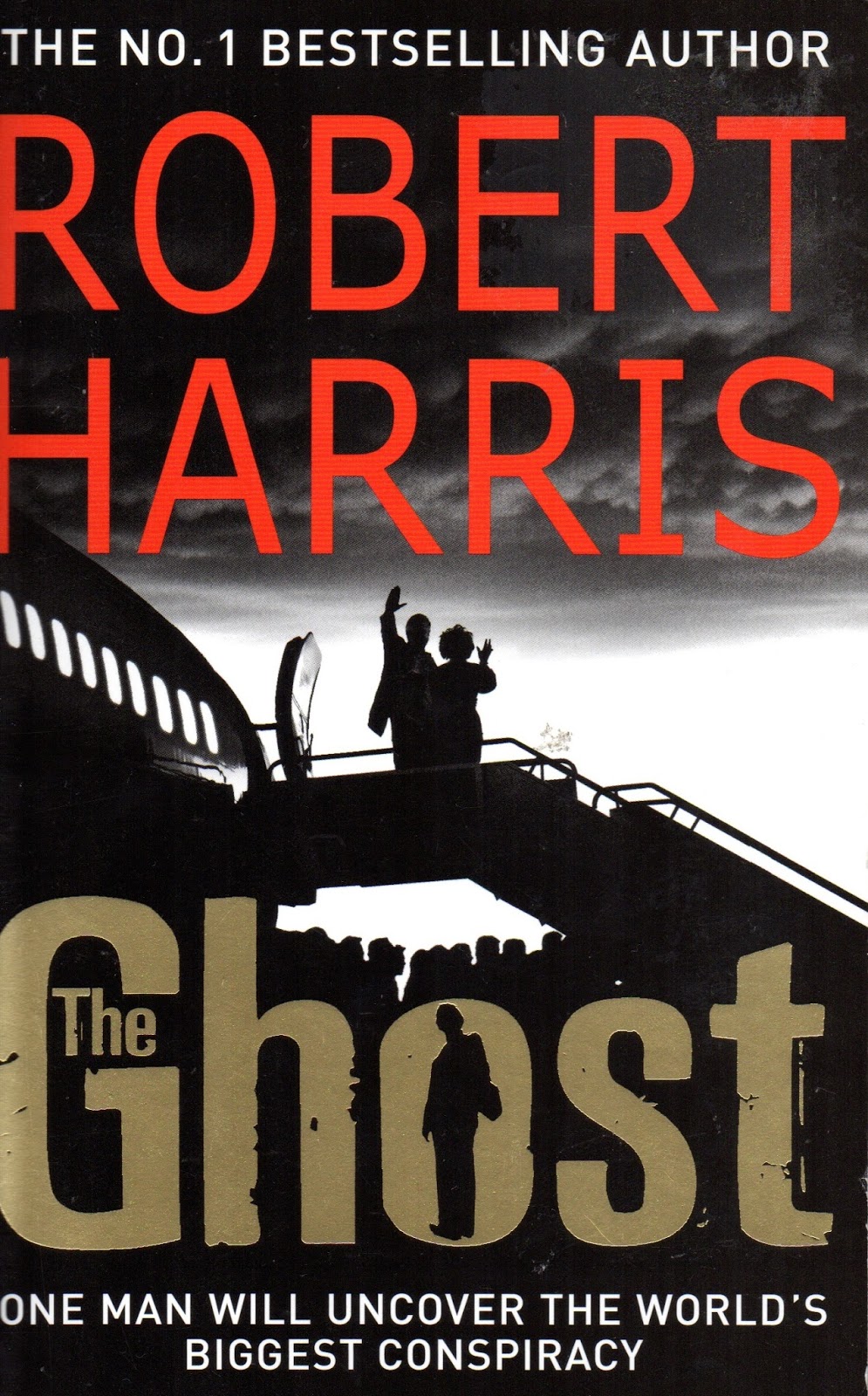
FFB - The Ghost

Robert Harris’ best-seller The Ghost (2007) gripped me from beginning to end. And what a beginning: ‘The moment I heard how McAra died I should have walked away. I can see that now.’

Mike McAra was the political friend and ghost writer of Adam Lang, Britain’s former prime minister. Sadly, McAra’s body was washed up on the American coast. So the unnamed narrator gets the job; it pays well, after all. He felt a slight unease about taking over from the dead man: ‘But I suppose that ghosts and ghost writers go naturally together.’

From that foreboding start, we get sucked in to the claustrophobic millionaire’s holiday home in Martha’s Vineyard, where the narrator meets Lang and his wife Ruth, the devoted fixer, Amelia and assorted bodyguards.
 
The style is deceptively easy, laced with humour, and the odd dash of cynicism and irony. The fictitious publishing company who paid the advance is Rhinehart. It ‘consisted of five ancient firms acquired during a vigorous bout of corporate kleptomania in the nineties. Wrenched out of their Dickensian garrets in Bloomsbury, upsized, downsized, rebranded, renamed, reorganised, modernised and merged, they had finally been dumped in Hounslow…’

The book is set very close to 2007, when Al Qaeda terrorist bombings are not only a real threat, but actual occurrences. There are questions being asked about the extraordinary rendition of four British citizens from Pakistan to Guantanamo Bay, and the use of waterboarding to torture prisoners. The ex-PM is accused of committing an illegal international act, namely authorising the abduction of those four men. So he is being hidden away in Martha’s Vineyard in order to complete his memoires. [Echoes resonate even now, as British so-called IS terrorists are vaporised by a drone’s missiles.]

‘Heathrow the next morning looked like one of those bad science fiction movies set in the near future after the security forces have taken over the state. Two armoured personnel carriers were parked outside the terminal. A dozen men with Rambo machine guns and bad haircuts patrolled inside…’(p41)

Harris is a good observer, giving us splendid description and can turn a good phrase. For example: ‘New England is basically Old England on steroids – wider roads, bigger woods, larger spaces; even the sky seemed huge and glossy.’ (p48) Another excellent example: ‘… passed a marker buoy at the entrance to the channel swinging frantically this way and that as if it was trying to free itself from some underwater monster. Its bell tolled in time with the waves like a funeral chime and the spray flew as vile as witch’s spit.’ (p50)

And he’s not without his humour, either: The bar ‘was decorated to look like the kind of place Captain Ahab might fancy dropping into after a hard day at the harpoon. The seats and tables were made out of old barrels. There were antique seine nets …’ (p95)
 
Insightful writing, too. Read this passage – ‘… it’s curious how helicopter news shots impart to even the most innocent activity the dangerous whiff of criminality.’ – and wonder about the heavy-handed police raid on Sir Cliff Richards’ house, which happened several years later than the publication of this book.
 
Writers too will empathise with the narrator, for obvious reasons: ‘Of all human activities, writing is the one for which it is easiest to find excuses not to begin – the desk’s too big, the desk’s too small, there’s too much noise, there’s too much quiet, it’s too hot, it’s too cold…’ (p180)

Those excerpts give you a little flavour, anyway. The Ghost is well written, in turns amusing, witty, thoughtful and incisive concerning the corruption of power. Despite the fact that we know there wasn’t a prime minister called Adam Lang, his wife Ruth etc., the first person narrative manages to suspend disbelief.
 
If you enjoy the drip-feed of tension rising towards paranoia, then you’ll appreciate this skilfully written novel.

Some of the paperback’s review quotes seem adrift. ‘An unputdownable thriller about corrupt power and sex…’ – the sex is minimal and not graphic in the slightest: the door stays closed.

‘Guaranteed to keep you awake and chuckling after dinner.’ – Does the reviewer usually sleep during dinner? It has many amusing asides and one-liners (as hinted at above), but it isn’t a comedy.

‘… satirical thriller…’ – The thriller elements are minimal, and only evident towards the end. It’s more psychological suspense up to that point.
 
‘Truly thrilling.’ – No, it isn’t. It is tense, however, and most convincing, with an excellent twist at the end.

Highly recommended.

Thursday, 10 September 2015

Writing – Competition – The London Magazine

The London Magazine has been around a long time. It is England’s oldest literary periodical, with a history stretching back to 1732 (with the odd hiatus of several years).

They run an annual short story competition, and this year's is now open for entries.

Prizes: 1st - £500, 2nd £300, 3rd - £200

Length – up to 4,000 words (title is not included in the word count)

Deadline – 31 October 2015


The editors do advise that you should read a copy of the magazine.
 
 
Bear in mind that they do not usually publish science fiction or fantasy or erotica.

Entry fee - £10 (Paypal, credit/debit card, cheque or postal order accepted).

Open worldwide on any theme or subject.

Submit online or by mail; the format and details are in the above link.

Note that the magazine does accept submissions at any time too. See the website


Good luck!


Wednesday, 9 September 2015

Writing – market - BBC drama

The BBC’s Writersroom has opened its window for unsolicited TV and film drama script submissions. 

The window closes on 24 September 2015. UK residents only!
 
Wikipedia commons

In this link here see the sub-section ‘submission windows’

Do not submit a first draft or a work in progress. Make it the best you possibly can. This is a highly competitive market.
 
More details here

Episode series. Send the first full pilot episode of a series and a brief outline of 1-3 pages of future episodes.

Serial. Send the first episode and a brief outline of 1-3 pages of the remaining serial narrative.

Single drama. Send the complete script.

In the website’s ‘Terms and Conditions’ you will find a wealth of advice, for instance:

Length
‘We accept scripts that are at least 30 minutes long, which is a fair length of time to assess a writer's work – it's extremely hard to judge a writer's abilities with a view to BBC broadcast slots if their work is shorter than this… The minute-to-a-page measure of classic screenplay format is a useful rule-of-thumb, but isn't a cast iron formula as it ultimately depends on the style of the piece. Generally speaking a half-hour sitcom would come in between 30 and 35 pages, an hour-long drama between 50-70 pages, and a feature film between 70-120 pages. The best way to judge the length of your script is to time yourself reading it, allowing extra space for action. A group reading or performance is even more useful since each reader, like an actor, may deliver their lines of dialogue at different paces...

Script Room reading process
‘BBC Writersroom employs professional script readers to assess all the submitted scripts. They sift the scripts by reading at least the first ten pages. All eligible scripts are considered in this way. If a script doesn't sufficiently hook our attention at the sift stage, it will not be considered further... If a script hooks our reader’s attention, it will progress to the second sift where the first 20-30 pages of scripts are read by another reader. If a script is long-listed it will progress to the full read and feedback stage of the process, where a third reader reads the script and provides feedback.  The reader may then recommend that the script is shortlisted, which means that it will be read and discussed by senior members of the BBC Writersroom team and the writer will be considered for further development.’

Also in the ‘Terms and Conditions’ is a comprehensive bullet point list showing what they do not accept, so make a point of reading this too. And one of the conditions is that they only accept scripts from those resident in the UK.

The website also contains a large library of scripts to browse, so you can see how they’re formatted and how the various writers deal with narrative and dialogue.

Good luck!


Tuesday, 8 September 2015

Writing – research – Writing Magazine

It often surprises me that beginning writers fail to master the basics of writing fiction.

Their enthusiasm for storytelling cannot be faulted. But really they should study published books to see ‘how it’s done’ before sending off any manuscript.

A long time ago – last century – when I was about fifteen, I did just that: I analysed published books (those in my own library and those borrowed from the public library) within my favourite genre.

·       How did the author begin the story?

·       How did the author end a chapter?

·       How long are the paragraphs?

·       What percentage of the book is dialogue as opposed to description?

·       What was the average length of the books?

·       How did the author convey suspense?

·       How did the author create exciting scenes?

… and so on.

Naturally, there was no intention of slavishly copying any particular author. But while analysing I was absorbing, almost like osmosis, the form and style of a typical thriller.

I spent time on the analysis.

In those days, there were very few ‘how to’ books on writing fiction, genre or any other type.

I did sign up for a writing correspondence course, which helped me successfully aim articles and short stories at particular markets. Additionally, by dint of writing a lot for this course’s targets and assignments, I improved my style and output. Sales didn’t happen overnight, but they started and after a while became quite regular.

That was then. Now, the budding writer is blessed with more than enough advice and guidance, whether from blogs, books, or magazines. So there is little excuse for any aspiring writer getting the basics wrong.

‘My writing will appeal no matter what form I deliver it in.’

‘I’m an original, I won’t conform.’

‘I don’t want to write in a straitjacket.’

‘Talent can’t be smothered by rules!’

‘Rules are meant to be broken.’

I’ve heard it all. Any excuse not to conform shouts out something: maybe he’s a tyro, perhaps she’s just arrogant or most likely they’re purely lazy.  

Time and again I and others spell it out: if you can’t be bothered to follow the guidelines – whether that’s for a writing competition or a publisher or an editor – then why should they bother with your submission? Yes, they may be at risk of losing something remarkable (though in need of judicious editing), but they can live with that; there are sufficient writers with talent who deliver as required.

This brings me on to sources of writing guidance.

There are two main writing magazines in the UK – Writers’ Forum and Writing Magazine.
Today, I’ll look at the latter.

Writing Magazine
For the cost of £4.10 per month (less if you subscribe), you get a 108-page full-colour magazine full of advice, markets, competitions, and advice, poetry, encouragement, and advice. (The repetition is deliberate). With the October issue there is also a 28-page special supplement listing national and international writing competitions, prizes adding up to £391,205 – not that any single person would be able to enter all of them!


There are articles about 'finding your voice', improving your humorous writing, a Rosie Thomas interview, moving to Windows 10, beating self-doubt as a writer, an author profile of David Nicholls, editing tips, short story and poetry winning entries, competition tips, creating characters, children's stories, news on competitions and events, and a regular back page column from Lorraine Mace, a successful Crooked Cat crime author.

If you’re writing genre fiction, then you could always read my Write a Western in 30 Days – with plenty of bullet points! I know; you’ve no intention of writing a western! Much of the book is applicable to any genre fiction writing – as reviewers have been good enough to point out. I used the western as it is a shorter book form to illustrate various aspects of writing – dialogue, characterisation, flora and fauna, conflict etc.
 
Or search Amazon or other online bookstores for ‘writing guides’ or even Google the same – and get swamped with useful tips.

The main thing is, do that research so you improve your chances of selling your work.

Good luck.

Monday, 7 September 2015

'Lives in suspension'

Illegal immigration across the Mediterranean has been an issue for a long time. Yesterday, I mentioned a pile of Traveller magazines I was browsing through prior to disposal.  In the May-June 2005 issue, there’s a photo-article by Matias Costa showing the plight of migrants entering Italy illegally by boat. Here are a few passages selected from the article:

Immigrants packed into a tiny vessel travel under cover of darkness…

Landed at Lampedusa before going to a reception centre in Palermo…

The sea crossing is so fraught that Italian newspapers have described the stretch of water between Africa and Sicily as a huge underwater graveyard.

Sound familiar? Ten years ago!

In the same piece, also:

George Alagiah, BBC News Presenter: ‘If water is a force of nature, then migration is a force of history. The challenge is not to try to stop it but how to manage it.’

Kofi Annan, UN Secretary General: ‘For millions of refugees and displaced people around the world, ‘home’ is a place they have fled from in fear of their lives, in a desperate attempt to find safety.’

Angelina Jolie, UNHCR Goodwill Ambassador: ‘Statistics tell only part of the story – behind the figures are families struggling to survive… all those lives in suspension for years and years.’
 
Brunson McKinley, Director of the International Organization for Migration: ‘Migration will be one of the major policy concerns of the twenty-first century.’

Then, the UN estimated there were more than 17 million asylum seekers and refugees worldwide. And that was before the appalling fighting and displacement in the Middle East and North Africa in the last few years, and the rise of the medieval so-called IS.

The writing was on the wall ten years ago.  And what has happened? It’s now much worse.

Until the continent of Africa is deemed safe from terror, the ‘great escape’ will continue.

Sunday, 6 September 2015

Reeds shaken, not stirred

Coincidences happen all the time.

Yesterday, I dug out a pile of old Traveller magazines with the intention of off-loading them. I need to make room! I put them to one side to browse through at another time.
 
Today, I plucked from a bookshelf my old copy of A Reed Shaken by the Wind by Gavin Maxwell (1957), my paperback a rather tired reprint from 1966. I’d read it long ago but not since; however, I plan to re-read it for research on a current book I’m working on, To Be King. A certain fantasy place in Floreskand – Taalland – has several similarities with the marshland between Baghdad and Basra, occupied by the marsh Arabs of Iraq, the Ma’dan.  In 1991 Saddam Hussein ordered the draining of the marshes and they became a desert, displacing thousands (see Wikipedia here).

Since the US invasion of Iraq in 2003, the marshes have gradually been restored, though it’s uncertain whether they will completely recover.

Maxwell's book title is taken from the Bible, Matthew Chapter 11, verse 7). Maxwell died in 1969, aged 55.

Later today. Back to the Traveller magazines. I browsed through all of them and found in the Summer 2004 issue (cover shown) a one-page excerpt from A Reed Shaken by the Wind! Of all the travel books in the world, I encountered this today. Coincidence. Life’s full of them.
 
 
If you’re wondering about the Tintin cover, there’s an article that mentikons the major exhibition ‘The Adventures of Tintin at Sea’ held at the National Maritime Museum in 2004. Interestingly, until very late in the young reporter’s life, his creator Hergé was an armchair traveller, utilising the National Geographic as source material, among others.  Hergé died in 1983, aged 75.


Saturday, 5 September 2015

Saturday fiction - 'Immigration crisis' - an excerpt

The immigrant crisis has dominated the news for many days, yet it has been a problem for years. The numbers of the dispossessed have vastly increased, true. What do they hope to find when they get to their destination? Yes, many are only too glad to feel ‘safe’, having escaped from terror, hate and the threat of death. Yet, despite the slave trade having been abolished for centuries, it still exists – fuelled by the unfortunates who seek a ‘new life’. Every day, refugees, immigrants, and the homeless will be sucked into illegal work by opportunists.

Today’s fiction excerpt from Blood of the Dragon Trees concerns this serious issue.

[Jalbala Emcheta. Conservationist. 6ft 2ins, skin mahogany, close-shaved head, coal black hair; high-domed head; full lips, marvellous smile. Almond-shaped eyes. Ebony – very dark brown eyes. Broad nose with flaring nostrils. Lantern jaw, high cheekbones, pearly teeth. Iron-muscled body, massive shoulders, pronounced biceps, defined pecs, washboard stomach. Voice – bass.

Jalbala is an associate of Andrew Kirby; they work for CITES. While investigating in Tenerife, they’re led to a network of people smugglers. Jalbala sneakily joins a group of fresh ‘recruits’ brought ashore from a smuggler’s boat, intent on obtaining incriminating evidence… ]

The week was a long ordeal of starvation rations, hard labor and a few minor beatings, but Jalbala stoically accepted his lot. His body ached in every muscle, mainly from work, but he was determined to fit in.

Including him, there were twenty-two in the new group, so Mustapha had been accurate on that point, too. It seemed that the rest of the group hadn’t noticed the switch. They were probably – and understandably – wrapped up in their own fate at the time.

            Some days he was put to work in a field, picking melons. The open air was preferable, but the sun quickly sapped his strength and gave him a pounding headache, the first signs of dehydration. In the fields, Jalbala got to know the woman he’d pulled out of the water. Her name was Nadira. She was twenty-four and had left her two young boys with her parents. Her husband had been killed and she wanted to fend for herself. ‘Europe is where I will make money and bring my children up,’ she told Jalbala with conviction.

Other days, he worked under immense sheets of plastic. Within these greenhouses, he found it difficult to breathe in the very humid 140oF. Light and heat seemed to radiate from every surface. The days melded into an amorphous mass of time within Jalbala’s surreal world, where the sky was white, suspended by arched wooden ribs, just inches above his head.

Toiling in the suffocating greenhouses, Jalbala made friends with one of the men who’d been landed from the ship. Talking made them even more breathless, but Jalbala needed information and Jope was glad to pass the time while doing monotonous work.

Jope spoke French. He was Senegalese, with a wife and a five-year-old daughter. He’d been an electrician, earning £25 a month.

            ‘Why talk in British pounds?’ Jalbala queried. ‘Your currency is francs, isn’t it?’

            Jope shrugged. ‘I don’t know why, but they preferred discredited pounds, rather than our francs or euros.’

            He went on. He’d been enticed by a friend who said that in the Canaries he could earn at least £1,000 a month. ‘I decided to improve my family’s lot. I spoke to my wife and we agreed. I took our family savings and went to the coast.’ He eventually caught a ship sailing from Dajla in Mauritania. ‘I want a house and I want to educate my children,’ he told Jalbala. ‘The journey cost £800. I worked for three months to add the wages to our savings.’

            Jalbala felt for the man. The money that ruled – and ruined – Jope’s life, was peanuts to the majority of people in the UK or the States. Everything was relative, he supposed. Both the States and the UK were still hurting from the credit crunch and massive borrowing. Yet he’d seen in England that large sections of the workforce were still intent on striking for higher wages. What planet were they on?

            ‘Why do you ask so many questions?’ Jope said.

            Really good question, Jalbala thought. ‘I’m a reporter. I want to expose the people who put you through this.’ He only wished that was true; maybe some aspects of it could be.

            Somewhere near, guard dogs barked and Jalbala knew that not far from their side strode sadistic men with pickaxe handles and baseball bats.

***

Jalbala’s stomach growled. After days of poor food and backbreaking work, he felt drained, weak, weary, and he ached all over. He was fit and strong, but the others weren’t, so he had no idea how the women coped.

            He worked in the fields, a huge plastic collecting basket strapped to his back. As he’d been shown, he sliced off melons and slung them over his shoulder to land in the basket. After a while, their combined weight started to tell, threatening to rip his shoulders off. The field was filled with his fellow illegals, women and men. Nadira, the woman he’d pulled out of the water, was over on his right, Jope on his left. They both bowed with a will, determined to work towards their freedom.

            A wave of depression swamped Jalbala as he realized they were being duped. They’d never get legitimate papers. Food and so-called lodging would be deducted from their miniscule wages; complications would arise over the required forms. They’d be made to work till they dropped, and then Black Beard or one of his men would come along with a baseball bat to encourage them to work some more.

            Already, one of their tent walked with a serious limp, thanks to ‘encouragement’ from a guard. Jalbala decided he could not wait much longer. He’d noticed a couple of guards watching him, as if making sure he pulled his weight. The slightest excuse, they’d give him a good hiding, and it might be so harsh he wouldn’t recover fully from it. Commonsense and honest fear told him he couldn’t delay more than a week. He must get the evidence soon.

***
He and ten other men occupied Jalbala’s tent; the women were accommodated separately. He waited until everybody in his tent was asleep then silently rose from his bedroll and tiptoed over the sleeping bodies of his fellow immigrant workers.

Hardly daring to breathe, he reached the tent flap and eased it aside. The sentry dozed, which wasn’t surprising; after the first two nights, all of the illegals seemed resigned and incapable of fighting a way out. Besides, they had to continue working to earn the official papers they’d been promised.

            Feeling the tension in every muscle, Jalbala stepped out. Nobody else was anywhere near. He slunk into the shadows and headed to the east section of the plantation. 

            As he moved, he listened.

But there was only the constant sound of cicadas. No dogs growling anywhere near.

            He reached the fence barrier and found a suitable spot, near a cluster of banana plants.

Cicadas close by stopped their racket for a few seconds, then, apparently satisfied they were not under threat, they resumed their loud noise.

Barbed wire sections overhung the other side of the fence.

He removed his right shoe and prized the heel free. It swiveled to reveal a hollow occupied by a plastic sealed miniature transmitter, its tiny light emitting a red flash.

            It only took a few seconds for him to bury the transmitter behind one of the young banana plants, by the fence. He covered his tracks, sure he could find the plant again tomorrow in the dark.

***
‘The signal pinpoints this position,’ Kirby said, pointing to the map on the lieutenant’s desk. ‘Next to the boundary fence.’ He sounded unusually cheerful. For the last few days, he’d seemed very quiet, withdrawn, almost depressed.

            Vargas slapped Kirby on the back. ‘Good. I’ll get Sergeant Alvarez to drive you to the spot.’

            ‘Well, make it close to the spot, Lieutenant. We don’t want to alert them.’

            Vargas nodded. ‘Just so.’ He picked up his desk phone. ‘You know, this might work.’

            ‘I hope so.’

            ‘Send in Sergeant Alvarez,’ Vargas said into the phone.

            Sí, teniente,’ came the reply.

            A sudden heaviness descended on his chest as Vargas replaced the receiver. ‘Until now, Jad has been taking a risk,’ he said. ‘Once he gets the delivery, that risk multiplies tenfold. If they catch him…’ He shook his head and held the worried eyes of Kirby. ‘Well, it will not be pleasant, I assure you…’

           ‘No, I guess not. I don’t think I’ll be sleeping for the next couple of nights,’ Kirby confessed.

***
The next night, Jalbala slunk out of his tent again, the only sound the raucous buzz of cicadas. He made his way to the banana plant where, hidden behind it, was a small canvas bag. His heart gave a slight flip of pleasure as he picked it up. He quickly checked that the handheld video camera, cushioned within a thick roll of bubble-wrap, was intact. Clearly, their plan worked. Kirby had tracked the transmitter accurately and lobbed the bag over the fence, probably earlier tonight.

He tucked the bag under his shirt and made his way to the tent. Now for some interviews.

            When he got back, he gently shook Jope awake.

            ‘I’ve got the camera,’ Jalbala whispered. ‘Are you still willing to speak?’

            Jope nodded.

            ‘And have you found anyone else who will speak?’

            ‘Yes.’ Cautiously, Jope clambered over the sleeping bodies and shook two men awake. He whispered to them and they nodded.

Jope and the others had spoken in measured tones about their mistreatment and how they came to be there. Jalbala got Jope to film him and he presented his testimony, too. Gradually, however, others in the tent woke up due to the sound of voices. Despite exhaustion, many of the workers were light sleepers, as if keeping one ear cocked in case there was an official raid. They’d all been told to disperse in every direction if the police descended on their plantation.

They were very tense moments and Jalbala’s pulse seemed to race on overdrive, but no alarm was raised. Yet the rest inside the tent shied away, giving the four of them wary glances. He hadn’t appreciated that not all the illegals would condone his actions. As far as they saw it, this was their chance to get a well-paid job. Nothing he said derailed them from that belief.

Jalbala considered breaking into the women’s tent for more evidence, but discarded the idea as foolhardy. Maybe Nadira would speak on camera, but his presence in the tent might cause concern or even alarm among the other women. He couldn’t risk it.

            After filming, he decided to take the camera in the bag back to the banana plant and lob it over the fence. On a number of days, there’d been evidence of searches in the tents. He had no idea what they were looking for; maybe drugs, or written notes.

            Most of the occupants in the tent were still awake when he left. The second journey to the fence seemed to take much longer. Maybe because he was carrying incriminating evidence, evidence that could cost him his life.

            Once at the banana plant, he stood still, listening. Nothing. No voices, no footfalls. The cicadas had stopped. They had last night, too. But for some reason they were keeping quiet. Why? Getting paranoid, he told himself, and lobbed the bag over the fence. He heard it land but couldn’t see it. Somewhere in the shadows. He hoped Kirby found it. Would he check for it tonight? If he didn’t, would it be visible to any of Black Beard’s men tomorrow? He had no way of knowing. He must trust to luck – which abruptly seemed to run out on him.

            A powerful torch beam blinded Jalbala.

            ‘Trying to run off, eh?’ The voice belonged to Black Beard, somewhere in the dark behind the torch.

            Jalbala raised his hands and slowly edged sideways away from that section of fence. Let them think that, he thought.

            ‘Come on, step forward,’ said Black Beard. ‘Accept your punishment like a man!’

            Jalbala heard the slapping of a hand against the wood surface of a baseball bat. I never was a good sportsman, he thought.

*

Blood of the Dragon Trees published by Crooked Cat Publishing as an e-book and paperback

Some review excerpts:

‘This is a breathless read - totally satisfying.’

‘Set on the idyllic holiday island of Tenerife, the novel exposes how illegal traders in endangered species and also human trafficking, thrive on making a massive fortune from their disgusting activities there…  a masterfully written fictional story based on these appalling facts - a thriller and romance rolled into one that draws you in with plenty of suspense and fast paced action. Each chapter ends with a hook leading you eagerly on to the next. The characters and all the location settings on the island are colourfully realised.’

The crimes are appalling, the characters well drawn and credible, and the settings superb.’

‘What a fantastic fast-paced read this is! The plot twists and turns and keeps us guessing.’

Nik Morton’s experiences and his writing put the reader in the novel and I felt like I had physically and emotionally travelled hand in hand with the characters through their arduous ordeals.’

Amazon COM here

Amazon UK here

Wednesday, 2 September 2015

Writing - thirty years of word-processing!

There’s an interesting article about the 30-year anniversary of the Amstrad word-processor in the Guardian here.


Like many a writer of long tooth, I used the first Amstrad word-processor with Locoscript and its dot-matrix printer, to write short stories and novels and ultimately a short story magazine, Auguries here.
 
Before that, I used a Remington portable typewriter, which travelled with me in my naval career. Having self-taught myself to touch-type, I improved my speed in the Royal Navy, which proved useful ever after.

There are plenty of authors who prefer writing in long-hand, and there’s nothing wrong with that, though it is quite laborious. There’s supposed to be this physical-mental symbiosis between mind and hand when wielding the pen. I imagine there can be; but it is no more immediate than fingers dancing across a keyboard almost as fast as thought.

I don’t think it’s apocryphal: I read somewhere that Frederick Forsyth buys himself an old-fashioned typewriter before he embarks on a new book. Of the old school. I remember those sit-up-and-beg mighty machines; you could train for the Olympics, simply by working the carriage return. And the rough Atlantic Ocean played havoc with typing, as the ratchet slipped during a prodigious swell.

I may be nostalgic about those times, but no, I don’t miss retyping entire books, carbon copies, ink rubbers, correcting fluid and Tipp-ex.

I eventually migrated on to a PC and purchased a PC-compatible Locoscript application, because there were many features I liked, and I wasn’t so keen on WordPerfect. That meant that eventually I could migrate all my written work to future PCs, which saved a lot of retyping. [Sad sign of the times, my spell-checker doesn’t recognise ‘Locoscript’…!]

Thirty years? Blimey. They went fast.

Tuesday, 1 September 2015

Writing - a serious laugh

Recently, a Guardian columnist who shall remain nameless displayed his literary snob credentials on his sleeve, criticising the massive affectionate outpouring for the late Sir Terry Pratchett, claiming there were many more worthy authors that should be read instead. In short, he felt that too much emphasis was placed on popular fiction instead of that serious stuff. Oh, and to make matters worse, he hadn’t actually read any of Pratchett’s books! The online comments in response seemed almost universal in their condemnation of his article and stance.

Maybe he feels that literature should address the human condition and not popular demand. Clearly, he hasn’t read anywhere enough popular fiction, as virtually every day popular authors are writing about the travails we face on this mortal coil, though invariably wrapped up in genre fiction.

I recall one reviewer of John D. MacDonald stated, ‘I shall not forgive John D. if he embarks on the Great American Novel. He is writing a chapter of it with every McGee thriller.’ MacDonald used humour in his genre fiction too.
 
The columnist must lack a sense of humour. I don’t mean the wonderful humour in Pratchett’s books – though he would doubtless be a more engaging columnist if he absorbed some of that writer’s slant on the world.

I write crime novels (and westerns and fantasy) which tend to look at the human predicament within the specific genre. Human frailty has been with us throughout history and will continue as such until the social engineers strip all individuality from us. Yet in contrast to the seriousness of conflict and drama, life also has humour. Life would be so drab without a laugh.

So I was particularly pleased that a recent Amazon review (of Catalyst) used the word ‘amusing’ to describe what is essentially a crime thriller.

‘This was an amusing read from start to finish. Vengeance takes many forms but it doesn’t necessarily leave a good taste in the mouth for Catherine Vibrissae - there are some recurring regrets. Catherine has a grand plan and not much is going to deflect her from fully carrying it through, yet reading of such important deeds doesn’t have to be a serious business as we find out in Catalyst! Her skills are numerous, but I loved that the author, Nik Morton, manages to inject her competence with a degree of quiet dignity. Preconceived notions about the past aren’t always entirely accurate and Cat has much to learn as the adventure unfolds…

‘Rick Barnes is a character who is easy to like and I particularly found his physiological talents quite funny. To say more might spoil things for the potential reader but if you’re looking for a quick and satisfying read, I can thoroughly recommend Catalyst. I’m definitely looking forward to Book 2 in the series.’

The point is, despite the suspense and danger, humour is in there, sometimes lovers fencing with words, sometimes as a response to a tricky situation – just like life. You need to use humour to get through the day, sometimes.
 
And laugh at columnists who think their reading experience is superior to your own.