
Mike
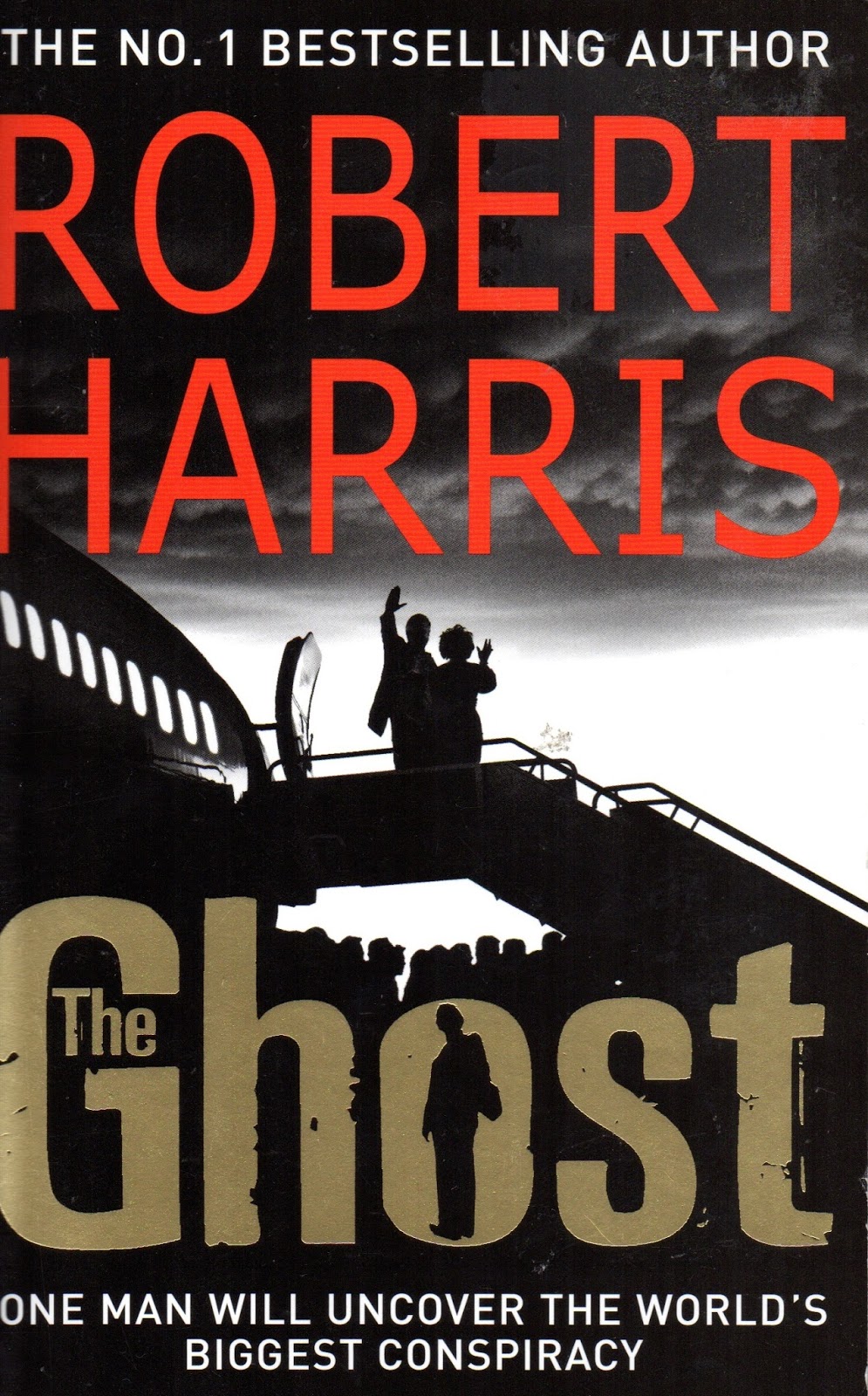
McAra was the political friend and ghost writer of Adam Lang, Britain’s former prime
minister. Sadly, McAra’s body was washed up on the American coast. So the
unnamed narrator gets the job; it pays well, after all. He felt a slight unease
about taking over from the dead man: ‘But I suppose that ghosts and ghost
writers go naturally together.’
From
that foreboding start, we get sucked in to the claustrophobic millionaire’s
holiday home in Martha’s Vineyard, where the narrator meets Lang and his wife
Ruth, the devoted fixer, Amelia and assorted bodyguards.
The
book is set very close to 2007, when Al Qaeda terrorist bombings are not only a
real threat, but actual occurrences. There are questions being asked about the
extraordinary rendition of four British citizens from Pakistan to Guantanamo
Bay, and the use of waterboarding to torture prisoners. The ex-PM is accused of
committing an illegal international act, namely authorising the abduction of
those four men. So he is being hidden away in Martha’s Vineyard in order to
complete his memoires. [Echoes resonate even now, as British so-called IS
terrorists are vaporised by a drone’s missiles.]
‘Heathrow
the next morning looked like one of those bad science fiction movies set in the
near future after the security forces have taken over the state. Two armoured
personnel carriers were parked outside the terminal. A dozen men with Rambo
machine guns and bad haircuts patrolled inside…’(p41)
Harris
is a good observer, giving us splendid description and can turn a good phrase.
For example: ‘New England is basically Old England on steroids – wider roads,
bigger woods, larger spaces; even the sky seemed huge and glossy.’ (p48)
Another excellent example: ‘… passed a marker buoy at the entrance to the
channel swinging frantically this way and that as if it was trying to free
itself from some underwater monster. Its bell tolled in time with the waves
like a funeral chime and the spray flew as vile as witch’s spit.’ (p50)
And
he’s not without his humour, either: The bar ‘was decorated to look like the
kind of place Captain Ahab might fancy dropping into after a hard day at the
harpoon. The seats and tables were made out of old barrels. There were antique
seine nets …’ (p95)
Insightful writing, too. Read this passage – ‘… it’s curious how helicopter news shots impart to even the most innocent activity the dangerous whiff of criminality.’ – and wonder about the heavy-handed police raid on Sir Cliff Richards’ house, which happened several years later than the publication of this book.
Writers too will empathise with the narrator, for obvious reasons: ‘Of all human activities, writing is the one for which it is easiest to find excuses not to begin – the desk’s too big, the desk’s too small, there’s too much noise, there’s too much quiet, it’s too hot, it’s too cold…’ (p180)
Those
excerpts give you a little flavour, anyway. The
Ghost is well written, in turns amusing, witty, thoughtful and incisive
concerning the corruption of power. Despite the fact that we know there wasn’t
a prime minister called Adam Lang, his wife Ruth etc., the first person
narrative manages to suspend disbelief.
If you enjoy the drip-feed of tension rising towards paranoia, then you’ll appreciate this skilfully written novel.
Some
of the paperback’s review quotes seem adrift. ‘An unputdownable thriller about
corrupt power and sex…’ – the sex is minimal and not graphic in the slightest:
the door stays closed.
‘Guaranteed
to keep you awake and chuckling after dinner.’ – Does the reviewer usually
sleep during dinner? It has many amusing asides and one-liners (as hinted at
above), but it isn’t a comedy.
‘…
satirical thriller…’ – The thriller elements are minimal, and only evident towards
the end. It’s more psychological suspense up to that point.
‘Truly thrilling.’ – No, it isn’t. It is tense, however, and most convincing, with an excellent twist at the end.
Highly
recommended.





