Search This Blog

Showing posts with label #writers. Show all posts

Sunday, 27 January 2019

Book review - The Garner Files

This is a memoir by James Garner (and Jon Winokur) with an introduction by Julie Andrews (published in 2011).

Garner died three years after its publication, in 2014, aged 86.


He began by observing that he’d avoided writing this book because he reckoned he was pretty average and didn’t think anyone would care about his life. He was browbeaten into writing it and he also felt it would allow him to acknowledge those who’d helped him along the way. ‘Here’s this dumb kid from Oklahoma, raised during the Depression, comes to Hollywood, gets a career, becomes famous, makes some money, has a wonderful family… what would I change? Nothing. I wouldn’t change a thing.’ (page xi)

As far as work went, in his early years he was a drifter. Then he went to Korea, got wounded [‘in the butt, how could they miss? (p27)], ‘I wasn’t a hero; I just got in the way a lot.’ (p30).

After stage acting he was hired as a Warner Bros actor, and he was being paid $500 a week. Eventually, he was called in to test for a new Western series. ‘They’d looked at just about every actor in Hollywood to lay a gambler wandering the frontier in the 1870s, but they picked me, probably because they… figured, Hey – we’ve already got this guy under contract, we might as well save money.’ (p51) He wasn’t happy about taking the role of Bret Maverick, he wanted to play in movies.

Jack Warner preferred recycling stories they’d already paid for, so the Maverick pilot was adapted from a book the studio had already purchased. Garner found himself wearing cast-off clothes from earlier movies to fit in with stock footage ‘re-adapted’ – standard operating procedure at Warners then. I can recall noting several recycled storylines in such series as Maverick, Cheyenne and others.

Garner was a little peeved (‘a little?’ I can hear him say) that he was still being paid $500pw when Maverick had displaced the big shows, Ed Sullivan and Jack Benny, which were making $25,000pw.

His view of the Bret Maverick character: ‘… quick-witted and quick on the draw, though he tries to avoid gunplay. But he’s no coward… exactly. He just believes in self-preservation… he only cheats cheaters… He’ll come to  your aid if there’s an injustice involved, and he’ll always stand up to bullies.’ (p58).

It took eight days to make a Maverick episode, starting on Tuesday and finish late Monday, usually. Since the episodes were being aired every seven days, they were inevitably going to run out of shows. ‘So they got the idea of adding a brother who could alternate with Bret.’ (p55)  Stuart Whitman and Rod Taylor were auditioned for the Bart Maverick part, and it went to Jack Kelly for $650pw…!

Warner Bros made 124 Maverick episodes and Garner was in 52. When he left the series, they tried to get Sean Connery, even flying him over, but he said ‘no’. Finally, they brought in Roger Moore (already under contract to Warners); he agreed to do it provided they’d release him from his contract at the end of the year; reluctantly, they agreed – and Moore went on to become The Saint.

He writes about many of his acting friends, and writers and directors, and offers plenty of insights into the profession in those days. He talks about his car racing with actors Paul Newman and Steve McQueen, and golf tournaments. And a lot of anecdotes, too; such as the on subject of autographs. ‘Paul Newman told Garner he stopped signing them forever the night he was standing at a urinal in Sardi’s and a guy shoved a pen and paper at him. Paul didn’t know whether to wash first before shaking hands… Gary Cooper wrote cheques for everything – gasoline, cigarettes, groceries, meals in restaurants – because he knew most of them wouldn’t be cashed. Coop figured he might as well get paid for signing his name.’ (p182)

He’s rightly proud of some of his film work, notably the TV movie Promise (1985) with James Woods, which dealt with the subject of schizophrenia. He comments, ‘I’m sorry to say that 25 years later, schizophrenia is the worst mental health problem facing the nation. Asylums have been closed, and government spending on mental health has been cut to the bone. There are new medications for schizophrenia, but though more expensive, they’re not much more effective than the old ones. And there is still no cure.’ (p195)

What caught my eye was his attitude to writers. ‘You can put the best actors and the best directors in the world out there, but they’re nothing without the written word. The script is sacred. I don’t improvise, because the writers write better than I do.’ (p171) ‘I didn’t get into the business to be better than anyone else. They give too much credit to actors, and I don’t think they should be singled out. It’s the writing. When it’s done right, acting isn’t a competition, it’s a collaboration. The better my fellow actors are, the better I am. If I get an acting award, I think I’m stealing it from somebody who deserves it more than I do…’ (p184)

Stephen J Cannell tells of a time filming Rockford. In five and a half years of the show, they’d never rewritten a line for Garner, but on this occasion he’s upset, he can’t get the line right. Cannell and Chase, the writer, suggest they can break the lines up, give some of it to Noah Beery. Garner said, ‘Change this line? Steve, this is a great line. I just can’t remember the goddam thing!’ So they never changed it (p231).

‘Every Christmas he gave each of the writers their scripts bound in beautiful red leather with gold lettering on the cover’ – David Chase (p233).

At the back of the book are comments from family and friends, reminiscences, a listing with comments of his films and TV work.

A fitting memoir – and memorial.


Sunday, 5 November 2017

Tell it in 100 words


Novelist Jeffrey Archer, who has sold about 300 million books worldwide, has set a writing competition to encourage budding writers.

The winner will receive £250 in book tokens and the top ten best entries will be published in The Mail on Sunday.

Flash fiction writers, give it a go!

Make every one of your 100 words count.

100 words excluding title.

Send your entry to shortstory@mailonsunday.co.uk.

Deadline midnight 17 November.

Here’s Lord Archer’s 100-word short story:

‘Unique’

Paris, March 14th, 1921. The collector relit his cigar, picked up the magnifying glass and studied the triangular 1874 Cape of Good Hope.

‘I did warn you there were two,’ said the dealer, ‘so yours is not unique.’

‘How much?’

‘The thousand francs.’

The collector wrote out a cheque, before taking a puff on his cigar, but it was no longer alight. He picked up a match, struck it, and set light to the stamp.

The dealer stared in disbelief as the stamp went up in smoke.

The collector smiled. ‘You were wrong, my friend,’ he said, ‘mine is unique.’

                                                               image - public domain

Good luck!

Thursday, 5 November 2015

Writing - Crime Writers' Competitions

Wikipedia commons

Two competitions for crime writers - submission fees are quite high, but so are the rewards! If you don't try, you won't win. Sent out by the Crime Writers' Association:

CWA Margery Allingham Short Story Competition

Our mission is to find the best unpublished short story – one that fits into Margery’s definition of what makes a great story.

“The Mystery remains box-shaped, at once a prison and a refuge. Its four walls are, roughly, a Crime, a Mystery, an Enquiry and a Conclusion with an Element of Satisfaction in it.”

The competition is open to all – both published and unpublished authors- and is for short stories of up to 3,500 words. All that we ask is that the story has not been previously published so whether you polish off a dusty draft or craft a brand new idea is totally up to you.

Submission: £15 (plus VAT)
Status: Open now
Deadline: 1st March 2016
Prize: £1,000 (sponsored by the Margery Allingham Society)
http://thecwa.co.uk/debuts/short-story-competition/


CWA Debut Dagger
For 15 years the Crime Writers' Association has been encouraging new writing with its Debut Dagger competition for unpublished writers. The submissions are judged by a panel of top crime editors and agents, and the short listed entries are sent to publishers and agents. The Debut Dagger is open to anyone who has not yet had a novel published commercially. All shortlisted entrants will receive a professional assessment of their entries. Winning the Debut Dagger doesn’t guarantee you’ll get published. But it does mean your work will be seen leading agents and top editors, who have signed up over two dozen winners and shortlisted Debut Dagger competitors.
Submission: £30 (plus VAT)
Status: Open now
Deadline: 28 February 2016
Prize: £500, professional assessment, submission to agents and editors
http://cwadaggers.co.uk/debut/

Tuesday, 22 September 2015

Writing – the short story

For many years I’ve added to my home library collections of short stories. Until the advent of the e-reader, received wisdom in publishing was that short story collections ‘don’t sell’. What they meant, perhaps, was that they don’t sell in vast numbers so are not worthwhile expending effort on them. However, now any form of writing can be obtained on an e-reader, and enjoyed, and the collected works of many classic authors can be downloaded for very little financial outlay (check out the Delphi Complete Works).

A short story in its literary form is supposed to be a brief fictional prose narrative, often involving one connected episode, a concentrated form, dependent for its success on feeling and suggestion. The writer must attempt to succinctly create a fictional world in the moment. Stories attempt to reflect the life that is lived by all of us, and the short form has to do it without benefit of the depth and breadth of a novel.

And, as with the novel, a short story has the potential to invoke any number of aspects of writing.

·       The plot – the sequence of related events that shape the narrative.

·       The characters – the people who play their parts in the narrative.

·       Setting – the place and time where the story’s action unfolds.

·       Point of view - a consistent perspective on the characters and their actions.

·       Style – how the author chooses to relate the story.

·       Theme – often the submerged back-bone of the story, a unifying idea that provides insight into the human condition.

The length of the short story will be dictated by a number of factors:

·       Complexity of the plot

·       Number of characters

·       Duration of the tale

·       Intended audience

·       It doesn’t have enough content to be a longer piece

That intended audience might be a publisher, an editor, a competition, a magazine, or simply personal preference.

A short story can cover the events of a brief episode or encompass action that takes years to conclude.

The author needs to use a scalpel to excise anything that is not pertinent to the original intention.

If a short story has to fit into 2,000 words then there is little scope for detailed exposition and rising action, and so on.

The nub of the conflict – the problem to be resolved by the protagonist – must be introduced very early.

If the story is allowed more words, say 6,000, then a more leisurely pace can be adopted, though again every word has to do its job – creating the world, the atmosphere, the characterisation and the emotional journey of the protagonist.

Usually, the so-called literary short stories have more words while genre fiction writers are quite content to settle for less to do the job.
 
Regardless of length, the writer of short stories must show the reader what is important through the dramatic action of the plot and the other elements of the story, and not just explicitly tell the reader what to think.
 
The illusion of reality should always be sustained by the plot right up to the end. This reality is enhanced by character creation. Dialogue is a useful tool here, conveying mood and emotion. With the wordage permitted, the writer must suggest enough complexity in the individual to affect the reader’s emotions. Mood can be affected by time and place, and setting is important, though ideally this will be achieved with a few deft sketches rather than a full-blown travelogue. Creating a visual place enables the reader to ‘see’ the action more definitively, in effect to be part of the scene, involved in the drama.
 
Drama is perceived through the eyes of the protagonist. In short stories, it is preferable to limit the number of characters and viewpoints. The first-person narrator could be a major character or a minor character who is a good observer. The third-person narrator can be omniscient, seeing into all characters’ hearts and minds, or limited omniscient, seeing into one or, possibly, two characters.

Some novelists are not comfortable with the short story; in their case, there is not enough scope to create the world the writer perceives; only a novel will do. And the same goes for some readers: they can’t seem to get lost in a short piece while they can easily become immersed in a thick novel. To each their own.
 
Writing short fiction can help to hone your writing. You have to convey scene, character, plot, setting, and emotion within a concise form, so every word should be selected to that end. There is little room for extraneous padding or ‘fluff’. In some ways, certain short story writers are similar to poets – selecting the right word to convey the precise feeling or moment.
 
Just browsing along my bookshelves, these are some of the short story collections I can see:

Collected Stories by John Cheever, Roald Dahl, Ruth Rendell, Eudora Welty, E M Forster, O Henry, D H Lawrence, W Somerset Maugham, Elizabeth Bowen, Anton Chekov, Noel Coward, Saki, Jack London, Edith Wharton, Edgar Allan Poe, Guy de Maupassant, Katherine Mansfield, Henry James, Elizabeth Spencer; Truman Capote – A Reader; Stanley Ellin – The Speciality of the House; Leslie Charteris – Señor Saint; Willa Catha – Great short works; Frederick Forsyth – The Veteran; Ring Lardner – Best Short Stories; James Joyce – Dubliners; Hugh Garner – Best Stories; Hermann Hesse – Stories from Five Decades; Elizabeth Spencer – Stories; August Derleth – The Return of Solar Pons; Arthur Conan Doyle – The Memoirs of Sherlock Holmes; Ernest Hemingway – The Snows of Kilimanjaro and Other Stories; Jeffery Deaver – Twisted; Joseph Conrad – Typhoon and other stories; Doris Lessing – This was the Old Chief’s Country, Stephen King – Everything’s Eventual, and G K Chesterton - Father Brown.  


This limited list doesn’t touch upon the horror, fantasy and science fiction shelves; these genres have spawned many hundreds of short stories.
 
If you haven’t tackled short story writing – read a collection or two and see what can be achieved by the masters such as those mentioned above, or Margaret Atwood, Ambrose Bierce, Ray Bradbury, Nathaniel Hawthorne, Shirley Jackson to name a few more.
 
Even today, short stories definitely have a story to tell.

Wednesday, 16 September 2015

Writing – what’s easy and hard to write?

Today, I popped in to the local Writers’ Circle. The chairman Ian had set a writing exercise, asking each of the fourteen attendees to write what they found hard and easy to write about.


This is a complex question.

Poetic
For those who don’t write poetry, this was certainly found to be hard to tackle – whether rhyming or not. 

That’s the idea!
Getting the idea was often elusive for the writer. That’s difficult to resolve. You have to have an inquisitive mind that is always asking ‘what if?’ A word, phrase or event can trigger an idea. If you can’t waylay ideas to generate in your writing, then you’re probably not destined to be a writer.

Muse, where art thou?
Wait for the muse? It can work, but it can also take a long time. As one famous author put it, ‘I wait for the muse each day. It arrives at 9am when I sit at my desk.’ In other words, he enforces discipline in his writing because he sees it as a job.

Oh, the pressure!
A few found they could write better when under some time constraint. That’s what journalists find – they have to deliver to a deadline. That deadline won’t shift. It has to be met. Writing to a self-imposed deadline can help you to train yourself to write regularly.

Excuses, excuses!
Then there was the question of motivation. How to get into a writerly mode. The basic answer is to sit down and write. Of course writers are very good at procrastinating. Anything rather than actually write; there are umpteen excuses. See a reference to this in my Friday’s forgotten book blog here.

Even for writers who find it easy to write, it still requires effort. That is allocating time to write, ensuring that you do write, spilling words onto the page or screen.

Point of view
Deciding on a point of view for the story can prove difficult for some. Determining this will affect the story. If it’s first person, then the narrator (presumably) survives any threat, so the danger must be faced by others possibly close to the narrator.

Voice over
Attaining a ‘voice’ for the story proves difficult for others. ‘Know your character’ can help here. Immersing yourself in the story with your characters will gradually bring out the appropriate ‘voice’; different professions have different ways of doing and saying things; but don’t overdo this, either.

Slang etc
When to use vernacular – and how to check its authenticity. Recommendation – don’t use it. Writers of Oor Wullie and the Broons comic strips are proficient; most aren’t. Try reading Mary Webb’s Gone to Earth – a good book but hard going!

Not enough words!
Some find it hard to write a lot – often too busy thinking about the right word to write. Get the thing written first, and then you can find the best words in the self-edit stage. Immerse yourself in the scene, using all the character’s senses, and describe the scene so the reader can ‘see’ it. Avoid padding, however!
 
Research
Reluctance to write historical fiction ‘because of the risk of getting something wrong’. Do research for the period, but limit it to what you need for the story, otherwise you’ll be forever researching and never creating your own fiction. Read fiction set in the period you’ve chosen to get the flavour, so you can immerse yourself; when you come to write your own piece, the style will tend to reflect the period. Don’t overdo the research and include everything just because it’s interesting! Even a short story might require some research.

Speaking of dialogue
Some writers find it hard to write dialogue and rely too much on narrative – ‘tell’ rather than ‘show’. (Show is more than simply using dialogue, however). Again, ‘know your characters’ to the point where you can ‘hear’ them speaking. Dialogue creates character and moves the story forward and is a faster read than dense description.
 
Self-doubt
Fear of criticism, fear of not getting it right, can freeze the brain so little or nothing is written. Beat the fear, just let the words flow because you know that this is only the first draft and it can be honed.

Confidence is linked to the above. The more you write the better your writing should become. Writing regularly should improve your confidence. Generally, writers are sensitive about their work and are filled with self-doubt. That’s healthy up to a point; but restrain those doubts and just write. If you find this writing business painful to do, perhaps you should try something else? You either persevere or give up. Good writers didn’t start out being good, but they persevered, and locked away those self-doubt fears in a little box under the bed.
 
Write what you know
One answer to lack of confidence is ‘experience’. As we all go through life we build up a wealth of experience. Use this to drive your characters. This is ‘what you know’ – life’s experience. Of course some things we won’t be directly involved in – murder, war, etc. Some experiences have to be gained vicariously through voracious reading – fine, use these too, suitably adjusted for your characters. This is where research comes in again – non-fiction books (biographies, histories, for example) contain a wealth of knowledge and experience you can tap into.

Monday, 14 September 2015

Writing – market – DarkFuse magazine

If you write dark fiction in the horror, thriller, suspense, crime or sci-fi genres, then this market is worth aiming towards. You can get all the information for submission here

Wikipedia commons

Salient points are these:

DarkFuse Magazine is an online publication looking for:

Original Fiction: Horror, thriller, suspense, crime, sci-fi, bizarre—anything with a dark slant. Original, never-before-published stories.  

500-2K words paid. [Will publish longer stories, but maximum pay-out is to 2k words].

DarkFuse Magazine also publishes stories 500-999 words as part of their continuing ‘Horror d'oeuvres series’ within the magazine.  [1K+ words is considered featured fiction].

Payment: 5 cents per word up to 2k words.

Rights Taken: One-time web publication rights.  Two year exclusive agreement before submitting to another market. Non-exclusive archive rights for the life of the online magazine. All other rights revert to the author on publication.

Response Time appears quite long, however: 6 months or less.

Notes:

DarkFuse Magazine market is geared towards both new, mid-list and established authors in dark fiction.

For New & Mid-list Authors: This magazine is a paying market with a major focus on exposure through distribution and paid marketing and promotions of its content. DarkFuse editors use submissions to scout talent for the company's main focus and revenue stream which is its digital and physical book lines.

For Established & Professional Authors: This magazine offers professional rates and a growing readership. Payment greater than 5 cents per word may be offered if your work is solicited.

NO SIMULTANEOUS SUBMISSIONS.
 
NO MULTIPLE SUBMISSIONS.

Light the fuse and go!

Friday, 11 September 2015

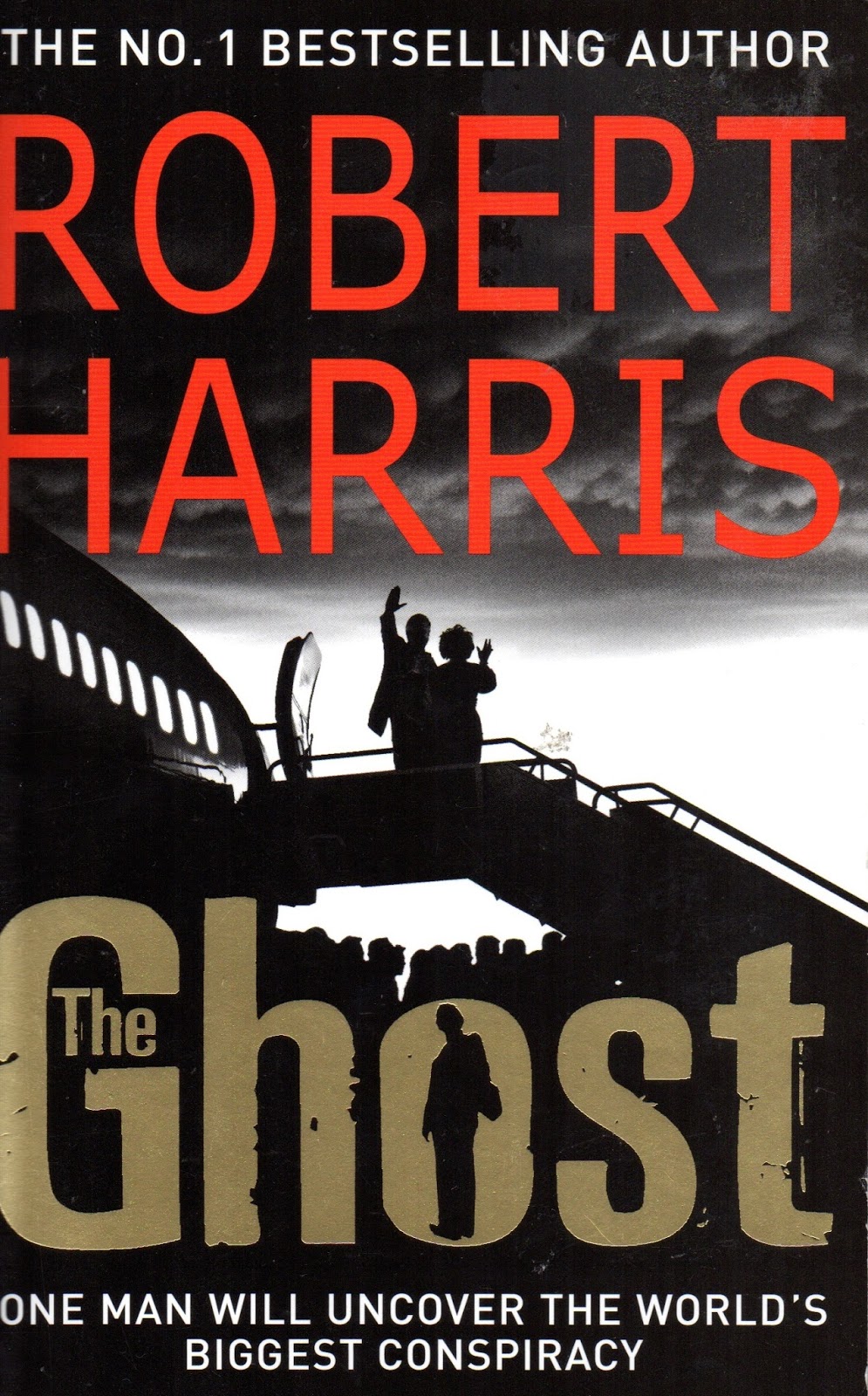
FFB - The Ghost

Robert Harris’ best-seller The Ghost (2007) gripped me from beginning to end. And what a beginning: ‘The moment I heard how McAra died I should have walked away. I can see that now.’

Mike McAra was the political friend and ghost writer of Adam Lang, Britain’s former prime minister. Sadly, McAra’s body was washed up on the American coast. So the unnamed narrator gets the job; it pays well, after all. He felt a slight unease about taking over from the dead man: ‘But I suppose that ghosts and ghost writers go naturally together.’

From that foreboding start, we get sucked in to the claustrophobic millionaire’s holiday home in Martha’s Vineyard, where the narrator meets Lang and his wife Ruth, the devoted fixer, Amelia and assorted bodyguards.
 
The style is deceptively easy, laced with humour, and the odd dash of cynicism and irony. The fictitious publishing company who paid the advance is Rhinehart. It ‘consisted of five ancient firms acquired during a vigorous bout of corporate kleptomania in the nineties. Wrenched out of their Dickensian garrets in Bloomsbury, upsized, downsized, rebranded, renamed, reorganised, modernised and merged, they had finally been dumped in Hounslow…’

The book is set very close to 2007, when Al Qaeda terrorist bombings are not only a real threat, but actual occurrences. There are questions being asked about the extraordinary rendition of four British citizens from Pakistan to Guantanamo Bay, and the use of waterboarding to torture prisoners. The ex-PM is accused of committing an illegal international act, namely authorising the abduction of those four men. So he is being hidden away in Martha’s Vineyard in order to complete his memoires. [Echoes resonate even now, as British so-called IS terrorists are vaporised by a drone’s missiles.]

‘Heathrow the next morning looked like one of those bad science fiction movies set in the near future after the security forces have taken over the state. Two armoured personnel carriers were parked outside the terminal. A dozen men with Rambo machine guns and bad haircuts patrolled inside…’(p41)

Harris is a good observer, giving us splendid description and can turn a good phrase. For example: ‘New England is basically Old England on steroids – wider roads, bigger woods, larger spaces; even the sky seemed huge and glossy.’ (p48) Another excellent example: ‘… passed a marker buoy at the entrance to the channel swinging frantically this way and that as if it was trying to free itself from some underwater monster. Its bell tolled in time with the waves like a funeral chime and the spray flew as vile as witch’s spit.’ (p50)

And he’s not without his humour, either: The bar ‘was decorated to look like the kind of place Captain Ahab might fancy dropping into after a hard day at the harpoon. The seats and tables were made out of old barrels. There were antique seine nets …’ (p95)
 
Insightful writing, too. Read this passage – ‘… it’s curious how helicopter news shots impart to even the most innocent activity the dangerous whiff of criminality.’ – and wonder about the heavy-handed police raid on Sir Cliff Richards’ house, which happened several years later than the publication of this book.
 
Writers too will empathise with the narrator, for obvious reasons: ‘Of all human activities, writing is the one for which it is easiest to find excuses not to begin – the desk’s too big, the desk’s too small, there’s too much noise, there’s too much quiet, it’s too hot, it’s too cold…’ (p180)

Those excerpts give you a little flavour, anyway. The Ghost is well written, in turns amusing, witty, thoughtful and incisive concerning the corruption of power. Despite the fact that we know there wasn’t a prime minister called Adam Lang, his wife Ruth etc., the first person narrative manages to suspend disbelief.
 
If you enjoy the drip-feed of tension rising towards paranoia, then you’ll appreciate this skilfully written novel.

Some of the paperback’s review quotes seem adrift. ‘An unputdownable thriller about corrupt power and sex…’ – the sex is minimal and not graphic in the slightest: the door stays closed.

‘Guaranteed to keep you awake and chuckling after dinner.’ – Does the reviewer usually sleep during dinner? It has many amusing asides and one-liners (as hinted at above), but it isn’t a comedy.

‘… satirical thriller…’ – The thriller elements are minimal, and only evident towards the end. It’s more psychological suspense up to that point.
 
‘Truly thrilling.’ – No, it isn’t. It is tense, however, and most convincing, with an excellent twist at the end.

Highly recommended.

Wednesday, 2 September 2015

Writing - thirty years of word-processing!

There’s an interesting article about the 30-year anniversary of the Amstrad word-processor in the Guardian here.


Like many a writer of long tooth, I used the first Amstrad word-processor with Locoscript and its dot-matrix printer, to write short stories and novels and ultimately a short story magazine, Auguries here.
 
Before that, I used a Remington portable typewriter, which travelled with me in my naval career. Having self-taught myself to touch-type, I improved my speed in the Royal Navy, which proved useful ever after.

There are plenty of authors who prefer writing in long-hand, and there’s nothing wrong with that, though it is quite laborious. There’s supposed to be this physical-mental symbiosis between mind and hand when wielding the pen. I imagine there can be; but it is no more immediate than fingers dancing across a keyboard almost as fast as thought.

I don’t think it’s apocryphal: I read somewhere that Frederick Forsyth buys himself an old-fashioned typewriter before he embarks on a new book. Of the old school. I remember those sit-up-and-beg mighty machines; you could train for the Olympics, simply by working the carriage return. And the rough Atlantic Ocean played havoc with typing, as the ratchet slipped during a prodigious swell.

I may be nostalgic about those times, but no, I don’t miss retyping entire books, carbon copies, ink rubbers, correcting fluid and Tipp-ex.

I eventually migrated on to a PC and purchased a PC-compatible Locoscript application, because there were many features I liked, and I wasn’t so keen on WordPerfect. That meant that eventually I could migrate all my written work to future PCs, which saved a lot of retyping. [Sad sign of the times, my spell-checker doesn’t recognise ‘Locoscript’…!]

Thirty years? Blimey. They went fast.