Search This Blog

Showing posts with label immigrants. Show all posts

Thursday, 28 July 2016

Book review plus - LIFE IN RUSSIA


Michael Binyon’s view of Russia, published in 1983 is useful for my research purposes, as I certainly wasn’t able to go there at the time (since I was serving in the RN). Binyon was a correspondent for The Times 1978-1982.

Naturally, since the wall came down in November 1989 and the USSR dissolved in December 1991, much has changed. Yet the people are probably not that different now.

The book is written with genuine warmth for the Russian people. He uses the term ‘Russian’ to simplify the fact that the USSR is a vast mixture of countries, cultures and ethnic groups. Some of the statements are prescient, though at the time of writing Binyon never conceived the breakup would occur. ‘The Soviet Union is a world of its own. But it is a world its rulers ever fear will fly apart into disparate fragments unless they keep a very tight grip.’ (p4)  Here and elsewhere, with hindsight you could easily substitute the European Union to observe strong parallels!

The recent doping scandal relating to the Olympics springs to mind when I read this entry:
 ‘Russians respect power and authority, and most have a bully’s instinct to walk all over anyone who is servile and obsequious. The best way of doing business is to make your position and determination clear from the start, negotiate toughly but politely and ensure that face is not lost…’ (p4)

And this has bearing, perhaps: ‘To a Russian, saving face is of great importance, and this Eastern characteristic colours not only individual actions but policies and attitudes in dealing with other countries. Indeed, many national policies can only be understood by reference to the Russian character.’ (p136)

For many years I was puzzled by the British trade unions’ affectionate dalliance with the USSR. Naturally, the Soviet authorities were keen to foster disruption in the West, and even suborned certain trade union members to do their bidding. Yet the picture, beyond the ‘official’ image presented to visiting union comrades was far removed from the freedoms enjoyed in the West:

‘Not one of the estimated 130 million Soviet trade unionists has ever gone on strike.’ (p27) One has not to wonder why. In 1977 a number of sacked workers got together to form an ‘independent’ union. The KGB exiled the leaders from Moscow, questioned, harassed, arrested and sent several to psychiatric hospitals. Three years later, the rise of Poland’s Solidarity movement caused Brezhnev to launch an attack on union officials for laziness and indifference to their members’ needs, turning the union leaders against their unions, using the unions to police their members in effect, for the communist cause. This was typical Russian double-think.

The union can be a deadening influence, stifling innovation, free thinking. ‘The task of the officially organised unions of artists, writers and musicians is not to promote their members’ interests, but to ensure their members stay in line.’ (p113) ‘All land in the Soviet Union is nationalised’; people can own homes, but not the land.

The propaganda had it that the country benefited from full employment. Yet there were thousands of workshy (many with false documents who have abandoned families and responsibilities). ‘Factories are only too glad when poor and disruptive workers quietly disappear. Rather than report their absence,  they allow their names to remain on the factory register, thus conveniently enabling the factory to draw state money for salaries, which are diverted straight into the management’s pockets to be used for the inevitable bribes and pay-offs.’ (p33)

I wonder how many 1980s Marxist-Leninist students would have been keen to study in the USSR. ‘University or college graduates are sent to remote villages for the obligatory two year first posting which every Soviet student faces at the end of his studies. For many, it is like banishment.’ (p196)

I was also interested to read: ‘The Academy of Medical Sciences has long been carrying out full-scale research into para-psychology, telepathy and bio-rhythms, a favourite topic of popular scientific journalism.’ (p53) See my earlier blog posts on Soviet psychic research.

Drunkenness was a big problem and accounted for absenteeism and accidental deaths, and marital and family breakdown.  ‘In the Ukraine, several mines run daily checks for inebriation among the miners as they report for work. Traffic police have also urged tougher penalties for drunken driving, which is already severely punished, and in recent years a number of people causing fatal accidents while drunk have been shot.’ (p63) Severe punishment indeed – but did it reduce the incidence of drunk driving? The book doesn’t say – and doubtless statistics were not available.

The Russians are avid readers, though found it difficult to get their hands on books (other than official tracts, presidential speeches and the like. I can’t imagine poets filling Wembley Stadium, yet Poet Andrei Voznesensky gave a reading to 80,000 people in a football stadium. ‘His latest collection was published in an edition of 200,000 and sold out immediately.’ (p109) Sales to dream about, indeed!

Voznesensky would retreat to the Georgian village of Peredelkino, south of Moscow. This is the official writers’ colony. Pasternak lived here for many years and is buried in its cemetery. Binyon spotted a man in a grey raincoat standing near the monument (to Sergei Yesenin, poet, Isadora Duncan’s lover); the man took off his hat and recited some of Yesenin’s poems. Others present clapped. This echoed in my mind – scenes from Fahrenheit 451.

Greek myths and Herodotus were best-sellers; new editions of Tolstoy sold out immediately. ‘Even during the anniversaries of Tolstoy’s birth, or Dostoyevsky’s, their works could not be found. Pushkin, Gogol hard to find…The most heavily forested country in the world has to limit its newspapers to four or six pages because of the paper shortage… painful lack of toilet paper, a commodity that has achieved an almost mystic value to those who tire of the discomfort and irony of using Pravda..’ (p170)

Surprisingly, perhaps, the Soviet press was campaigning, hard-hitting and effective, not afraid to hound racketeers and the guilty – according to the party line. Appeals in the paper Pravda could work: a resident of a village where the only shop was closed complained; a party delegation investigated and within hours a shop was opened there…

Soviet historians estimate 20 million Russians perished in The Great Patriotic War (WWII). In the Ukraine alone 20,000 villages were destroyed. ‘Even now at least half a dozen elderly people are shot each year for war crimes or collaboration with the Nazis.’ (p125)

Party members and grandmothers alike state: ‘Let there be no more war’ and the toast at every official dinner is always ‘to peace’. I’d be inclined to believe that this is still the same now; the people don’t want war, but they don’t want to be walked over either…

Binyon wrote about the little Byelorussian village of Khatyn where The Black Death SS herded 74 adults and 75 children into a barn, doused it with petrol and set it alight. One man was away at the time; Joseph Kaminski returned to find his young still alive among the charred bodies. He picked him up and the boy died in his father’s arms… a bronze statue of Kaminski carrying his dying son and staring in blank horror straight ahead stands at the entrance to Khatyn (where nobody now lives).  This is not to be confused with Katyn, where Polish officers were massacred by Stalin! (p126)

Most Russians accepted the official version of the war: it was a Russian victory over fascism, and the Soviet intervention in Manchuria forced the Japanese to surrender; there was no mention of the atomic bombs… Little or nothing was ‘said or written about the extensive American war aid, or the British convoys to Murmansk. No official memorial has been erected in that Arctic city to the allied sailors who lost their lives.’ (p127) [Since this was written, Russia pressed for the Arctic convoy veterans to be honoured with a Russian medal, but government intransigence didn’t permit it – until 2013, a year after they were belatedly presented with the British Arctic Star.]

Binyon refers to a book Through Russia on a Mustang (1891) by Thomas Stevens and offers a brief excerpt, which offers traditions, beliefs, and adventures of a witty character. It was out of print when quoted. Happily, there are several reprints available now; here’s one

There’s a brief mention of Mikhail Gorbachev, ‘the young agricultural expert in the politburo, has distanced himself from the food programme, and is presumed to have pushed for something more radical.’ (p199)

The following two passages strongly suggest the malaise that is the European Union (replace ‘communist party’ and Soviet Union with ‘EU’, perhaps: ‘The communist party is a single, monolithic organisation, and local government has only limited powers. But the Soviet Union is the world’s largest and most diverse multi-national state, and without a very firm structure and tight control at the centre, it would probably split apart into dozens of separate competing units. Regional and ethnic nationalism is strong and is growing, and despite the much-trumpeted official picture of a big, happy, harmonious family, there are tensions and quarrels beneath the surface, which are suppressed only with difficulty.’ (p206)

‘From travels in nine different republics, my impressions were strongly reinforced that the diversity and variety is such that no amount of centralisation can mould a single type of ‘Soviet man’, even if that were the aim – which increasingly is recognised as unrealistic.’ (p206) Homogenising people doesn’t work – they have their culture, belief systems, traditions and history.

Another example comes from Latvia: Russians, Ukrainians and Belorussians flooded into Riga because of the higher standard of living, and brought Russification in their wake. When the non-Latvian population reached 800,000 out of a total of only 2,500,000 in all Latvia, further immigration was stopped.’ (211) Freedom of movement within the USSR (by party pressure) created an immigrant crisis.

And we’ve seen how Russia deals with the fundamentalist Islamic issue. The State’s atheism does not sit comfortably with Islam.  Science and Religion said the home mosques supported social customs that were incompatible with modern social life, including blood feuds, the abduction of brides, the marriage of underage girls and polygamy…’ (p245)

This is a fascinating and thought-provoking book, a glance back in time, when the Cold War was thawing then heating up, as East and West attempted to accommodate the other, neither side wanting more global conflict. The Soviet Union could not sustain its vast empire and it took the realist Gorbachev to understand that. What followed was another completely different ball game – but throughout the period, from the time of this book to the present, the Russian people have found the changes in their lives bewildering and unsettling. Certainly, the independent states seem keen not to go back.


Monday, 7 September 2015

'Lives in suspension'

Illegal immigration across the Mediterranean has been an issue for a long time. Yesterday, I mentioned a pile of Traveller magazines I was browsing through prior to disposal.  In the May-June 2005 issue, there’s a photo-article by Matias Costa showing the plight of migrants entering Italy illegally by boat. Here are a few passages selected from the article:

Immigrants packed into a tiny vessel travel under cover of darkness…

Landed at Lampedusa before going to a reception centre in Palermo…

The sea crossing is so fraught that Italian newspapers have described the stretch of water between Africa and Sicily as a huge underwater graveyard.

Sound familiar? Ten years ago!

In the same piece, also:

George Alagiah, BBC News Presenter: ‘If water is a force of nature, then migration is a force of history. The challenge is not to try to stop it but how to manage it.’

Kofi Annan, UN Secretary General: ‘For millions of refugees and displaced people around the world, ‘home’ is a place they have fled from in fear of their lives, in a desperate attempt to find safety.’

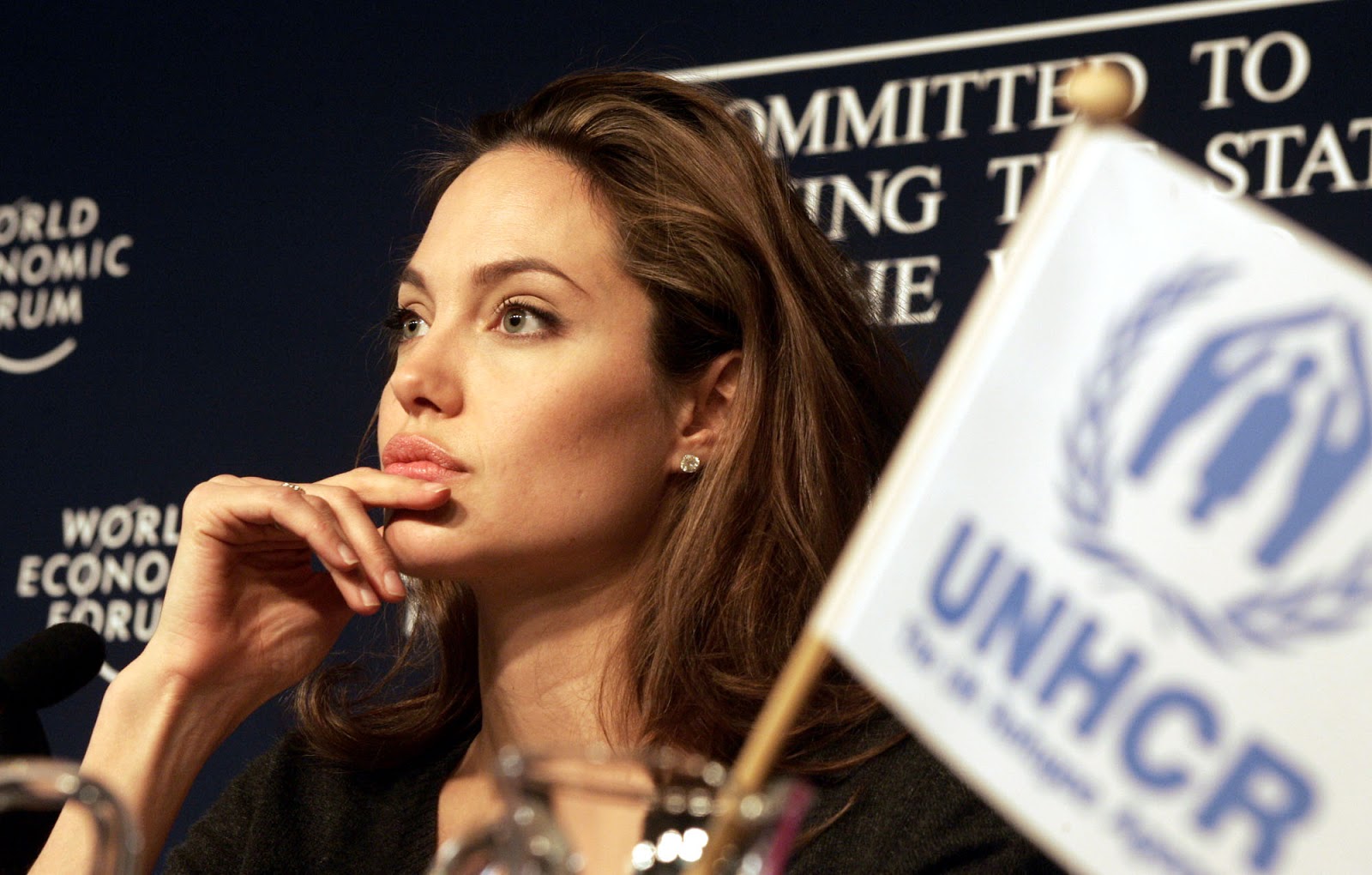
Angelina Jolie, UNHCR Goodwill Ambassador: ‘Statistics tell only part of the story – behind the figures are families struggling to survive… all those lives in suspension for years and years.’
 
Brunson McKinley, Director of the International Organization for Migration: ‘Migration will be one of the major policy concerns of the twenty-first century.’

Then, the UN estimated there were more than 17 million asylum seekers and refugees worldwide. And that was before the appalling fighting and displacement in the Middle East and North Africa in the last few years, and the rise of the medieval so-called IS.

The writing was on the wall ten years ago.  And what has happened? It’s now much worse.

Until the continent of Africa is deemed safe from terror, the ‘great escape’ will continue.

Saturday, 5 September 2015

Saturday fiction - 'Immigration crisis' - an excerpt

The immigrant crisis has dominated the news for many days, yet it has been a problem for years. The numbers of the dispossessed have vastly increased, true. What do they hope to find when they get to their destination? Yes, many are only too glad to feel ‘safe’, having escaped from terror, hate and the threat of death. Yet, despite the slave trade having been abolished for centuries, it still exists – fuelled by the unfortunates who seek a ‘new life’. Every day, refugees, immigrants, and the homeless will be sucked into illegal work by opportunists.

Today’s fiction excerpt from Blood of the Dragon Trees concerns this serious issue.

[Jalbala Emcheta. Conservationist. 6ft 2ins, skin mahogany, close-shaved head, coal black hair; high-domed head; full lips, marvellous smile. Almond-shaped eyes. Ebony – very dark brown eyes. Broad nose with flaring nostrils. Lantern jaw, high cheekbones, pearly teeth. Iron-muscled body, massive shoulders, pronounced biceps, defined pecs, washboard stomach. Voice – bass.

Jalbala is an associate of Andrew Kirby; they work for CITES. While investigating in Tenerife, they’re led to a network of people smugglers. Jalbala sneakily joins a group of fresh ‘recruits’ brought ashore from a smuggler’s boat, intent on obtaining incriminating evidence… ]

The week was a long ordeal of starvation rations, hard labor and a few minor beatings, but Jalbala stoically accepted his lot. His body ached in every muscle, mainly from work, but he was determined to fit in.

Including him, there were twenty-two in the new group, so Mustapha had been accurate on that point, too. It seemed that the rest of the group hadn’t noticed the switch. They were probably – and understandably – wrapped up in their own fate at the time.

            Some days he was put to work in a field, picking melons. The open air was preferable, but the sun quickly sapped his strength and gave him a pounding headache, the first signs of dehydration. In the fields, Jalbala got to know the woman he’d pulled out of the water. Her name was Nadira. She was twenty-four and had left her two young boys with her parents. Her husband had been killed and she wanted to fend for herself. ‘Europe is where I will make money and bring my children up,’ she told Jalbala with conviction.

Other days, he worked under immense sheets of plastic. Within these greenhouses, he found it difficult to breathe in the very humid 140oF. Light and heat seemed to radiate from every surface. The days melded into an amorphous mass of time within Jalbala’s surreal world, where the sky was white, suspended by arched wooden ribs, just inches above his head.

Toiling in the suffocating greenhouses, Jalbala made friends with one of the men who’d been landed from the ship. Talking made them even more breathless, but Jalbala needed information and Jope was glad to pass the time while doing monotonous work.

Jope spoke French. He was Senegalese, with a wife and a five-year-old daughter. He’d been an electrician, earning £25 a month.

            ‘Why talk in British pounds?’ Jalbala queried. ‘Your currency is francs, isn’t it?’

            Jope shrugged. ‘I don’t know why, but they preferred discredited pounds, rather than our francs or euros.’

            He went on. He’d been enticed by a friend who said that in the Canaries he could earn at least £1,000 a month. ‘I decided to improve my family’s lot. I spoke to my wife and we agreed. I took our family savings and went to the coast.’ He eventually caught a ship sailing from Dajla in Mauritania. ‘I want a house and I want to educate my children,’ he told Jalbala. ‘The journey cost £800. I worked for three months to add the wages to our savings.’

            Jalbala felt for the man. The money that ruled – and ruined – Jope’s life, was peanuts to the majority of people in the UK or the States. Everything was relative, he supposed. Both the States and the UK were still hurting from the credit crunch and massive borrowing. Yet he’d seen in England that large sections of the workforce were still intent on striking for higher wages. What planet were they on?

            ‘Why do you ask so many questions?’ Jope said.

            Really good question, Jalbala thought. ‘I’m a reporter. I want to expose the people who put you through this.’ He only wished that was true; maybe some aspects of it could be.

            Somewhere near, guard dogs barked and Jalbala knew that not far from their side strode sadistic men with pickaxe handles and baseball bats.

***

Jalbala’s stomach growled. After days of poor food and backbreaking work, he felt drained, weak, weary, and he ached all over. He was fit and strong, but the others weren’t, so he had no idea how the women coped.

            He worked in the fields, a huge plastic collecting basket strapped to his back. As he’d been shown, he sliced off melons and slung them over his shoulder to land in the basket. After a while, their combined weight started to tell, threatening to rip his shoulders off. The field was filled with his fellow illegals, women and men. Nadira, the woman he’d pulled out of the water, was over on his right, Jope on his left. They both bowed with a will, determined to work towards their freedom.

            A wave of depression swamped Jalbala as he realized they were being duped. They’d never get legitimate papers. Food and so-called lodging would be deducted from their miniscule wages; complications would arise over the required forms. They’d be made to work till they dropped, and then Black Beard or one of his men would come along with a baseball bat to encourage them to work some more.

            Already, one of their tent walked with a serious limp, thanks to ‘encouragement’ from a guard. Jalbala decided he could not wait much longer. He’d noticed a couple of guards watching him, as if making sure he pulled his weight. The slightest excuse, they’d give him a good hiding, and it might be so harsh he wouldn’t recover fully from it. Commonsense and honest fear told him he couldn’t delay more than a week. He must get the evidence soon.

***
He and ten other men occupied Jalbala’s tent; the women were accommodated separately. He waited until everybody in his tent was asleep then silently rose from his bedroll and tiptoed over the sleeping bodies of his fellow immigrant workers.

Hardly daring to breathe, he reached the tent flap and eased it aside. The sentry dozed, which wasn’t surprising; after the first two nights, all of the illegals seemed resigned and incapable of fighting a way out. Besides, they had to continue working to earn the official papers they’d been promised.

            Feeling the tension in every muscle, Jalbala stepped out. Nobody else was anywhere near. He slunk into the shadows and headed to the east section of the plantation. 

            As he moved, he listened.

But there was only the constant sound of cicadas. No dogs growling anywhere near.

            He reached the fence barrier and found a suitable spot, near a cluster of banana plants.

Cicadas close by stopped their racket for a few seconds, then, apparently satisfied they were not under threat, they resumed their loud noise.

Barbed wire sections overhung the other side of the fence.

He removed his right shoe and prized the heel free. It swiveled to reveal a hollow occupied by a plastic sealed miniature transmitter, its tiny light emitting a red flash.

            It only took a few seconds for him to bury the transmitter behind one of the young banana plants, by the fence. He covered his tracks, sure he could find the plant again tomorrow in the dark.

***
‘The signal pinpoints this position,’ Kirby said, pointing to the map on the lieutenant’s desk. ‘Next to the boundary fence.’ He sounded unusually cheerful. For the last few days, he’d seemed very quiet, withdrawn, almost depressed.

            Vargas slapped Kirby on the back. ‘Good. I’ll get Sergeant Alvarez to drive you to the spot.’

            ‘Well, make it close to the spot, Lieutenant. We don’t want to alert them.’

            Vargas nodded. ‘Just so.’ He picked up his desk phone. ‘You know, this might work.’

            ‘I hope so.’

            ‘Send in Sergeant Alvarez,’ Vargas said into the phone.

            Sí, teniente,’ came the reply.

            A sudden heaviness descended on his chest as Vargas replaced the receiver. ‘Until now, Jad has been taking a risk,’ he said. ‘Once he gets the delivery, that risk multiplies tenfold. If they catch him…’ He shook his head and held the worried eyes of Kirby. ‘Well, it will not be pleasant, I assure you…’

           ‘No, I guess not. I don’t think I’ll be sleeping for the next couple of nights,’ Kirby confessed.

***
The next night, Jalbala slunk out of his tent again, the only sound the raucous buzz of cicadas. He made his way to the banana plant where, hidden behind it, was a small canvas bag. His heart gave a slight flip of pleasure as he picked it up. He quickly checked that the handheld video camera, cushioned within a thick roll of bubble-wrap, was intact. Clearly, their plan worked. Kirby had tracked the transmitter accurately and lobbed the bag over the fence, probably earlier tonight.

He tucked the bag under his shirt and made his way to the tent. Now for some interviews.

            When he got back, he gently shook Jope awake.

            ‘I’ve got the camera,’ Jalbala whispered. ‘Are you still willing to speak?’

            Jope nodded.

            ‘And have you found anyone else who will speak?’

            ‘Yes.’ Cautiously, Jope clambered over the sleeping bodies and shook two men awake. He whispered to them and they nodded.

Jope and the others had spoken in measured tones about their mistreatment and how they came to be there. Jalbala got Jope to film him and he presented his testimony, too. Gradually, however, others in the tent woke up due to the sound of voices. Despite exhaustion, many of the workers were light sleepers, as if keeping one ear cocked in case there was an official raid. They’d all been told to disperse in every direction if the police descended on their plantation.

They were very tense moments and Jalbala’s pulse seemed to race on overdrive, but no alarm was raised. Yet the rest inside the tent shied away, giving the four of them wary glances. He hadn’t appreciated that not all the illegals would condone his actions. As far as they saw it, this was their chance to get a well-paid job. Nothing he said derailed them from that belief.

Jalbala considered breaking into the women’s tent for more evidence, but discarded the idea as foolhardy. Maybe Nadira would speak on camera, but his presence in the tent might cause concern or even alarm among the other women. He couldn’t risk it.

            After filming, he decided to take the camera in the bag back to the banana plant and lob it over the fence. On a number of days, there’d been evidence of searches in the tents. He had no idea what they were looking for; maybe drugs, or written notes.

            Most of the occupants in the tent were still awake when he left. The second journey to the fence seemed to take much longer. Maybe because he was carrying incriminating evidence, evidence that could cost him his life.

            Once at the banana plant, he stood still, listening. Nothing. No voices, no footfalls. The cicadas had stopped. They had last night, too. But for some reason they were keeping quiet. Why? Getting paranoid, he told himself, and lobbed the bag over the fence. He heard it land but couldn’t see it. Somewhere in the shadows. He hoped Kirby found it. Would he check for it tonight? If he didn’t, would it be visible to any of Black Beard’s men tomorrow? He had no way of knowing. He must trust to luck – which abruptly seemed to run out on him.

            A powerful torch beam blinded Jalbala.

            ‘Trying to run off, eh?’ The voice belonged to Black Beard, somewhere in the dark behind the torch.

            Jalbala raised his hands and slowly edged sideways away from that section of fence. Let them think that, he thought.

            ‘Come on, step forward,’ said Black Beard. ‘Accept your punishment like a man!’

            Jalbala heard the slapping of a hand against the wood surface of a baseball bat. I never was a good sportsman, he thought.

*

Blood of the Dragon Trees published by Crooked Cat Publishing as an e-book and paperback

Some review excerpts:

‘This is a breathless read - totally satisfying.’

‘Set on the idyllic holiday island of Tenerife, the novel exposes how illegal traders in endangered species and also human trafficking, thrive on making a massive fortune from their disgusting activities there…  a masterfully written fictional story based on these appalling facts - a thriller and romance rolled into one that draws you in with plenty of suspense and fast paced action. Each chapter ends with a hook leading you eagerly on to the next. The characters and all the location settings on the island are colourfully realised.’

The crimes are appalling, the characters well drawn and credible, and the settings superb.’

‘What a fantastic fast-paced read this is! The plot twists and turns and keeps us guessing.’

Nik Morton’s experiences and his writing put the reader in the novel and I felt like I had physically and emotionally travelled hand in hand with the characters through their arduous ordeals.’

Amazon COM here

Amazon UK here

Thursday, 26 August 2010

Spanish Eye - front cover story

Pleased to see that The New Coastal Press monthly magazine is featuring one of the 21 stories in Spanish Eye - a shorter version - plus plugging the book. The nice thing about it is that the magazine's cover illustration is for the story, 'Adopted Country'.

For a couple of weeks, you can access the magazine at the link shown below. If you want to read it at leisure, then I'd advise you download it. The story is on p16.

http://www.newcoastalpress.com/PDF/New%20Coastal%20Press%20Agosto%202010_web.pdf