Search This Blog

Saturday, 19 September 2015

Saturday fiction – ‘Tidy burglars’

This excerpt is from Chapter 5 of Sudden Vengeance, published in paperback and e-book format by Crooked Cat Publishing, available at the usual outlets. [I could have used the first chapter or two from the book, but they're available to read for free on Amazon anyway.]
 

                          Youth Let Off
                          Judge Wallside dismissed the case against Steven Campion, 17,
                          charged with sexually assaulting his neighbour’s six-year-old girl.
                          “I understand that while you babysat, the girl was provocative in
                          her nightdress,” the judge said.
                          The parents of the child intend to appeal.
                          A Child Protection Agency spokeswoman said, “This sends out
                          entirely the wrong signals. The judge’s comments were
                          wholly inappropriate.”
                          – The Alverbank Chronicle
Tuesday

Hunched over the Formica table, his small bony frame angular and dejected like some wilting flower, Ben Morrison sat in the kitchen, staring at the mail that had floated to the doormat minutes after his wife, Mary, popped out to catch the bus to Pompey. She was visiting her old friend, Jane. She’d said that on her way back she’d drop in on the corner shop to get a carton of milk – “cheaper than from the milkman”. Unspoken was the fact that they needed to watch the pennies because they had no pounds to look after themselves.

Fingers trembling, he slit open the envelope and, though expecting it, he still could not believe the building society intended to repossess their house.

He must have read the formal letter about ten times but it was still the same, though the words began to swirl in front of his eyes.

A terrible gnawing emptiness settled in his stomach. He removed his spectacles and nervously rubbed his eyes and creased brow. A stray lock of greying brown hair fell across his vision. At least I’ve got all my hair, he thought sanguinely. I’ve got little else!

Wasn’t it enough that he’d lost his job, after all these years? No, the society’s managers weren’t running a charity but a business. They didn’t care about people, not really, only their shareholders and dividends... Market forces, that was it. Just like warfare, he thought, and I’m one of the casualties in the bloody infantry!

Last night’s Alverbank Chronicle lay open on the table. To save money he only got the Thursday edition now, for the job vacancies. Face-up, a quarter-page building society advertisement exhorted first-time buyers to take their special offers, to be sucked into the lender’s unfeeling maw, while houses were taken away from existing customers at an unprecedented rate. The small print exonerated them from responsibility or compassion: “your house might be at risk if you cannot keep up payments”.
 
The redundancy money – all £10,000 of it! – had paid off a couple of credit cards and they needed the rest to survive until another job – he laughed – came along. Though it wasn’t likely, ageism was so rife and he was all of fifty-two.
 
Perhaps the building society was right in their assessment. Maybe he was a lost cause, a risk they’d prefer to jettison. He might never get another job, even if the economy perked up. He might never earn enough to repay the loan, at their usurious rates. And, to think, his taxes helped them get out of the mess they had got themselves into!
 
Whatever Mary and I scraped together over fifteen years to pay off the interest will be lost.

He’d worked for a home over their heads, a future for their retirement, but even that had been a house built on sand: the government destroyed his private pension, made it virtually worthless. In fact, all those pension funds had been used to bolster up the top-heavy creaking government machinery of state. All he’d accomplished was to pay out interest to faceless financiers who squirreled away obscene bonuses. Now they had nothing.
 
Ben crumpled the damned standard apology letter into a ball and flung it across the kitchen. It landed on the draining board, amidst the breakfast cereal bowls and mugs. Absently buttoning his fawn cardigan, he walked over and brushed the offending paper on the floor. He used too much washing-up liquid, bubbles overflowing, and when he immersed the dishes he scalded his hands, forgetting to let cold into the bowl. He thrust his fingers under the cold tap then, in violent agitated movements, he washed the dishes.
 
His mind seemed full of cotton wool, like that morning when he drove back from his job in Havant for the last time. He still marvelled how he had managed to arrive home without being in an accident on the M27, because the entire journey was a blank.
 
To be fair, he’d been warned of the possibility of redundancy. And Steve, his shop-floor manager, had been sympathetic about it. The personnel chap, Dave, he’d been understanding, offering to pass on any vacancy details he got wind of, and they would cover the cost of his postage and phone calls that related to his job search. Never did, though, did he?
 
Yet the humane approach still couldn’t lighten the dull dead weight in his chest and, worse, his mind.

Then, he’d wondered how they would manage. Now, he realised, they couldn’t.
 
Ben stared out the kitchen window. Mary’s rockery was looking unkempt. Some of the heather had died. The miniature firs were scorched with frost. Winter was not the best time of year for gardening, he supposed. Not the best time to be left homeless, either. With no family to fall back on, he felt lost, useless. No job, and now no bloody home! He’d failed Mary and most of all himself!
 
God, he thought, I can’t put her through this!
 
He kicked the pedal bin.
 
When he finished stacking the dishes on the worktop, he opened the cutlery drawer and, about to dry the spoons with a tea towel, he noticed his screwdriver and chisel in the side-compartment. “Handy for any quickie jobs,” he constantly explained when Mary Spring-cleaned.

His mouth went dry.
 
Ben picked up the chisel and glanced at the garage access door.
 
*** 
Gulls screeched and fought over food scraps and pecked at a clutter of cardboard boxes on the pebble-covered shoreline.

From the police station’s office window Paul Knight watched them, his thoughts momentarily transported to the graveside.

In complete contrast to the scavenging birds, the station was relatively quiet. He’d had a busy day and didn’t want to meet too many officers. Most had handed over their duties and left. Paul was grateful for that. The first day back after a death or a funeral was awkward for all concerned. The constant expressions of sympathy, while well meaning, wore you down.

Earlier, Detective Inspector Traynor had called Paul into his office. After offering his condolences, he explained that the case officers, DS Rafferty and DC Brookes, might have a lead. Traynor’s long drawn features were lined, the eyes puffy with lack of sleep. Some years back he must have been a handsome man, yet now he seemed haggard. “A bit too soon to commit ourselves, Knight, but we’ll keep you informed of any progress.”

Detective Sergeant Muir had come in to commiserate, too.

“Thanks for attending the funeral,” Paul said.

Muir was portly, his paunch the result of too many bar lunches perhaps, his lips thick and wet, eyes small, bright blue and evasive. He said in a gravel voice, “Oh, yes, think nothing of it, Paul. Now give my regards to your mother, will you?”

“Do you know her, Sergeant?”

“Oh yes, indeed. Met a few times, at the Adult Education Centre. Nice lady.”

“I see. Yes, I will. And thanks.” Paul wondered what Muir had studied but was not inclined to raise the subject. Mum had done art, life-drawing, but couldn’t master the foreshortening perspective, she said, so she gave up, which was unusual – she never gave up on anything else, she wasn’t the sort. As it was while Dad was unemployed, maybe she didn’t want to pay out for any more term-fees.

Paul pulled his attention from the window and the seagulls, and watched Sue White, one of the civilian staff, as she inserted a blank Incident Log form – quadruple carbon-impregnated paper – into the computer.
 
Three of his reports down, one to go, he mused ruefully.
 
The day had been typical: four burglaries, taking down statements, completing the Property Taken form (in duplicate), feeling anger at the sight of the wanton destruction left in the wake of the culprits. Prized possessions trampled underfoot, carpets fouled, drawers and cupboards damaged; the list was endless. And insurance was little compensation. At each crime scene, he kept getting flashes of Gran, of her flat...
 
Of the four reported break-ins he attended, only one seemed to be professional. They took the DVD player, two televisions, and a hallmarked silver cutlery set, but left everything else untouched.

While inwardly he boiled to think these people believed they had the right to steal, he found himself agreeing with the aggrieved pensioners that “at least they didn’t do any damage”!

What have we come to, he wondered, when we feel grateful for being robbed by tidy burglars?

***
I am doing the right thing, Ben Morrison thought. From time to time, he took his eyes off the road to glance at the chisel on the passenger seat. It seemed to offer reassurance.

He drove his old blue Ford Fiesta into town and passed a string of boarded-up commercial premises. There was the empty block once owned by Woolworths, its windows now covered by wooden boards plastered over with tattered old election posters. The only places doing any kind of trade were the fast food outlets and charity shops. The town’s heart had been plucked out of it. He knew how the town felt.

Everywhere were yellow lines – and the car parks charged, which simply dissuaded shoppers from visiting the town. By chance, Ben found a parking spot at the curb opposite the building society. He switched off the engine and waited.

It was dark when he pulled out from the kerb and followed the black BMW driven by Mr. Dilwyn bloody Upperton, the building society manager. A company car, of course, Ben thought. His own car repayments were already a month outstanding. It was only a matter of time before he’d lose that as well.

The car radio played Classic FM, but he didn’t hear; Mendelssohn’s music had no calming effect on him this evening.

He steered the vehicle almost in a dream, keeping the BMW just within sight as they negotiated the evening traffic and headed out of town.

After about thirty minutes, they turned into the new Barrett development on the outskirts, ‘Cormorant Nest’. Five bedroom homes, two en suite bedrooms, double garages, study, games room. Only Two Remaining, proclaimed the billboard.

He drove slowly past as Upperton turned into the wide brick-laid drive of a Georgian-style detached house.

Pulling in a little further down the narrow road, Ben glanced guiltily at the chisel. His heart pounded and his fingers trembled. He felt out of place here, amidst so much executive wealth. It was intimidating. Then he checked the gently curving road. Nobody about. A few porch lights shone with a buttery glow, but the street lamps offered poor illumination.

He carefully put the tool in the pocket of his green anorak and got out of the car. His outer garment rustled at every movement. Eyeing the street, he unzipped it, removed the chisel, put it in his back pocket and flung the anorak on the passenger seat. He didn’t feel the cold; too intent on what he felt compelled to do. No point in locking the door, he thought.

He made his way along the path towards the Upperton house, hurried across the open lawn and quickly slunk into the shadows afforded by a row of evergreen bushes leading up to the back entrance. His heart pounded as he climbed the wrought iron gate, and fleetingly remembered the last time he’d scaled a garden gate, when courting Mary! Then, they’d been young, with the prospects of a good happy future. A gust of cold air caught the area over his kidneys as the pullover rode up at the back. He shivered as he landed on the other side.
 
Within a few seconds, he was out of breath after running over soft soil to the shadows of a small wooden garden shed.

By the time he reached the back of the house, his shoes were quite heavy, caked in mud.

The lights were on in the kitchen, the downstairs lounge and also one upstairs room. Upperton’s probably changing out of his day clothes, he thought.
 
He peered through a gap in the curtain of the French window.
 
Upperton’s blonde wife was in a long lounge, playing with two boys whose ages couldn’t be more than six or seven. A loving domestic scene, which he cast from his thoughts and turned away.

His legs felt like jelly. It wasn’t too late to back off, to get away. Ben reached for the chisel’s firm smooth wooden handle. He moved towards the kitchen’s back door, momentarily warmed by the exhaust fumes from the central heating flue. The kitchen door was closed but unlocked, so he wouldn’t need the chisel after all.
 
He opened the door, stepped inside and, guiltily recalling the recent image of Upperton’s wife, he slipped off his muddy shoes.
 
Heart hammering, he crossed the cushion-floor of the fitted teak kitchen and tensely waited at the ajar door. Squinting through the opening, he confirmed the hallway was clear.
 
Soundless in his stocking-feet, Ben dashed through the hall and up the stairs, sweat pouring in fear as he expected someone to come out and accost him at any minute.
 
He was halfway up when he realised he should have stopped a second to yank out the hall telephone jack. Too late now, though. He continued on up the stairs.
 
Light only showed in the gap underneath one door, at the back of the house. His mouth was very dry as he walked across the landing and opened the bedroom door. The decor was predominantly peach-coloured.
 
Upperton was singing under a shower in the bathroom adjoining the bedroom.

Ben remembered Upperton’s cold, heartless letter of intent he’d received in the mail. Was it only this morning? Heart suddenly hardened, he stepped through the doorway and crossed the thick-pile carpet to the bathroom.
 
On the bed was Upperton’s business suit, discarded like an unwanted shell. Ben wanted to rend the material, cut open the bed’s mattress, but that would be mindless and Mary would never forgive him. No, he would deal solely with Upperton, show the bastard for good and all!

Gripping the chisel in his right hand, Ben pushed the bathroom door wide.
 
Ben Morrison wailed in despair and rushed straight at Upperton as the manager stepped out of the shower cubicle.
 
Overweight, his pink flesh wet and glistening, Upperton was transfixed. His eyes dropped to the weapon in Ben’s hand. He squeaked, “Who the blazes!”
 
Ben hurled the chisel away from him and it clattered noisily into the bath. Upperton flinched as Ben took a step closer, trembling with anger. “You people in your fancy posh houses!” he sobbed. “You have no idea the pain and worry you cause!” He took another step and shoved shaking hands at Upperton’s flabby chest. He pushed, the contact of his palms against cold clammy flesh unnerving.

Upperton exclaimed and overbalanced against a set of weighing-scales. His outstretched hand grabbed the shower curtain, tearing it and the rail down. Upperton fell heavily on the carpet floor, his belly and flaccid sex wobbling.
 
His heart hammering, Ben wiped his hands on his shirt, his throat dry. He turned on his heel and dashed onto the landing and down the stairs.
 
In a final act of frustration, he lashed out with his hand at a Chinese-style vase at the foot of the stairs in the hall. As it smashed on the floor, he wrenched open the front door.

“Dilwyn, what on earth is–?” Mrs. Upperton came out of the lounge and gasped. “Oh, my God!”

Leaving the door swinging open, Ben raced over the grass, the soft moist surface uncomfortable on the soles of his stocking feet. My shoes! But he kept on running.
 
He jerked open his car door and pushed the key in the ignition. He drove away, steering erratically, hands tight-clenched, eyes streaming.
 
He couldn’t do it.
 
Failed even in his attempt at retribution.
 
A complete failure!

***
NOTES:
Chapter headings carry news items based on real events.
Alverbank is a fictional town on the south coast of Hampshire, England.
The funeral was Paul's gran, her death as a result of a robbery.
The reference to Paul’s mother has dramatic repercussions later in the story.
Ben’s ordeal is not over yet, either…

Sudden Vengeance – paperback and e-book

 
 Amazon COM here

 Amazon UK here


Friday, 18 September 2015

FFB – Blood of the Dragon Trees

Sales of Blood of the Dragon Tree have decreased in the last few months, which I find puzzling since it has picked up a good selection of favourable reviews.

They say never believe your own publicity, and that’s true enough. Yet when reviewers use phrases like ‘difficult to put down’, ‘excellent holiday read’, ‘a breathless read’, ‘well-drawn characters’, ‘evocative descriptions’, ‘felt like I had physically and emotionally travelled’, ‘add another layer’, ‘a memorable villainess’, ‘emotive and gripping thriller’, ‘stomach-churning danger’, and ‘a visual feast’ I have to wonder why the book is still not finding a bigger readership. [I write to be read, not to become rich].

This is a problem with any so-called mid-list author – finding a wider audience. Word-of-mouth isn’t working, maybe. And, to be fair, there are thousands of books out there to choose from, so why pick this one?

What’s the book about? It isn’t a fantasy and there are no dragons in it. It’s a romantic crime thriller. The blood and gore is minimal, but it isn’t a cozy crime book either. Certainly, the subject of people smuggling is ever-present in today's news reports, and the book reflects several aspects of this.

Crime on the sunny island of Tenerife. Something to do with dealing in the products from endangered species and people trafficking...

Laura Reid likes her new job on Tenerife, teaching the Spanish twins Maria and Ricardo Chávez. She certainly doesn’t want to get involved with Andrew Kirby and his pal, Jalbala Emcheta, who work for CITES, tracking down illegal traders in endangered species. Yet she’s undeniably drawn to Andrew, which is complicated, as she’s also attracted to Felipe, the brother of her widower host, Don Alonso.

Felipe’s girlfriend Lola is jealous and Laura is forced to take sides – risking her own life – as she and Andrew uncover the criminal network that not only deals in the products from endangered species, but also thrives on people trafficking. The pair are aided by two Spanish lawmen, Lieutenant Vargas of the Guardia Civil and Ruben Salazar, Inspector Jefe del Grupo de Homicidios de las Canarias.

Very soon betrayal and mortal danger lurk in the shadows, along with the dark deeds of kidnapping and clandestine scuba diving…

Here are samples from a selection of reviews, gleaned from Amazon UK, Amazon COM and newspapers:

1) Blood of the Dragon Trees is a fast paced thriller and a book that is difficult to put down… but it is the characters rather than the crime that stand out in this book…
 
2) What a fantastic fast-paced read this is! The plot twists and turns and keeps us guessing… Morton has cleverly illuminated this text with his knowledge of Tenerife and of Spanish. Yet he does not overwhelm the reader with these details. They just allow the story to seem more real…I actually read the book whilst staying on Tenerife. That probably enhanced my enjoyment of the novel - many of the places mentioned I knew from this visit… It certainly made this an excellent holiday read on this beauty-endowed island.
 
3) We are introduced to some colourful characters as the flavour and nature of the island is revealed, and the hint of romance hangs in the air…There is also something deliciously sensuous about the description of Senora Pineda, the cook, vigorously slicing open a fresh wholemeal roll, her pendulous chest and upper arms wobbling with the cutting motion. And when she lops off thin slivers of cucumber and places them on top of the cheese and tomato, why do I think of knives, and blood, and sliced flesh? This is vigorous, dramatic writing, and sends shivers down my spine. Another scene where Laura takes a bath is blissfully described. These gems give pause while the story races on, scene giving way to action-packed scene, where neither the characters nor the reader knows exactly what is happening or why. Despite the danger, with surprisingly little bloodshed, the Dragon Tree wins out, and the cleverly crafted story comes to a surprising but credible close. This is a breathless read - totally satisfying.

4) When Laura Reid, a linguist, comes to work for the Chavez family in Tenerife, she cannot imagine the terrifying twists and turns her life will take… crimes committed by the well-drawn characters on this seemingly peaceful and beautiful island. Lots of pace, a really good yarn and a skilfully painted picture of Tenerife made it an excellent read.

5) Visitors to the Island of Tenerife will recognise the beauty of the island in Morton's evocative descriptions of what the island has to offer to the tourist, but few, if any, will recognise the darker side so vividly portrayed in this novel… It is a fact that immigrants head for the Canary Islands from Africa, but here Morton has added spice to the tragedies that often unfold through people trafficking… Morton takes the story along at a fine pace, and readers of his past novels will not be disappointed in his narrative, his characterisation and careful plotting.

6) Mr. Morton’s skilful descriptions of the environment put the reader there, and his careful delineation and development of the characters lead to a thoroughly enjoyable read. There is romance, action, and danger as the novel carries the reader through more twists and turns than a roller-coaster. The reader journeys with Andrew, Laura, Felipe and others as the thieves, murderers, and kidnappers are hunted down. Morton drops clues for the perceptive reader along the way as to the identity of the mysterious “el Jefe” making Blood of the Dragon Tree a delightful, enriching, informative puzzle wrapped in mystery and intrigue… I felt like I had physically and emotionally travelled hand in hand with the characters through their arduous ordeals.

7) Set in Tenerife, a place I have visited several times, I hoped the author would be able to recreate the setting without giving it the feel of a travelogue. I needn't have worried. His clear knowledge of the place enables him to put the reader on the island without overdoing the settings in the slightest… The action is fast paced and the romantic elements don't slow this down, rather they add another layer to the intrigue. For those who like to try to guess who the bad people are while reading (like me) there are plenty of artfully placed clues and misdirection, which only become obvious towards the end of the novel. The crimes are appalling, the characters well-drawn and credible, and the settings superb. What more can I add, except this: go and buy a copy…

8) This book benefits from an exotic setting that may be new to many (as it was to me). This setting has a very strong bearing on the story line, including quite a few exciting chase scenes. The crimes that drive the plot are interesting and highly relevant to the world today. The characters have good depth, and there's a memorable villainess. There's no small measure of violence, but it's tempered in a rather surprising way. The story also has a strong romantic element.

9) Morton has woven a masterfully written fictional story based on these appalling facts - a thriller and romance rolled into one that draws you in with plenty of suspense and fast paced action. Each chapter ends with a hook leading you eagerly on to the next. The characters and all the location settings on the island are colourfully realised. The author, who clearly knows Tenerife well, gets it absolutely right. Not once did I feel that all the research that must have gone into writing such an emotive and gripping thriller becomes too obvious…

10) …The intense contrast between stomach-churning danger and the relief of rescue is terrific. And it doesn’t just happen once, either, so hang onto your hat. The story never lets up, but somehow finds time to immerse the reader in the beauty and atmosphere of Tenerife.

11) … Without ever falling into the trap of being a tourist guide of Tenerife, Morton's book offers the reader a visual feast, a detailed view of the island, its scenery, its people and its culture. For any Canary aficionados, this is a must… It's a well-constructed love story and thriller with plenty of suspense, false trails and derring-do. The bad people get their comeuppance, the good find the justice they seek, and love conquers all. And there's a final twist in the tail to tantalise the most critical reader. Well written, visually descriptive but fast-paced, this is a must for any holiday anywhere!

My sincere thanks to all the readers who have made the effort to review the book, many at such great length too. Your views are greatly appreciated!
 
 
Blood of the Dragon Trees – paperback and e-book

Amazon UK here
Amazon COM here

And if you like Blood of the Dragon Trees, you might also like Spanish Eye, 22 cases from Leon Cazador, half-English, half-Spanish private eye, 'in his own words'.
 
Spanish Eye - paperback and e-book
Amazon UK here
Amazon COM here


Wednesday, 16 September 2015

Writing – what’s easy and hard to write?

Today, I popped in to the local Writers’ Circle. The chairman Ian had set a writing exercise, asking each of the fourteen attendees to write what they found hard and easy to write about.


This is a complex question.

Poetic
For those who don’t write poetry, this was certainly found to be hard to tackle – whether rhyming or not. 

That’s the idea!
Getting the idea was often elusive for the writer. That’s difficult to resolve. You have to have an inquisitive mind that is always asking ‘what if?’ A word, phrase or event can trigger an idea. If you can’t waylay ideas to generate in your writing, then you’re probably not destined to be a writer.

Muse, where art thou?
Wait for the muse? It can work, but it can also take a long time. As one famous author put it, ‘I wait for the muse each day. It arrives at 9am when I sit at my desk.’ In other words, he enforces discipline in his writing because he sees it as a job.

Oh, the pressure!
A few found they could write better when under some time constraint. That’s what journalists find – they have to deliver to a deadline. That deadline won’t shift. It has to be met. Writing to a self-imposed deadline can help you to train yourself to write regularly.

Excuses, excuses!
Then there was the question of motivation. How to get into a writerly mode. The basic answer is to sit down and write. Of course writers are very good at procrastinating. Anything rather than actually write; there are umpteen excuses. See a reference to this in my Friday’s forgotten book blog here.

Even for writers who find it easy to write, it still requires effort. That is allocating time to write, ensuring that you do write, spilling words onto the page or screen.

Point of view
Deciding on a point of view for the story can prove difficult for some. Determining this will affect the story. If it’s first person, then the narrator (presumably) survives any threat, so the danger must be faced by others possibly close to the narrator.

Voice over
Attaining a ‘voice’ for the story proves difficult for others. ‘Know your character’ can help here. Immersing yourself in the story with your characters will gradually bring out the appropriate ‘voice’; different professions have different ways of doing and saying things; but don’t overdo this, either.

Slang etc
When to use vernacular – and how to check its authenticity. Recommendation – don’t use it. Writers of Oor Wullie and the Broons comic strips are proficient; most aren’t. Try reading Mary Webb’s Gone to Earth – a good book but hard going!

Not enough words!
Some find it hard to write a lot – often too busy thinking about the right word to write. Get the thing written first, and then you can find the best words in the self-edit stage. Immerse yourself in the scene, using all the character’s senses, and describe the scene so the reader can ‘see’ it. Avoid padding, however!
 
Research
Reluctance to write historical fiction ‘because of the risk of getting something wrong’. Do research for the period, but limit it to what you need for the story, otherwise you’ll be forever researching and never creating your own fiction. Read fiction set in the period you’ve chosen to get the flavour, so you can immerse yourself; when you come to write your own piece, the style will tend to reflect the period. Don’t overdo the research and include everything just because it’s interesting! Even a short story might require some research.

Speaking of dialogue
Some writers find it hard to write dialogue and rely too much on narrative – ‘tell’ rather than ‘show’. (Show is more than simply using dialogue, however). Again, ‘know your characters’ to the point where you can ‘hear’ them speaking. Dialogue creates character and moves the story forward and is a faster read than dense description.
 
Self-doubt
Fear of criticism, fear of not getting it right, can freeze the brain so little or nothing is written. Beat the fear, just let the words flow because you know that this is only the first draft and it can be honed.

Confidence is linked to the above. The more you write the better your writing should become. Writing regularly should improve your confidence. Generally, writers are sensitive about their work and are filled with self-doubt. That’s healthy up to a point; but restrain those doubts and just write. If you find this writing business painful to do, perhaps you should try something else? You either persevere or give up. Good writers didn’t start out being good, but they persevered, and locked away those self-doubt fears in a little box under the bed.
 
Write what you know
One answer to lack of confidence is ‘experience’. As we all go through life we build up a wealth of experience. Use this to drive your characters. This is ‘what you know’ – life’s experience. Of course some things we won’t be directly involved in – murder, war, etc. Some experiences have to be gained vicariously through voracious reading – fine, use these too, suitably adjusted for your characters. This is where research comes in again – non-fiction books (biographies, histories, for example) contain a wealth of knowledge and experience you can tap into.

Tuesday, 15 September 2015

Wonderful to be

Life is to celebrate, not to destroy

For many years I’ve been interested in, among other things, the miracle of life. In a bygone age I derived information from books – notably The Body (1968) and The Mind (1984), both by Anthony Smith (1968) and then I completed a couple of Open University courses, Brain Biology and Behaviour and Psychology.


There’s a quotation I used in my out-of-print book Pain Wears No Mask; it’s from Robert Boyle: It is highly dishonourable for a reasonable soul to live in so divinely built a mansion as the body she resides in altogether unacquainted with the exquisite structure of it. [The gender used here is immaterial; the bottom line is we all take our bodies for granted; for example, once it starts in the womb, our beating heart never stops until we quit this mortal coil.]

Last night’s BBC2 Countdown to Life: the Extraordinary Making of You was the first of three documentaries and featured the initial eight weeks after conception – a time, as presenter Michael Mosley pointed out, when some women may not even realise they’re pregnant. Yet while there may be no obvious external signs, inside the body hundreds of changes and processes that could determine the rest of our lives are already under way, and this was the point of the engaging programme. [In my co-written fantasy quest, women know at the instant of conception; the first Chronicle of Floreskand is Wings of the Overlord.]

Mosley showed us the identical quads Holly, Jessica, Georgie and Ellie, who were the result of a 64-million-to one chance. Their single egg divided to create four genetically identical sisters – this process happened just five days after conception.

Then there was basketball star Randy, whose life changed just nineteen days after he was conceived. All of his organs are on the wrong sides – he is a perfect mirror image of most human beings. This was due to some tiny structures called cilia that come to life on day 19, spinning clockwise to create a leftward current to activate genes that will tell the organs where to go, but they failed to spin in his case. [In my out of print vampire thriller set in Malta, Death is Another Life, my two vampire brothers are mirror twins – a crucial plot point.]

Supernumerary digits and other body parts occur from time to time; Ian Fleming’s The Man With The Golden Gun villain Francisco Scaramanga had a third nipple. Amazingly, in Brazil, fourteen of twenty six individuals in the De Silva family possess six digits on each hand; as a result of the so-called sonic hedgehog protein (yes, it was named after the Sega game, Sonic the Hedgehog). It’s difficult enough to draw the usual human hand – that’s why cartoon characters generally only have three fingers; fascinatingly, those six digits looked normal, as the hands were larger to accommodate the extra finger.

Studies over seventy years in Gambia have revealed how babies conceived in the wet season – when pregnant mothers eat plenty of greens – are seven times more likely to live longer than those conceived in the dry season, when their mothers eat less healthily.

Mosley met Nell, a seven-year-old who received a double dose of her father’s growth gene in the womb and so towered over her classmates; happily, the growth spurt seems to be stabilising now. He also met Melanie Gaydos, who suffered from a unique genetic slip-up in the womb which caused catastrophic damage to her hair and teeth, transforming her facial features; she has bravely carved out a life as a striking model in New York.

Mosley was enthusiastic, charming and filled with wonder. He described a body scan as ‘a work of art’, which it is.

And no political points were being made, and no reference to Climate Change either.

As Walt Whitman said, I Sing the Body Electric. Wondrous to behold. Wonderful to be.

Monday, 14 September 2015

Writing – market – DarkFuse magazine

If you write dark fiction in the horror, thriller, suspense, crime or sci-fi genres, then this market is worth aiming towards. You can get all the information for submission here

Wikipedia commons

Salient points are these:

DarkFuse Magazine is an online publication looking for:

Original Fiction: Horror, thriller, suspense, crime, sci-fi, bizarre—anything with a dark slant. Original, never-before-published stories.  

500-2K words paid. [Will publish longer stories, but maximum pay-out is to 2k words].

DarkFuse Magazine also publishes stories 500-999 words as part of their continuing ‘Horror d'oeuvres series’ within the magazine.  [1K+ words is considered featured fiction].

Payment: 5 cents per word up to 2k words.

Rights Taken: One-time web publication rights.  Two year exclusive agreement before submitting to another market. Non-exclusive archive rights for the life of the online magazine. All other rights revert to the author on publication.

Response Time appears quite long, however: 6 months or less.

Notes:

DarkFuse Magazine market is geared towards both new, mid-list and established authors in dark fiction.

For New & Mid-list Authors: This magazine is a paying market with a major focus on exposure through distribution and paid marketing and promotions of its content. DarkFuse editors use submissions to scout talent for the company's main focus and revenue stream which is its digital and physical book lines.

For Established & Professional Authors: This magazine offers professional rates and a growing readership. Payment greater than 5 cents per word may be offered if your work is solicited.

NO SIMULTANEOUS SUBMISSIONS.
 
NO MULTIPLE SUBMISSIONS.

Light the fuse and go!

Friday, 11 September 2015

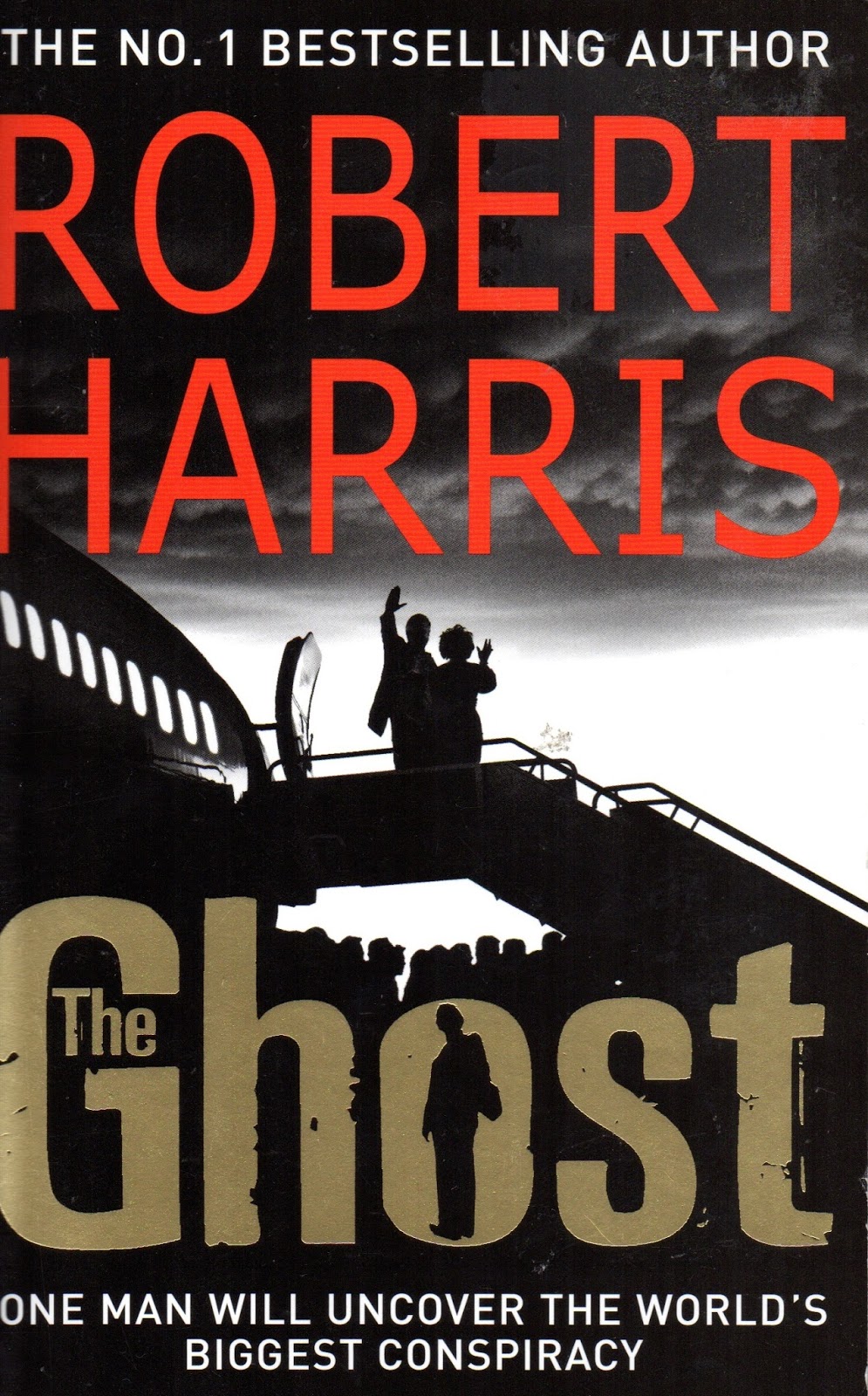
FFB - The Ghost

Robert Harris’ best-seller The Ghost (2007) gripped me from beginning to end. And what a beginning: ‘The moment I heard how McAra died I should have walked away. I can see that now.’

Mike McAra was the political friend and ghost writer of Adam Lang, Britain’s former prime minister. Sadly, McAra’s body was washed up on the American coast. So the unnamed narrator gets the job; it pays well, after all. He felt a slight unease about taking over from the dead man: ‘But I suppose that ghosts and ghost writers go naturally together.’

From that foreboding start, we get sucked in to the claustrophobic millionaire’s holiday home in Martha’s Vineyard, where the narrator meets Lang and his wife Ruth, the devoted fixer, Amelia and assorted bodyguards.
 
The style is deceptively easy, laced with humour, and the odd dash of cynicism and irony. The fictitious publishing company who paid the advance is Rhinehart. It ‘consisted of five ancient firms acquired during a vigorous bout of corporate kleptomania in the nineties. Wrenched out of their Dickensian garrets in Bloomsbury, upsized, downsized, rebranded, renamed, reorganised, modernised and merged, they had finally been dumped in Hounslow…’

The book is set very close to 2007, when Al Qaeda terrorist bombings are not only a real threat, but actual occurrences. There are questions being asked about the extraordinary rendition of four British citizens from Pakistan to Guantanamo Bay, and the use of waterboarding to torture prisoners. The ex-PM is accused of committing an illegal international act, namely authorising the abduction of those four men. So he is being hidden away in Martha’s Vineyard in order to complete his memoires. [Echoes resonate even now, as British so-called IS terrorists are vaporised by a drone’s missiles.]

‘Heathrow the next morning looked like one of those bad science fiction movies set in the near future after the security forces have taken over the state. Two armoured personnel carriers were parked outside the terminal. A dozen men with Rambo machine guns and bad haircuts patrolled inside…’(p41)

Harris is a good observer, giving us splendid description and can turn a good phrase. For example: ‘New England is basically Old England on steroids – wider roads, bigger woods, larger spaces; even the sky seemed huge and glossy.’ (p48) Another excellent example: ‘… passed a marker buoy at the entrance to the channel swinging frantically this way and that as if it was trying to free itself from some underwater monster. Its bell tolled in time with the waves like a funeral chime and the spray flew as vile as witch’s spit.’ (p50)

And he’s not without his humour, either: The bar ‘was decorated to look like the kind of place Captain Ahab might fancy dropping into after a hard day at the harpoon. The seats and tables were made out of old barrels. There were antique seine nets …’ (p95)
 
Insightful writing, too. Read this passage – ‘… it’s curious how helicopter news shots impart to even the most innocent activity the dangerous whiff of criminality.’ – and wonder about the heavy-handed police raid on Sir Cliff Richards’ house, which happened several years later than the publication of this book.
 
Writers too will empathise with the narrator, for obvious reasons: ‘Of all human activities, writing is the one for which it is easiest to find excuses not to begin – the desk’s too big, the desk’s too small, there’s too much noise, there’s too much quiet, it’s too hot, it’s too cold…’ (p180)

Those excerpts give you a little flavour, anyway. The Ghost is well written, in turns amusing, witty, thoughtful and incisive concerning the corruption of power. Despite the fact that we know there wasn’t a prime minister called Adam Lang, his wife Ruth etc., the first person narrative manages to suspend disbelief.
 
If you enjoy the drip-feed of tension rising towards paranoia, then you’ll appreciate this skilfully written novel.

Some of the paperback’s review quotes seem adrift. ‘An unputdownable thriller about corrupt power and sex…’ – the sex is minimal and not graphic in the slightest: the door stays closed.

‘Guaranteed to keep you awake and chuckling after dinner.’ – Does the reviewer usually sleep during dinner? It has many amusing asides and one-liners (as hinted at above), but it isn’t a comedy.

‘… satirical thriller…’ – The thriller elements are minimal, and only evident towards the end. It’s more psychological suspense up to that point.
 
‘Truly thrilling.’ – No, it isn’t. It is tense, however, and most convincing, with an excellent twist at the end.

Highly recommended.

Thursday, 10 September 2015

Writing – Competition – The London Magazine

The London Magazine has been around a long time. It is England’s oldest literary periodical, with a history stretching back to 1732 (with the odd hiatus of several years).

They run an annual short story competition, and this year's is now open for entries.

Prizes: 1st - £500, 2nd £300, 3rd - £200

Length – up to 4,000 words (title is not included in the word count)

Deadline – 31 October 2015


The editors do advise that you should read a copy of the magazine.
 
 
Bear in mind that they do not usually publish science fiction or fantasy or erotica.

Entry fee - £10 (Paypal, credit/debit card, cheque or postal order accepted).

Open worldwide on any theme or subject.

Submit online or by mail; the format and details are in the above link.

Note that the magazine does accept submissions at any time too. See the website


Good luck!


Wednesday, 9 September 2015

Writing – market - BBC drama

The BBC’s Writersroom has opened its window for unsolicited TV and film drama script submissions. 

The window closes on 24 September 2015. UK residents only!
 
Wikipedia commons

In this link here see the sub-section ‘submission windows’

Do not submit a first draft or a work in progress. Make it the best you possibly can. This is a highly competitive market.
 
More details here

Episode series. Send the first full pilot episode of a series and a brief outline of 1-3 pages of future episodes.

Serial. Send the first episode and a brief outline of 1-3 pages of the remaining serial narrative.

Single drama. Send the complete script.

In the website’s ‘Terms and Conditions’ you will find a wealth of advice, for instance:

‘Length
‘We accept scripts that are at least 30 minutes long, which is a fair length of time to assess a writer's work – it's extremely hard to judge a writer's abilities with a view to BBC broadcast slots if their work is shorter than this… The minute-to-a-page measure of classic screenplay format is a useful rule-of-thumb, but isn't a cast iron formula as it ultimately depends on the style of the piece. Generally speaking a half-hour sitcom would come in between 30 and 35 pages, an hour-long drama between 50-70 pages, and a feature film between 70-120 pages. The best way to judge the length of your script is to time yourself reading it, allowing extra space for action. A group reading or performance is even more useful since each reader, like an actor, may deliver their lines of dialogue at different paces...

‘Script Room reading process
‘BBC Writersroom employs professional script readers to assess all the submitted scripts. They sift the scripts by reading at least the first ten pages. All eligible scripts are considered in this way. If a script doesn't sufficiently hook our attention at the sift stage, it will not be considered further... If a script hooks our reader’s attention, it will progress to the second sift where the first 20-30 pages of scripts are read by another reader. If a script is long-listed it will progress to the full read and feedback stage of the process, where a third reader reads the script and provides feedback.  The reader may then recommend that the script is shortlisted, which means that it will be read and discussed by senior members of the BBC Writersroom team and the writer will be considered for further development.’

Also in the ‘Terms and Conditions’ is a comprehensive bullet point list showing what they do not accept, so make a point of reading this too. And one of the conditions is that they only accept scripts from those resident in the UK.

The website also contains a large library of scripts to browse, so you can see how they’re formatted and how the various writers deal with narrative and dialogue.

Good luck!


Tuesday, 8 September 2015

Writing – research – Writing Magazine

It often surprises me that beginning writers fail to master the basics of writing fiction.

Their enthusiasm for storytelling cannot be faulted. But really they should study published books to see ‘how it’s done’ before sending off any manuscript.

A long time ago – last century – when I was about fifteen, I did just that: I analysed published books (those in my own library and those borrowed from the public library) within my favourite genre.

·       How did the author begin the story?

·       How did the author end a chapter?

·       How long are the paragraphs?

·       What percentage of the book is dialogue as opposed to description?

·       What was the average length of the books?

·       How did the author convey suspense?

·       How did the author create exciting scenes?

… and so on.

Naturally, there was no intention of slavishly copying any particular author. But while analysing I was absorbing, almost like osmosis, the form and style of a typical thriller.

I spent time on the analysis.

In those days, there were very few ‘how to’ books on writing fiction, genre or any other type.

I did sign up for a writing correspondence course, which helped me successfully aim articles and short stories at particular markets. Additionally, by dint of writing a lot for this course’s targets and assignments, I improved my style and output. Sales didn’t happen overnight, but they started and after a while became quite regular.

That was then. Now, the budding writer is blessed with more than enough advice and guidance, whether from blogs, books, or magazines. So there is little excuse for any aspiring writer getting the basics wrong.

‘My writing will appeal no matter what form I deliver it in.’

‘I’m an original, I won’t conform.’

‘I don’t want to write in a straitjacket.’

‘Talent can’t be smothered by rules!’

‘Rules are meant to be broken.’

I’ve heard it all. Any excuse not to conform shouts out something: maybe he’s a tyro, perhaps she’s just arrogant or most likely they’re purely lazy.  

Time and again I and others spell it out: if you can’t be bothered to follow the guidelines – whether that’s for a writing competition or a publisher or an editor – then why should they bother with your submission? Yes, they may be at risk of losing something remarkable (though in need of judicious editing), but they can live with that; there are sufficient writers with talent who deliver as required.

This brings me on to sources of writing guidance.

There are two main writing magazines in the UK – Writers’ Forum and Writing Magazine.
Today, I’ll look at the latter.

Writing Magazine
For the cost of £4.10 per month (less if you subscribe), you get a 108-page full-colour magazine full of advice, markets, competitions, and advice, poetry, encouragement, and advice. (The repetition is deliberate). With the October issue there is also a 28-page special supplement listing national and international writing competitions, prizes adding up to £391,205 – not that any single person would be able to enter all of them!


There are articles about 'finding your voice', improving your humorous writing, a Rosie Thomas interview, moving to Windows 10, beating self-doubt as a writer, an author profile of David Nicholls, editing tips, short story and poetry winning entries, competition tips, creating characters, children's stories, news on competitions and events, and a regular back page column from Lorraine Mace, a successful Crooked Cat crime author.

If you’re writing genre fiction, then you could always read my Write a Western in 30 Days – with plenty of bullet points! I know; you’ve no intention of writing a western! Much of the book is applicable to any genre fiction writing – as reviewers have been good enough to point out. I used the western as it is a shorter book form to illustrate various aspects of writing – dialogue, characterisation, flora and fauna, conflict etc.
 
Or search Amazon or other online bookstores for ‘writing guides’ or even Google the same – and get swamped with useful tips.

The main thing is, do that research so you improve your chances of selling your work.

Good luck.