Search This Blog

Showing posts with label the Saint. Show all posts

Wednesday, 15 August 2018

Works in progress: (1) A Leon Cazador novel

A little background, first...

In the middle of 2005, I received a communication from a Spanish man, Leon Cazador. He wrote in English and this is it.

Dear Mr Morton

Forgive me for approaching you like this, but I was intrigued by your book Pain Wears No Mask, which is purportedly a novel. Yet the first person narrative suggests otherwise. I thought you captured the voice of Sister Rose perfectly. I feel you could do the same for me, too.
         Let me begin by saying that my allegiance is split because I’m half-English and half-Spanish. Mother had a whirlwind romance with a Spanish waiter but happily it didn’t end when the holiday was over. The waiter pursued her to England and they were married.
         I was born in Spain and I have a married sister, Pilar, and an older brother, Juan, who is an officer in the Guardia Civil. You may wonder why I am contacting you. Well, I am a private investigator and sometimes I operate in disguise under several aliases, among them Carlos Ortiz Santos, my little tribute to the fabled fictional character, Simon Templar.
         As a consequence of dealing with the authorities and criminals, I have observed in my two home countries the gradual deterioration of effective law enforcement and the disintegration of respect. My name translated into English is ‘Lion Hunter’. The Spanish sounds less pretentious, I think.
         When I was growing up in England, I never imagined there would be no-go areas in those great cities, places where the shadow of light falls on streets and minds. At weekends, some sections of many towns seem to be under siege.
         Now that I have returned to live in Spain, I find that it is not so bad here, though I must admits that there have been many changes over the last thirty years, most of them good, yet some to be deplored. It is heartening to see that family cohesion is still strong in most areas, but even that age-old stability is under threat. Yet, some urbanizaciones more resemble towns on the frontier of the Old West, where mayors can be bought, where lawlessness is endemic and civilised behaviour has barely a foothold. Even so, most nights you can walk the streets and feel safe here in Spain.
         I was not always a private investigator. I believe you will find I have led an interesting life. As Spain’s conscription didn’t cease until 2001, I decided to jump rather than be pushed and joined the Army, graduating as an Artillery Lieutenant. About a year later, I joined the Spanish Foreign Legion’s Special Operations Company (Bandera de operaciones especiales de la legión) and was trained in the United States at Fort Bragg, where I built up my knowledge about clandestine activities and weapons. Some months afterwards, I was recruited into the CESID (Centro Superior de Informacion de la Defensa), which later became the CNI (Centro Nacional de Inteligencia). Unlike most Western democracies, Spain runs a single intelligence organisation to handle both domestic and foreign risks.
         I am one of those fortunate individuals capable of learning a foreign language with ease: I grew up bilingual, speaking English and Spanish, and soon learned Portuguese, French, German, Arabic, Chinese, and basic Japanese. Part of my intelligence gathering entailed my transfer to the Spanish Embassy in Washington, D.C. There, I met several useful contacts in the intelligence community, and at the close of the Soviet occupation of Afghanistan I embarked on a number of secret missions to that blighted land with CIA operatives. By the time the Soviet withdrawal was a reality, I was transferred to the Spanish Embassy in Tokyo, liaising with both intelligence and police organisations. Secret work followed in China, the Gulf and Yugoslavia.
         A year after witnessing the atrocity of the Twin Towers while stationed with the United Nations, I returned to civilian life and set up a private investigation firm. During periods of leave and while stationed in Spain, I established a useful network of contacts in law enforcement, notably the Guardia Civil. One of my early cases resulted in me becoming financially set for life, so now I conduct my crusade against villains of all shades, and in the process attempt to save the unwary from the clutches of conmen, rogues and crooks.
         To begin with, I would like to relate to you several of my private eye cases, changing names as appropriate, of course. Perhaps at a later date I might be able to go into some detail about certain clandestine operations. Would you be interested in meeting me with a view to writing about these cases as fiction ‘in my own words’?
         I remain,
         Yours truly
         Leon Cazador
***
Pain Wears No Mask has since been republished, with some changes, as The Bread of Tears, and has picked up its fair share of favourable reviews. 


Needless to say, I couldn’t miss the meeting. Señor Cazador is a remarkable individual and I have since transcribed 23 of his cases in the collection Leon Cazador, P.I. 


He also appears in the ‘Avenging Cat’ novels, Catalyst and Catacomb currently published by Crooked Cat Books.


Now:
Leon continues to supply me with information that I am gathering for additional short stories and a novel which I’m writing now, though this will be from the third person perspective. I hope it will be ready this year (2018).


Leon Cazador, P.I. – some reviews

… These stories are humorous, insightful and sometimes tragic. Leon Cazador is not afraid to bring the bad men to justice, and so help to restore the balance in this world. Beautifully written with a simple and uncluttered style which draws you in to the heart of the story. Highly recommended! - Laura Graham, actress, author of Down a Tuscan Alley

…While reading these exciting stories I experienced a myriad of emotions. I laughed, cried, and became incensed. I cheered and clapped, but most of all I felt a confirmation of universal values. - E.B. Sullivan, author of Different Hearts

A likable protagonist in Leon Cazador, a colorful international flavor, and some terrific writing make these stories about a PI who likes bringing the ungodly to justice a very enjoyable read. Leon has a heart, yet uses common sense in his assessment of problems in Spain and Europe, often in refreshing contrast to political correctness.
Some stories involve criminal cases, others are more adventure oriented. Some are just stories about Spain’s people Leon has known and helped. My only caveat is that the first couple of longer short stories were good enough that it made the shorter ones which followed — there were a slew of them, so you definitely don’t get cheated — seem like quick shots rather than a full glass… I liked the old-fashioned Saint vibe blended with modern day Spain and with an interesting half-English half-Spanish protagonist in Leon Cazador. The colorful flavor of Spain and an international vibe give these stories some spice… – Bobby Underwood, author

… a marvelous collection of short stories linked by a common protagonist, the private investigator Leon Cazador. Yet, each story is unique in setting and plot, drawing on the author's remarkable breadth of knowledge and extraordinarily full life, spiced by a genuine loathing for evil and wrong-doing. We learn a great deal about the history, culture, lore, and landscape of Spain and meet a diverse cast of characters, as Cazador sees to it that a variety of miscreants, petty and grand, are appropriately done in. Mr. Morton is a gifted writer, a modern-day Aesop, only more complex, providing entertaining stories, each with a moral. You have no idea of the treat that is in store for you. – Charles Ameringer, author of The Old Spook.

A particular difficulty with short stories is that they are exactly that – short. All too often they can be over before they have really begun, leaving the reader somewhat frustrated. But Nik Morton has managed to create a collection of individual stories in this particular book which are absolute little gems. The pace of each is perfectly judged to reach its conclusion at just the right time and in just the right way. Nik has also managed in many of them to weave in topical Spanish themes and issues such as immigrants trying to get into Spain from North Africa, drug running, memories of the Civil War and the corruption of Land Grab in Valencia to name but a few. I can thoroughly recommend this book. Not only will the tales appeal to general lovers of short stories but in particular those with experience of living in Spain will I’m sure feel a certain resonance with these stories. – Amazon reviewer.

Links

amazon.com/author/nikmorton

Facebook – www.facebook.com/nikmorton.10

Twitter - @nik_morton


Monday, 26 February 2018

'Recommended for fans of The Saint ...'


My sixth collection of short stories, Leon Cazador, P.I. has a most helpful (to potential readers) long review on Goodreads, where each of the 23 short stories is covered, and it begins like this: 

'A likable protagonist in Leon Cazador, a colorful international flavor, and some terrific writing make these stories about a PI who likes bringing the ungodly to justice a very enjoyable read. Leon has a heart, yet uses common sense in his assessment of problems in Spain and Europe, often in refreshing contrast to political correctness.

'Some stories involve criminal cases, others are more adventure oriented. Some are just stories about Spain’s people Leon has known and helped...'

There then follows a detailed review of the stories, ending:

'...I liked the old-fashioned Saint vibe blended with modern day Spain and with an interesting half-English half-Spanish protagonist in Leon Cazador. The colorful flavor of Spain and an international vibe give these stories some spice...

'Recommended for fans of The Saint and other such knights who come to the aid of those in need. I’m giving it four solid stars as it makes a nice little bedside read when you need something short.'

Thank you Bobby Underwood, avid reader and reviewer!


  Leon Cazador, P.I. - e-book and paperback from Amazon here  
 

Tuesday, 27 September 2016

'...wry and witty, well observed, and fast paced.'

A big thank you to Rowena Hoseason of murdermayhemandmore.net for her review of Catalyst. It's interesting that both she and Jack Owen (see yesterday's blog) refer in their reviews to Emma Peel from The Avengers TV series. Maybe there was some subconscious tribute working there when I created the character, since I was in my formative years when I watched that highly original ground-breaking series in the 1960s!

Here is the Amazon review; a slightly longer review can be found at Rowena's site (above):

Catherine is a talented woman. Smart enough to be a biochemist. Beautiful enough to be a top-class catwalk model. Physically skilled and strong enough to free-climb a sleek city office block. Determined enough to avenge the financial ruin and deaths of her parents. Yup, she’s a thoroughly modern girl.

But Cat is also a wonderful throwback to Emma Peel of The Avengers TV series. Indeed, the whole atmosphere of Catalyst is resoundingly retro and it shares a lot of style with The Avengers and The Saint, and even the early Bond movies.  

Catalyst is not a pastiche nor a parody but feels instead like a loving tribute to the sensibilities and sly humour of those 1960s spy series. Yet it’s most definitely set in the 21st century and it doesn’t lampoon its influences so much as cherish them.

There’s a coherent plot to push the action along, one which touches on animal rights, science running amok, corporate abuses of the environment and human trafficking alongside good old-fashioned love, jealously, betrayal, intrigue and, of course, murder. The writing is straightforward and easy to follow, although occasionally it gets bogged down a little bit in everyday minutiae.

Author Nik Morton can deliver a gripping action set piece; the opening sequence involving Cat’s incredible climb is outright excellent and skilfully pulls the reader straight into the fray.

I particularly enjoyed: the role reversal which gleefully subverts gender stereotypes and sees the leading man tied helpless to railway track (yes, really), relying on the all-action heroine to come to his aid.

I was also intrigued by the police officers who follow Cat's path as it zigzags across the UK and onwards to Spain. One of them is known as ‘Inspector Mushroom’ because he only comes out after dark – can’t wait for that back-story to be explained in a future episode. In fact, he’s such an interesting character that he probably deserves a spin-off story all of his own.

Catalyst made for an enjoyable afternoon’s light-hearted entertainment. It’s wry and witty, well observed, and fast paced. The violence and intimate action all leans towards the delicate end of the scale so there’s nothing here to shock or horrify. Good, old fashioned fun, in fact. Steed would certainly approve.


Note: I was very pleased that Rowena picked up on the two NCA characters, Pointer and Basset, 'the dogs of law'. Yes, Pointer's strange origin is explained in the prologue of Catacomb!


Catalyst can be obtained from Amazon sites worldwide.

Thursday, 12 November 2015

FFB - All the Sounds of Fear

The 1973 Panther paperback was the first British publication of this collection by Harlan Ellison. It comprises eight short stories previously published in magazines from 1956 to 1967. Considering that he was twenty-two when the first of these stories was published, it’s not surprising that he garnered much praise – and awards. On the back cover he is described as ‘one of the most explosive talents in science fiction today’, ‘a non-stop controversialist’ and ‘the bête noire of science fiction.’

Harlan Ellison wears his heart on his sleeve; that’s no bad thing: he has a good heart, even at eighty-one. He admits to possessing an abrasive personality, but that has no bearing here; it is his work that matters.
 
In his introduction to this book (1970), Ellison is not hopeful about our planet and human evolution: ‘we have created for ourselves a madhouse of irrationality and despair.’ Surprisingly, perhaps, we’ve survived, after a fashion, some forty-five years since; as for ‘irrationality and despair’, he could have prophetically been thinking about the ravings and cravings found in social media.

Not alone among authors, he believes that writers can make a difference: ‘The creative intellect struggles against this sorry reality… It would seem only the mind of the madman is free… And even so the artist persists… in hopes that cautions may be flung on the wind and somehow still be heard.’ He states that this collection of stories, written over a decade or so, is dominated by the theme of alienation. However, he is a romantic at heart, and still believes ‘we find hope within ourselves.’

Perhaps one of the most anthologised of his stories is the first here, ‘I Have No Mouth, and I Must Scream’ (1967), which won a Hugo Award. It’s the future and the supercomputer AM feels trapped because though he had sentience, he couldn’t do anything except simply be. In a rage, he had destroyed humankind, save for five who he would torment for all eternity. ‘He was Earth and we were the fruit of that Earth and though he had eaten us, he would never digest us.’ They couldn’t attempt suicide, either; they were to all intents immortal, and damned.

‘The Discarded’ (1959) is from the viewpoint of Bedzyk, one of many incarcerated in a space vessel, ‘a raft adrift in the sea of night’. Everyone on-board was a mutant of some description – not X-Men with superhuman powers, simply possessors of additional limbs, eyes, heads, and therefore outcast. All as a result of a terrible contagion on Earth. Once normality had resumed, those who looked different were outcast, set adrift in space, unwelcome on no inhabited station or planet.

‘Deeper than the Darkness’ (1957) concerns Alf Gunnderson who is released from prison for a special task. He was imprisoned because he accidentally started a forest fire with his mind. Now, however, the authorities wanted to put his ‘gift’ to use, to end a war. Alf was in a quandary: ‘What of the people who hated war, and the people who served because they had been told to serve, and the people who wanted to be left alone? What of the men who went into the fields, while their fellow troops dutifully sharpened their war knives, and cried?
            ‘Was this war one of salvation or liberation or duty as they parroted the phrases of patriotism? Or was this still another of the unending wars for domination, larger holdings, richer worlds. Was this another vast joke of the Universe, where men were sent to their deaths so one type of government, no better than another, could rule?’ A novella about conscience and power.

‘Blind Lightning’ (1956) finds us with old spaceman Kettridge stranded on an inhospitable planet with an enormous ravenous beast that happens to speak telepathically in his language... Quite a moving little parable, about redemption and ‘first contact’.

‘All the Sounds of Fear’ (1962) is an interesting story, first featured in The Saint Detective Magazine. Richard Becker is an extraordinary actor – he seems to not only live the stage part, but to become the character he portrays in every way, no matter what the source, historical or contemporary. Until that dark day when he emulated a character to a murderous degree and was sectioned to be studied by doctors. While in the sanatorium Becker transgresses, becoming each part again, from the most recent to the earliest. A stunning end awaits.
 
‘The Silver Corridor’ (1956) is about egomania, where two  powerful men vie to be proved ‘right’ and the other ‘wrong’ regarding the latest theory. They are thrust into a special corridor that stretches reality to the limits, where they contest in many varied duels to better each other. Of all these stories, this is the weakest, though it has plenty of colour, time-shifts, action and excitement.

‘“Repent, Harlequin!” Said the Ticktockman’ (1965) won Ellison several awards and is believed to be one of the most reprinted short stories in the English language. It is a tongue-in-cheek critique of a dystopian system and in particular of lives being ruled by the clock. In the dystopia depicted, everybody had a schedule to keep; lateness was punishable, ultimately by being switched off – everybody was fitted with a cardioplate that the Timekeeper could make inactive. Unfortunately for the system, Everett C Marm wasn’t punctual and revelled in disturbing the smooth running of the day, causing schedule mayhem while disguised as a harlequin. The mysterious Harlequin became ‘an emotionally disturbed segment of the populace’.

Ellison’s distinctive style is evidenced here, for example: ‘And so it goes. And so it goes. And so it goes. And so it goes goes goes goes goes tick tock tick tock tick tock and one day we no longer let time serve us, we serve time and we are slaves of the schedule, worshippers of the sun’s passing, bound into a life predicated on restrictions because the system will not function if we don’t keep the schedule tight… Until it becomes more than a minor inconvenience to be late. It becomes a sin. Then a crime. Then a crime punishable by (death).’ In essence, if a person was ten minutes late, then those minutes were deducted from that person’s life-span.
 
The book ends with ‘Bright Eyes’ which is anything but bright, for it is the end of the world. The last survivor – who came before Man – witnesses the utter waste of resources and life. An apocalyptic tale, with bruising and impressive imagery, and no hope.

And of course Ellison ends this collection with ‘no hope’ in the belief stated in his Introduction that his ‘cautions may be flung on the wind and somehow still be heard.’

Wednesday, 28 October 2015

Writing – Affection for the genre

I’m fortunate in that I enjoy reading books in almost any genre – whether that’s crime, science fiction, fantasy, horror, western, romance or thriller. Not to mention all those sub-genres! To me, the genre doesn’t matter so much; it’s the story that counts.

Recently, a correspondent who was re-reading my genre fiction writing guide (Write a Western in 30 Days – with plenty of bullet points!) asked me how I gained my affection for the genre.

The quotation he had in mind is:

‘A good writer can get published in almost any field. They’ve studied their craft of storytelling and know the requirements implicit in each particular form. Less accomplished writers might contemplate trying a western, as it seems ‘easier than a contemporary detective novel.’ That approach is unlikely to work. To write a western, you need to have a strong affection for the genre. You don’t have to be a fan, but you should respect its roots. If you don’t, then it will show in the prose and storyline – and it will get rejected pronto.’ (p11)

Being a child of the 1950s, my diet of fiction from television was a plethora of western series – Cheyenne, Wagon Train, Laramie, Have Gun Will Travel, Gunsmoke, The Rifleman, and Range Rider, among others. Then there were plenty of western movies in the theatres besides at least two western series on TV in any week. At the same time there were many comics either wholly dedicated to Western characters – Pecos Bill, Hopalong Cassidy and Roy Rogers or they featured in other comics such as Comet and Eagle and the Buffalo Bill annuals. In the Eagle I discovered O Henry’s short stories and then went on to books by Louis L’Amour, Max Brand and Zane Grey and so on. And at school, we studied Jack Schaefer’s Shane.
 
 
Those western tales usually contained a moral core, where good triumphed over evil. The morality was black and white – as were the images. Moral ambiguity gained prominence with the Spaghetti Westerns in that particular genre. Of course grey characters and storylines existed before this – on the big screen in all genres.

Before I left school I was writing stories and drawing comic strips. My writing took me in another direction, however, towards science fiction and fantasy and then I was drawn to crime thrillers.  But I always hankered after writing a western one day.  Briefly I ran a fledgling literary agency and placed one lady’s excellent book with a publisher; I tried getting publishers interested in two good writers, one who had written the sequel to Shane no less, but to no avail, so sadly I packed that in. 

In those young teen days I couldn’t afford to buy books on a regular basis so made use of the local library; the hushed aisles were filled with hardbacks, not paperbacks. Over time, reading taste changed and included Dracula, Frankenstein and science fiction, the latter mainly within Gollancz yellow dust-jackets. My interest in the western tended to centre upon history books of that period, rather than fiction.
 
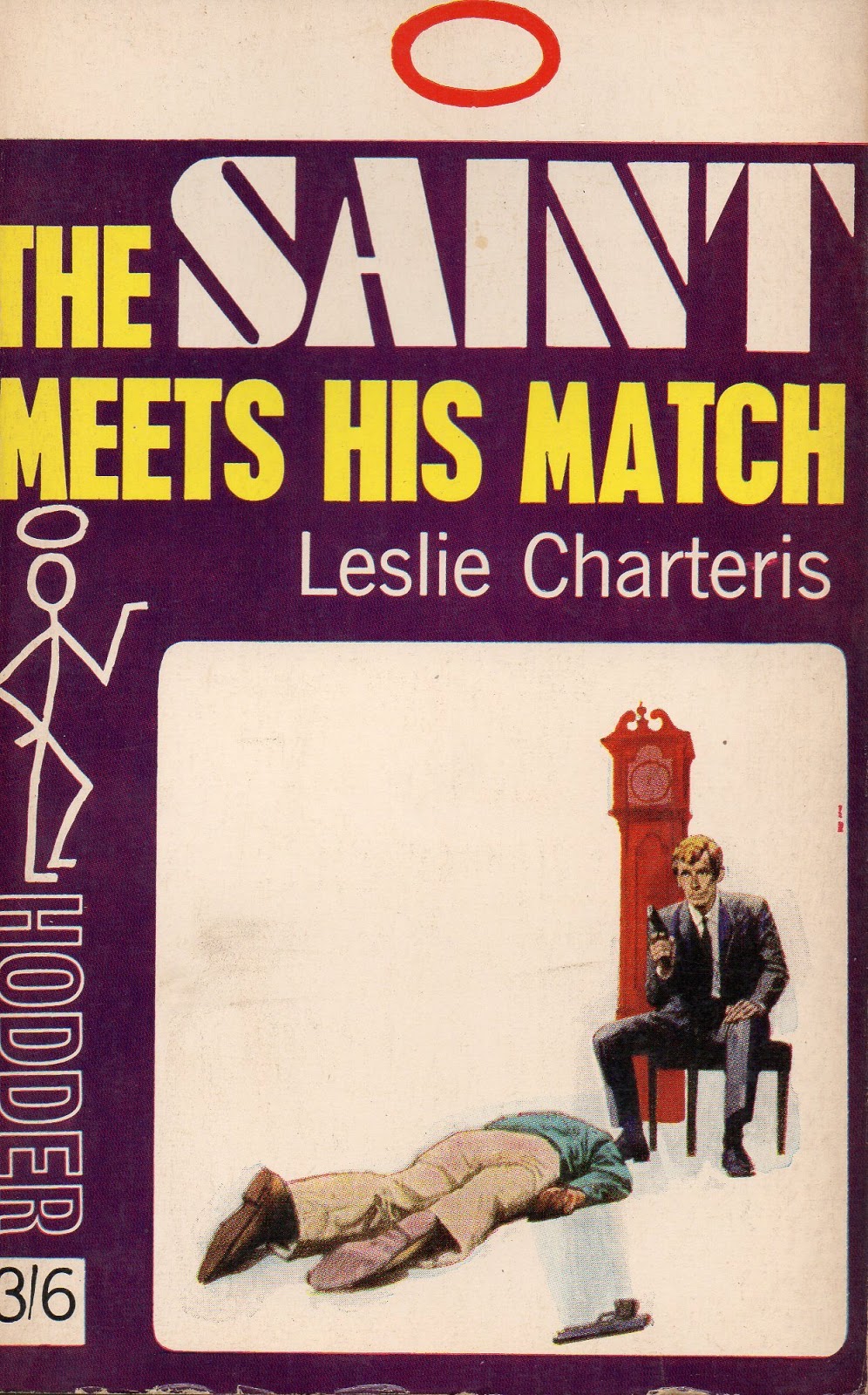
At about the same time I also enjoyed the modern adventurers on TV: The Saint, The Persuaders, Danger Man, Gideon’s Way, The Champions, The Prisoner et al. I discovered the Saint books when Hodder began publishing them as uniform paperbacks and particularly enjoyed the 1930s stories, Simon Templar’s character somewhat removed from Roger Moore’s portrayal.


I discovered Agatha Christie and Raymond Chandler while being hospitalised with an upper respiratory tract infection, having been landed from my ship to the submarine base, HMS Neptune: at my bedside stood a small bookcase stocked with several books by these authors. And at sea I read the new breed of violent westerns epitomised by George G. Gilman’s Edge character.
 
Looking back, it is difficult to determine how my affection for various genre fiction authors came about. Genre authors write good stories, I suppose, and I’ve always liked a ‘good story’. It is so much easier these days, thanks to online stores and blog reviews, to be made aware of different authors, ‘new’ to you. The downside is now the choice is bigger than ever! Naturally, browsing in book shops, twirling the whirligigs of paperbacks, reading the few weekly book reviews in the newspapers all helped me identify unfamiliar but possibly interesting books. And there are phases I passed through – western, occult fiction, true war books, spy novels, detective tales, thrillers, and science fiction.

As a writer, I believe we scribes should read broadly – both fiction and non-fiction. My affection for genre fiction is still strong, but of course I read outside that label too, and always have done so.


BARNES & NOBLE books
SMASHWORDS books
KOBO books
AMAZON COM books
AMAZON UK books


Tuesday, 14 October 2014

Crooks bested

Inspired by Leslie Charteris’ Simon Templar, The Saint, I conceived and wrote a series of short stories about Leon Cazador, a private eye who was not averse to bending the law to ensure that members of the criminal fraternity get their just deserts. Dessert = sweet revenge?

He evolved almost whole after the first tale in 2005. Half-English, half-Spanish, he served in the forces and the secret service, roaming the world. This meant that he built-up an enviable selection of contacts he could call upon for help from time to time. As with our real-world private enquiry agents, who are not permitted to get involved in a murder investigation, he couldn’t go there; well, providing he wasn’t caught doing so, perhaps.

The tone is sometimes light, sometimes dark – because life is like that.

Victims really do need more champions; the criminals have had it their own way for too long. I wouldn’t suggest that Leon Cazador is a vigilante – that role is reserved for my protagonist in Sudden Vengeance. But he certainly strives to bring his kind of justice to the unrepentant ungodly.

For a taster, here’s the beginning of the story ‘Off Plan’:

I was wearing a false moustache, grey coloured contact lenses, and my hair was dyed black. My brother, Juan, wouldn’t recognise me. In fact, I had difficulty recognising me. I was no longer Leon Cazador but Carlos Ortiz Santos. Sometimes it was necessary to wear a disguise and take on a fake name to hoodwink the ungodly. This was one of those times.

“If you can’t come up with the €75,000, Alonso,” I said, “then I will make the offer to the other two developers.” I tapped the regional map impatiently with a forefinger. “The mayor wants the money soon, so it can all be settled.”

Alonso Vargas was slim and appeared urbane in his smart suit. He was convincing in his tone and words. The perfect conman, it seemed. “It is difficult, Carlos. That is a great deal of money.” He was toying with me, playing for time, and debating whether I would bargain. His dark eyes glinted. I knew it wasn’t with humour but greed. He rubbed his pointed chin, pretending to think. He needed a kick.

I sighed resignedly and started folding up the map.

“No, no, Carlos,” he said and urgently gripped my forearm and halted my retiring action. “I have the money, as promised.” He eyed the Mercadona supermarket bag at his feet.

“That’s good, Alonso.” I smiled and left the map half-folded.

He cocked his head to one side. “I suppose it would be foolish of me to ask for a receipt?”

I grinned and nodded. “That would be foolish, yes. The mayor has to pay several anxious people to adjust various documents. Others, they need financial incentives to keep their mouths shut.” I shrugged. “You know how it is.”

“Ah, yes.” His eyes glimmered with the prospect of four hundred acres of re-designated land, all his to build upon. “I know how it is.” His foot gently moved the plastic bag over the tiled floor towards me.

Leaning down and picking it up, I asked, “So, you can bring me the final instalment next week, as agreed?”

“Cash flow is difficult, times are not so good since the building boom has slowed down, you know.” He shrugged pronounced shoulders. “The crisis, it bites deeply.”

Shaking my head, I quickly finished folding the map. “If you cannot honour our agreement, then I must go elsewhere. We agreed you would pay me two instalments.” I slid the bag across the table, in plain view.

Anxiety was written all over his face. He glanced left and right, but nobody seemed to be paying us any attention.

“I’m not one of your clients, Alonso. Delay is not an option.”

“No, no,” he said hastily, pushing the bag towards me. “Please, take this now. It is difficult, but not impossible. I will have the rest of the money.”

“You’re sure?”

He nodded and offered the same smooth trusting smile he turned on for his clients. “You have my word,” he said.

I stood up. “Your word is good enough for me, Alonso,” I lied and shook his offered hand. I turned and left the bar with the bag of money under my arm.

***

To find out how Alonso – and quite a lot of other crooks – gets his comeuppance, please purchase or otherwise obtain a copy of Spanish Eye, published by Crooked Cat. The e-book is really good value – and reviewers on Amazon UK and Amazon COM seem to think so too.
 
 
Amazon UK here
 
Amazon COM here
 
End of commercial break.