Search This Blog

Showing posts with label Eagle. Show all posts

Saturday, 6 April 2024

Dan Dare #2 - Book review


This is the second deluxe collector’s edition of The Red Moon Mystery and Marooned on Mercury featured in the Eagle comic from October 1951 to February 1953.

I first bought the Eagle in February 1958 (featuring the Dan Dare story The Ship that Lived). Thereafter, I was hooked – not only by the colourful artwork in Dan Dare but also the other features inside. The comic exuded an almost intoxicating smell, either the ink or the paper, or a combination of both. Subsequently, I managed to obtain a good number of the preceding issues, but never had an entire set. So the publication of these deluxe editions published by Hawk Books (1988) in full size and full colour were must-haves!

The story of The Red Moon Mystery is about a mysterious red moon that has appeared. It is threatening the space stations of Mars and, inevitably, it is likely to move against Earth. The other characters are Dare’s batman Digby, Sir Hubert Guest, Professor Jocelyn Peabody, the Yank, Henry Hogan, Sondar, the good Treen and Dr Ivor Dare, an eccentric scientist. It seems only Dan Dare and his pals can avert disaster! This adventure is written and drawn by the legendary Frank Hampson (though also see the reference below). This adventure takes place in 1999 - some 48 years in the future...

Marooned on Mercury. At the end of the previous adventure a massive explosion thrusts Dare’s spaceship towards Mercury, where they crash-land. Little do Dare and his crew know, but the evil Mekon has set up a base on the far side of Mercury; from here he intends to attack Earth, as space-born despots tend to do from time to time. On Mercury the team encounter strange beings, Mercurians, and enlist their help to combat the Mekon and his Treens. This adventure was drawn by Harold Johns as Hampson was ill.

Naturally, the tales are somewhat dated in their speech patterns and unscientific appreciation of planets like Mercury. And yet, they are fast-paced, inventive, even exciting, as well as amusing. There is a tendency to put too many words in the speech balloons – seemingly necessary to explain many of the ‘technological’ goings-on. And, for the time, it was probably ground-breaking to have a female professor as a significant character.

For more insight into the production of the weekly two-page full-colour strip, see WRITEALOT: FFB - The Man Who Drew Tomorrow (nik-writealot.blogspot.com)


Wednesday, 28 October 2015

Writing – Affection for the genre

I’m fortunate in that I enjoy reading books in almost any genre – whether that’s crime, science fiction, fantasy, horror, western, romance or thriller. Not to mention all those sub-genres! To me, the genre doesn’t matter so much; it’s the story that counts.

Recently, a correspondent who was re-reading my genre fiction writing guide (Write a Western in 30 Days – with plenty of bullet points!) asked me how I gained my affection for the genre.

The quotation he had in mind is:

‘A good writer can get published in almost any field. They’ve studied their craft of storytelling and know the requirements implicit in each particular form. Less accomplished writers might contemplate trying a western, as it seems ‘easier than a contemporary detective novel.’ That approach is unlikely to work. To write a western, you need to have a strong affection for the genre. You don’t have to be a fan, but you should respect its roots. If you don’t, then it will show in the prose and storyline – and it will get rejected pronto.’ (p11)

Being a child of the 1950s, my diet of fiction from television was a plethora of western series – Cheyenne, Wagon Train, Laramie, Have Gun Will Travel, Gunsmoke, The Rifleman, and Range Rider, among others. Then there were plenty of western movies in the theatres besides at least two western series on TV in any week. At the same time there were many comics either wholly dedicated to Western characters – Pecos Bill, Hopalong Cassidy and Roy Rogers or they featured in other comics such as Comet and Eagle and the Buffalo Bill annuals. In the Eagle I discovered O Henry’s short stories and then went on to books by Louis L’Amour, Max Brand and Zane Grey and so on. And at school, we studied Jack Schaefer’s Shane.
 
 
Those western tales usually contained a moral core, where good triumphed over evil. The morality was black and white – as were the images. Moral ambiguity gained prominence with the Spaghetti Westerns in that particular genre. Of course grey characters and storylines existed before this – on the big screen in all genres.

Before I left school I was writing stories and drawing comic strips. My writing took me in another direction, however, towards science fiction and fantasy and then I was drawn to crime thrillers.  But I always hankered after writing a western one day.  Briefly I ran a fledgling literary agency and placed one lady’s excellent book with a publisher; I tried getting publishers interested in two good writers, one who had written the sequel to Shane no less, but to no avail, so sadly I packed that in. 

In those young teen days I couldn’t afford to buy books on a regular basis so made use of the local library; the hushed aisles were filled with hardbacks, not paperbacks. Over time, reading taste changed and included Dracula, Frankenstein and science fiction, the latter mainly within Gollancz yellow dust-jackets. My interest in the western tended to centre upon history books of that period, rather than fiction.
 
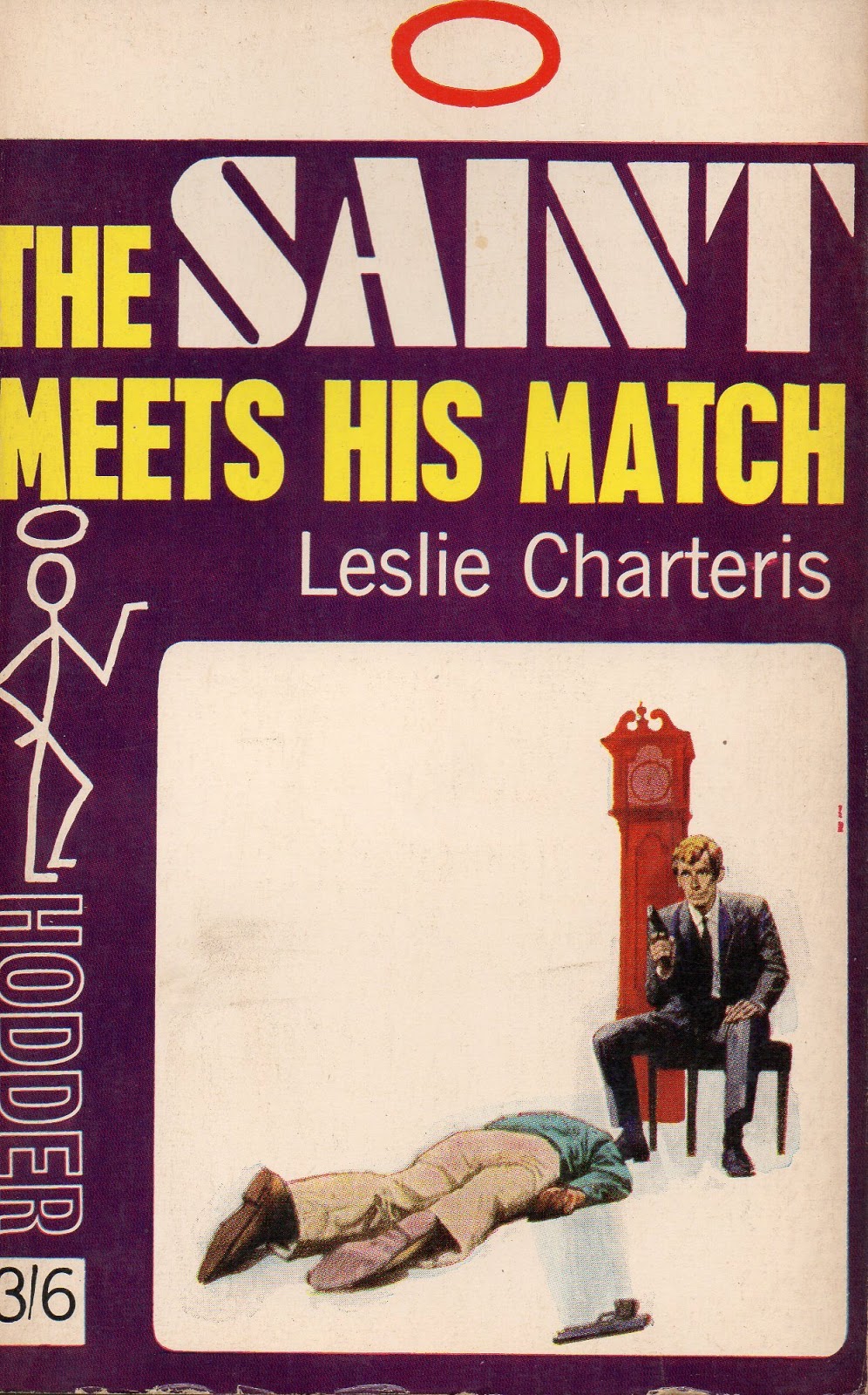
At about the same time I also enjoyed the modern adventurers on TV: The Saint, The Persuaders, Danger Man, Gideon’s Way, The Champions, The Prisoner et al. I discovered the Saint books when Hodder began publishing them as uniform paperbacks and particularly enjoyed the 1930s stories, Simon Templar’s character somewhat removed from Roger Moore’s portrayal.


I discovered Agatha Christie and Raymond Chandler while being hospitalised with an upper respiratory tract infection, having been landed from my ship to the submarine base, HMS Neptune: at my bedside stood a small bookcase stocked with several books by these authors. And at sea I read the new breed of violent westerns epitomised by George G. Gilman’s Edge character.
 
Looking back, it is difficult to determine how my affection for various genre fiction authors came about. Genre authors write good stories, I suppose, and I’ve always liked a ‘good story’. It is so much easier these days, thanks to online stores and blog reviews, to be made aware of different authors, ‘new’ to you. The downside is now the choice is bigger than ever! Naturally, browsing in book shops, twirling the whirligigs of paperbacks, reading the few weekly book reviews in the newspapers all helped me identify unfamiliar but possibly interesting books. And there are phases I passed through – western, occult fiction, true war books, spy novels, detective tales, thrillers, and science fiction.

As a writer, I believe we scribes should read broadly – both fiction and non-fiction. My affection for genre fiction is still strong, but of course I read outside that label too, and always have done so.


BARNES & NOBLE books
SMASHWORDS books
KOBO books
AMAZON COM books
AMAZON UK books


Monday, 20 July 2015

The Eagle has Landed

Wikipedia commons

Forty-six years ago today, Apollo 11 landed on the moon. The Command Module was christened Columbia, not after the New York university or the many places in the US, but in a reference to the Columbiad, the giant shell cum spacecraft fired from a cannon from Florida in Jules Verne’s 1865 novel From the Earth to the Moon. The Lunar Module was called Eagle, referring to the bald eagle, the symbol and national bird of the US. This lent more gravitas than the Apollo 10 naming of Charlie Brown and Snoopy for the two Modules!

Neil Armstrong's voice crackled from the speakers at NASA's Mission Control in Houston. He said, ‘The Eagle has landed.’

President John F. Kennedy’s dream, expressed in 1961 – of putting humans on the Moon by the end of the decade - had come true, with five months to spare!

Of course the author Jack Higgins was to use the same phrase to great effect for the title of his first big best-seller published in 1975, The Eagle Has Landed.

Friday, 22 November 2013

FFB - The Man Who Drew Tomorrow

This large-format colourful book (published in 1986) is sub-titled ‘How Frank Hampson created Dan Dare, the world’s best comic strip’. Obviously, some purist comic collectors may argue over the word ‘best’, but there’s no denying that Frank Hampson exhibited a remarkable flair for invention and draughtsmanship, with incredible detail and colour in a period when post-war austerity still held sway (1950).


Dan Dare appeared on the front page of the
British comic Eagle on 14 April 1950.

In retrospect, Frank rationalised his creation of the famous pilot of the future: ‘I felt the prognostications about technology were too gloomy. Attitudes were too pessimistic, with The Bomb, the Cold War and rationing in the forefront of everyone’s mind. I wanted to give hope for the future, to show that rockets and science in general could reveal new worlds, new opportunities. I was sure that space travel would be a reality… Dan was the man I always wanted to be; Digby, his batman, was the man I saw myself as…’

In the early days, the Dan Dare strip was sent to Arthur C. Clarke to check that the sci-fi details were believable, but this arrangement lapsed when Clarke pointed out that the art studio was wasting its money on getting him to check it, the details were always authentic – so much so that an aeronautics engineer for RAF Farnborough asked for source material to help in the designs then of a space-suit!
From the beginning when the Reverend Marcus Morris approached Frank with the idea for a revolutionary boys’ comic of the highest calibre, Frank was inflamed with the ideals set. It was to have a morally uplifting tone, Christian in outlook, educational, and with artwork of superior craftsmanship. He set up a studio and hired associates and together with his father, Pop, Frank created Dan Dare.
A bust of Dan Dare, Southport, England

Almost every frame of the strip was sketched in rough first by Frank – he also wrote the storyline – and then photographs were taken of various team members to act as models for the finished strip drawings (Joan Porter, Greta Tomlinson, Robert Hampson, Harold Johns, Don Harley, Peter Hampson, and Eric Eden - Harley and Eden with Keith Watson were also artists on the strip). Most of the team members commented that even Frank’s rough sketches were good enough to be the finished article, but Frank was a perfectionist and this attitude often entailed the team working into the early hours of the morning to finish the strip: eight people to produce two pages of artwork may seem extravagant, but time has vindicated the approach – Frank was voted the best post-war writer and artist of strip cartoons in 1975 by an international jury of his peers.

This was in fact a long-overdue accolade, for prior to this he spent virtually fourteen years in the wilderness hiding from the fans that pursued him and suffering from a series of debilitating illnesses. He hid because he was deprived of the copyright to Dan Dare, his creation. Under the terms of his contract he was not allowed to draw Dan Dare after leaving. After completing the remarkable strip about Jesus, The Road to Courage in 1961, Frank left Eagle never to return.
My drawing, 1986

Eagle lasted from April 1950 until April 1969, 991 issues. It was reborn in 1982, though a pale reflection of itself, yet survived some 500 issues before its demise in 1994. Having just turned sixty in 1979, Frank was presented with his Open University BA, something he did to fill in the empty hours, though the studying of art was a lifetime love too. In July 1985, at the young age of sixty-six, he died.

Crompton’s book is very well illustrated, using pages from the old Eagles and studio photographs and sketches, plus glimpses of Hampson strips that were n ever taken up by Fleet Street. Dan Dare was a team effort, but the driving force was undoubtedly Frank Hampson. His treatment by Fleet Street, its accountants and editors, seems tragic, even if his personality and work methods didn’t suit them. This book, even now, is a must for anyone who remembers Eagle with a fond glint in the eye; it is useful to art students and comic enthusiasts alike, and is invaluable as an object lesson in the dangers of signing away copyright.
[Case in point: Jerry Siegel in 1975 launched a public-relations campaign to protest DC Comics’ treatment of Joe Shuster and himself, as in the early years they’d signed away their rights to Superman. Ultimately, Warner Communications, DC’s parent company, awarded Siegel and Shuster $20,000 a year each for the rest of their lives and guaranteed that all comics, TV episodes, films, and, later, video games starring Superman would be required to carry the credit that Superman was ‘created by Jerry Siegel and Joe Shuster’. The first issue with the restored credit was Superman #302 (August 1976)].


Sunday, 19 December 2010

Editor’s pet peeves-01: what’s empty?

From time to time, I’ll offer a few (possibly pedantic) comments on what tends to grate slightly when reading novels or works in progress.


‘Rossiter and Jacaud sat at a table… a bottle of cognac between them. Otherwise the place was empty, except for Mercier, who stood behind the bar counter polishing glasses.’ – A fine night for dying, Jack Higgins (1969).

Otherwise the place was empty, except for… Why not simply write: the only other person was Mercier…?

I’ve seen this example time and again, ‘empty, except for…’ The place wasn’t empty, since there were at least two other people in there. What constitutes full? When is it half-empty? This phrasing is often used by new writers who haven’t mastered critical self-edit yet.

I just happened to read this book yesterday so there’s no intention of slighting fellow Geordie-born Jack Higgins – a writer who has published over 60 novels and sold 250 million books and doubtless given pleasure to even more. Some years ago, a Sunday supplement journalist castigated him for unoriginality and regurgitating much of his material – whether gun lore, dialogue, events or even characters. Probably written by a disgruntled author who hadn’t achieved Higgins’s success. When you’ve written so many books, it’s quite possible some repetition creeps in. For example, Tarzan kept tripping over lost cities and civilizations in Africa, so that it seemed that the continent was overpopulated with them, but that didn’t detract from reader enjoyment.

It’s a strange coincidence but in the above book, Higgins writes: ‘Rossiter’s… hand dipped into his pocket and emerged clutching the Madonna. There was a sharp click and the blade jumped into view.’ And in Bad Company(2003), which is advertised at the rear of this book, there’s the passage: ‘(Marco) keeps an ivory Madonna in his pocket. When you press the button, the blade jumps out and shears right up under the chin.’ But, so what?

The majority of his early books are competent thrillers, though these days it’s unlikely they’d get published. And maybe that’s a fault of the present system; Higgins wrote 35 books before his breakthrough The Eagle Has Landed. Few, if any, publishers would now consider nurturing talent for that period of time. Yet he tells good fast-paced stories, is prolific – and popular. Go figure.