Search This Blog

Showing posts with label Buffalo Bill. Show all posts

Wednesday, 28 October 2015

Writing – Affection for the genre

I’m fortunate in that I enjoy reading books in almost any genre – whether that’s crime, science fiction, fantasy, horror, western, romance or thriller. Not to mention all those sub-genres! To me, the genre doesn’t matter so much; it’s the story that counts.

Recently, a correspondent who was re-reading my genre fiction writing guide (Write a Western in 30 Days – with plenty of bullet points!) asked me how I gained my affection for the genre.

The quotation he had in mind is:

‘A good writer can get published in almost any field. They’ve studied their craft of storytelling and know the requirements implicit in each particular form. Less accomplished writers might contemplate trying a western, as it seems ‘easier than a contemporary detective novel.’ That approach is unlikely to work. To write a western, you need to have a strong affection for the genre. You don’t have to be a fan, but you should respect its roots. If you don’t, then it will show in the prose and storyline – and it will get rejected pronto.’ (p11)

Being a child of the 1950s, my diet of fiction from television was a plethora of western series – Cheyenne, Wagon Train, Laramie, Have Gun Will Travel, Gunsmoke, The Rifleman, and Range Rider, among others. Then there were plenty of western movies in the theatres besides at least two western series on TV in any week. At the same time there were many comics either wholly dedicated to Western characters – Pecos Bill, Hopalong Cassidy and Roy Rogers or they featured in other comics such as Comet and Eagle and the Buffalo Bill annuals. In the Eagle I discovered O Henry’s short stories and then went on to books by Louis L’Amour, Max Brand and Zane Grey and so on. And at school, we studied Jack Schaefer’s Shane.
 
 
Those western tales usually contained a moral core, where good triumphed over evil. The morality was black and white – as were the images. Moral ambiguity gained prominence with the Spaghetti Westerns in that particular genre. Of course grey characters and storylines existed before this – on the big screen in all genres.

Before I left school I was writing stories and drawing comic strips. My writing took me in another direction, however, towards science fiction and fantasy and then I was drawn to crime thrillers.  But I always hankered after writing a western one day.  Briefly I ran a fledgling literary agency and placed one lady’s excellent book with a publisher; I tried getting publishers interested in two good writers, one who had written the sequel to Shane no less, but to no avail, so sadly I packed that in. 

In those young teen days I couldn’t afford to buy books on a regular basis so made use of the local library; the hushed aisles were filled with hardbacks, not paperbacks. Over time, reading taste changed and included Dracula, Frankenstein and science fiction, the latter mainly within Gollancz yellow dust-jackets. My interest in the western tended to centre upon history books of that period, rather than fiction.
 
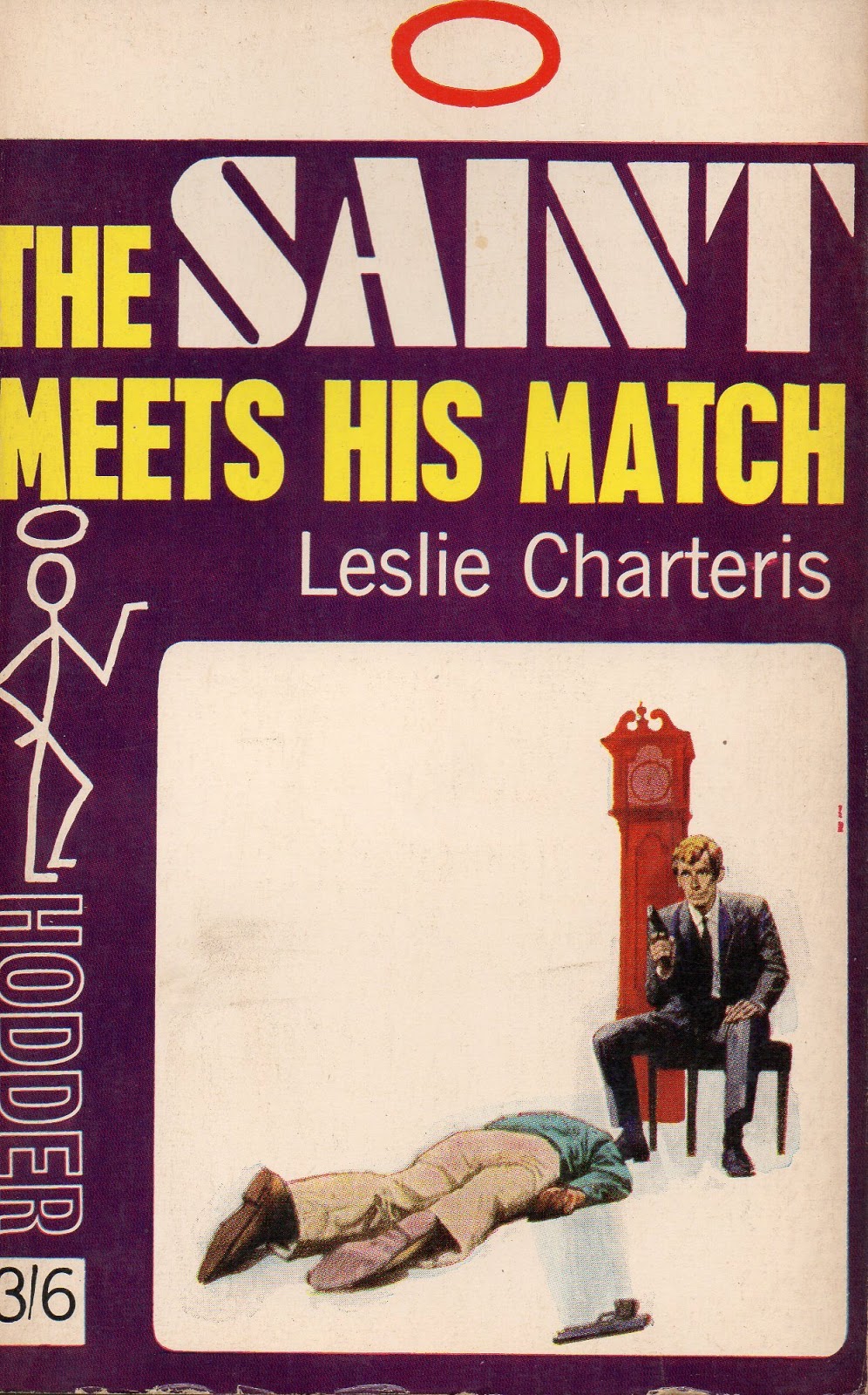
At about the same time I also enjoyed the modern adventurers on TV: The Saint, The Persuaders, Danger Man, Gideon’s Way, The Champions, The Prisoner et al. I discovered the Saint books when Hodder began publishing them as uniform paperbacks and particularly enjoyed the 1930s stories, Simon Templar’s character somewhat removed from Roger Moore’s portrayal.

I discovered Agatha Christie and Raymond Chandler while being hospitalised with an upper respiratory tract infection, having been landed from my ship to the submarine base, HMS Neptune: at my bedside stood a small bookcase stocked with several books by these authors. And at sea I read the new breed of violent westerns epitomised by George G. Gilman’s Edge character.
 
Looking back, it is difficult to determine how my affection for various genre fiction authors came about. Genre authors write good stories, I suppose, and I’ve always liked a ‘good story’. It is so much easier these days, thanks to online stores and blog reviews, to be made aware of different authors, ‘new’ to you. The downside is now the choice is bigger than ever! Naturally, browsing in book shops, twirling the whirligigs of paperbacks, reading the few weekly book reviews in the newspapers all helped me identify unfamiliar but possibly interesting books. And there are phases I passed through – western, occult fiction, true war books, spy novels, detective tales, thrillers, and science fiction.

As a writer, I believe we scribes should read broadly – both fiction and non-fiction. My affection for genre fiction is still strong, but of course I read outside that label too, and always have done so.


BARNES & NOBLE books
SMASHWORDS books
KOBO books
AMAZON COM books
AMAZON UK books


Thursday, 29 May 2014

The Mystery of Murdoch

My wife and I are following the series Murdoch Mysteries. We’re on the fourth series – there have been seven and an eighth is being produced. The TV episodes are based on the books of Maureen Jennings, who was born in Birmingham, England in 1939 and emigrated to Canada when seventeen. The stories centre round police station No.4 in Toronto in the 1890s. The main characters are Detective William Murdoch, Inspector Brackenreid and Constable Crabtree.


Jennings has written seven Murdoch books. The first is Except the Dying (1997), which was shortlisted for the Arthur Ellis and Anthony first novel awards. This book plus the next two, Under the Dragon’s Tail and Poor Tom is Cold were made into TV movies in 2004. This is where the mystery comes in. These three movies starred Peter Outerbridge as Murdoch, Colm Meaney as Brackenreid, and Matthew MacFadzean as Crabtree. The pathologist is male in the first book and underwent a scriptwriter sex-change and became Dr Julia Ogden for the movie, in the guise of Keeley Hawes.

The plot of Except the Dying is followed by the TV movie, judging by the synopsis. I have not been able to see the three TV movies; they don’t seem to be on DVD, though they were released in Canada as Murdoch Mysteries: Movie Collection. The book’s story goes: Detective Murdoch investigates the murder of a young girl found drugged and strangled in an alley. The autopsy reveals the girl was pregnant. Murdoch finds himself investigating prominent members of Toronto society when the girl is identified as Therese Laporte, a chambermaid working for a wealthy family. When a possible witness to the murder is also killed, Murdoch learns that Therese was seen voluntarily getting into a carriage, as if she knew the occupant. Before long, another witness seems to be in danger…

Jennings captures the period well and uses her research subtly, scattering the underworld vernacular judiciously; ‘… you had connections with Therese Laporte?’ Connections is a euphemism for sex.. Brackenreid in the book is Irish, so Colm Meaney was a good fit, I imagine: ‘… He had rigorously tried to expunge his native brogue but it slipped out now and again…’

Murdoch is a devout Roman Catholic. ‘Brackenreid was perfectly aware of his detective’s faith but always tried to get in a jibe or two at Murdoch’s expense...’

Murdoch rents shared accommodation with Arthur and Beatrice Kitchen, who seem to be his sounding board.

Now, the mystery is why the original cast didn’t continue for the series. The Canadian TV series Murdoch Mysteries first aired in 2008 and stars Yannick Bisson as Murdoch, Thomas Craig as Brackenreid, Hélène Joy as Dr Ogden and Jonny Harris as Crabtree. Interestingly, Australian actress Hélène Joy featured in Under the Dragon’s Tail as the wife of a judge. There’s no sign of the Kitchens. Murdoch’s sounding board is Julia – a creation of the screenwriters.
Hélène Joy as Dr Ogden


Yannick Bisson                                                       Thomas Craig
 
The series scriptwriters – and actors – seem to have nailed the characters. Granted, Brackenreid is now a bluff Yorkshireman, but his mannerisms and speech leap from the book:

            He nodded over at the wall, which the detective was using as a blackboard. ‘What’ve       you got there?’

            ‘It’s a map of the area pertinent to the scene of the crime, sir.’

            ‘I hope that chalk will rub off.’

            ‘If it doesn’t I’ll personally whitewash the wall.’

            Brackenreid went closer. ‘Explain it to me, Murdoch.’

Murdoch’s hesitation and careful, precise manner are from the book, merely enlarged upon by the actor; in the book, he has a moustache, but these days it seems quite rare for a hero to wear one (Tom Selleck excepted, of course!) so Bisson is clean-shaven.

One of the attractions for the books was the period atmosphere. The attraction of the TV series is the main leads, their on-off romance, and the introduction of virtually anachronistic crime detecting inventions. Real history and people from history often figure in the plots – Buffalo Bill Cody, Annie Oakley, H.G. Wells, Nikola Tesla, Jack London, Arthur Conan Doyle, for example. There is plenty of humour as well as gore. The TV series has a big fan base. In 2011, Rogers Media dropped the show after the fifth series, but CBC picked it up.

Reviews of the books have been good, though a few reviewers have complained that the books aren’t like the TV series – which isn’t surprising since the books came first! Then again, the publisher doesn’t really help by putting the series cast on the cover; before the series, the TV movie cast was on the cover, which was fine (even if Dr Ogden wasn’t in the book!) The fact is, the TV series helps to sell the books. It’s a business, after all.

If you like Victorian murder mysteries, you’ll find plenty to appreciate with Murdoch, in either book or TV series.
 
The other books in the series are:

Let Loose the Dogs

Night’s Child

Vices of My Blood

A Journeyman to Grief.


Tuesday, 3 September 2013

ALIENS AND COWBOYS REVISITED (sort of...)

Reading some commentators, you’d think that the concept for Aliens and Cowboys was new. Yet combining western and science fiction genres goes back to the 1950s, if not earlier.

Certainly, the pulps had fun with cross genre books, and comics tended to follow suit.

Here is an eye-catching cover of a DC Comics Special from 1970.


The Special is a crafty idea, as it repackages previously published tales about several DC frontier characters within a cross-genre story arc. There’s a book-end and linking storyline ‘Behold the Wild Frontier’ where the modern-day Gramps tells frontier tales to his two grandsons. This arc is drawn by Gil Kane, I reckon (author and artist credits were not given), and here’s the first page.
 

The rest of the stories are drawn by their respective illustrators of the time. There begins a Daniel Boone tale, ‘Son of Chief Black Fish!’ Then Gramps went on to relate the story of ‘The Junior Ghost Patrol!’ featuring Tomahawk. Next up was Davy Crocket with ‘War Stick of Chief Fighting Elk!’ This was followed by Kit Carson and ‘The Raiders of the Oregon Trail!’  We’re moving forward a little in time, I guess, and now meet Buffalo Bill in ‘Young Bill – of the Pony Express!’ No sooner is that story told than Gramps relates the story of Pow-Wow Smith, Indian Lawman. (The only story title that doesn’t boast an exclamation mark!) And the book-end/story arc concludes with Gramps meeting up with aliens. The comic is rounded off with a DPS text story, ‘Death Hunt’, uncredited.
 
[Eli Katz (April 6, 1926 – January 31, 2000) who worked under the name Gil Kane and less famously Scott Edward, Gil Stack and other pseudonyms, was a comic book artist whose career spanned the 1940s to 1990s and every major comics company and character. Kane co-created the modern-day version of the superhero Green Lantern.]
Ah, those were the days.