Search This Blog

Showing posts with label library. Show all posts

Monday, 12 May 2014

Shelfie

No, that isn't a misspelling in the title!

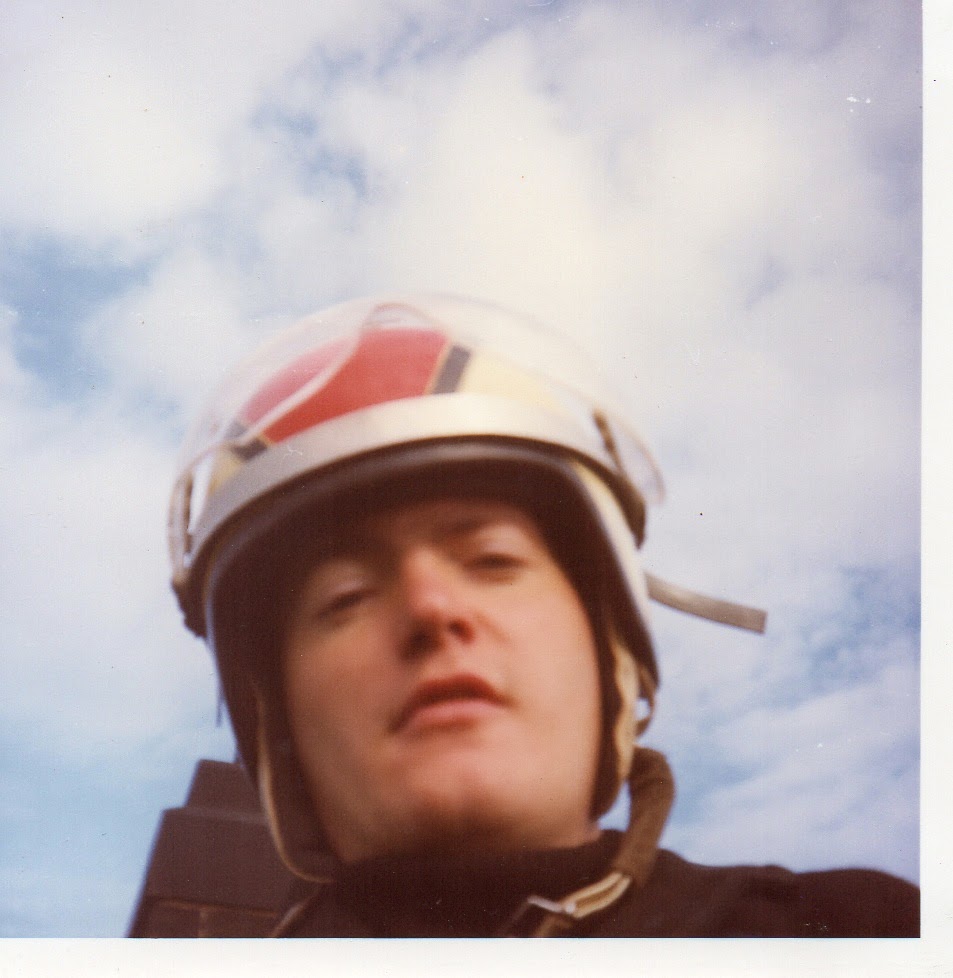
Recently, there have been a number of selfie photos about. Nothing new in the concept; since a camera was light enough to be held at arms’-length, so-called selfie photos have been taken.

Here is one I took earlier – 1968.
Now, perhaps a variant could go the rounds. [See note below!]

A shelfie – photos of books written by the photographer. Here is my shelfie.

Shelfie of Nik Morton
 
Death at Bethesda Falls, hardback and large-print - out-of-print
Last Chance Saloon, hardback and large-print - out-of-print
Pain Wears No Mask, paperback out-of-print
The Prague Manuscript, paperback out-of-print
The Tehran Transmission, paperback out-of-print
Death is Another Life, paperback out-of-print
When the Flowers are in Bloom, paperback out-of-print
A Sudden Vengeance Waits, paperback out-of-print

Bullets for a Ballot, e-book (so I use a DVD box with cover here)
The $300 Man, hardback and large-print
Blind Justice at Wedlock, hardback and large-print
Old Guns, hardback and large-print
Assignment Kilimanjaro, paperback
Spanish Eye, paperback
Blood of the Dragon Trees, paperback
Write a Western in 30 Days, paperback
Where Legends Ride, paperback (co-editor)
A Fistful of Legends, paperback (editor)
The Traditional West, anthology
[Other anthologies I’ve neglected to put on this shelf – lack of room!]

Of course a good number of authors will have two or more shelves of their books. James Reasoner, David Whitehead and Robert J. Randisi spring to mind, but there are plenty of others. My wife Jennifer collects Clive Cussler’s books and this is quite a shelf, too, viz:

Cussler books

 Talking about book-shelves, we have them in every room of the house, save the bathrooms.


 Poet’s corner

 
Our home library


Western reference shelves


Bedroom

[Still to photograph: work area, which contains sci-fi, western, reference, general non-fiction… I'll book another time for that...]

 
NOTE (27 Aug 2014). Inevitable, really, but the word SHELFIE was already coined before I wrote this. I've just learned there was an article about this in the Guardian in 2013. The term may be earlier than this, too. But here's the link http://www.theguardian.com/books/booksblog/2013/dec/16/shelfie-show-photo-your-bookshelf


Thursday, 6 February 2014

Up the wall(s)

Today, I'm painting the walls of the library (see yesterday's blog re: ceiling).

Yes, there is still wall space in here! The rest of my books are elsewhere (five or six photos, another day...)

So, sorry, there is no blog today.

Here's a section of the library - photos taken from the side where the walls are!


Tomorrow, it's Friday's Forgotten Book time.(Forgotten which book I'm reviewing. But while painting I did sort out a couple of plot details for my current work in progress (I have the plan written, but the devil is in the details...)

Adios for today.

Thursday, 23 January 2014

My e-book initiation

Compared to many, I joined the e-book revolution rather late. I have a private library of over 4,000 printed books – many thousands more were consigned to charity shops when we moved to Spain. I like to see them on the shelves. And, let’s be honest, the majority of titles aren’t on the bookshop shelves more than a couple of months, so you need to buy when you find them. I know that this attitude has been negated somewhat by the remarkable availability of books on the Internet. Yet I still like browsing bookshops of all kinds, hoping to find that nugget I’ve been seeking for years, or coming across a useful reference tome.
About a quarter of my home library

I started with a Kindle for PC on my desktop and soon realised I needed the real thing for its portability. Serendipity knocked and as I stepped down as Chairman of the Writers’ Circle, the members kindly clubbed together to buy me a Kindle.

As the Editor in Chief of Solstice (2011-2013), I found this Kindle invaluable. I converted submitted MSS to PDF and loaded them on my Kindle and read the submissions away from the computer and email interruptions.

Of course there’s nothing like holding your own printed book in your hands. That’s a special feeling. Any of my e-books that haven’t been printed yet, I create and print a DVD cover and insert it into an empty DVD case; this is then stowed on my bookshelf, physical evidence of my book’s existence. When the book is printed, I remove the DVD case from the shelf.

The first time I ordered an e-book through my Kindle, I was impressed. What I like is that any e-book I order from Amazon.com (all non-UK orders have to go through .com and not .co.uk), once I’ve read it I can remove it from my device and it resides in the Archive at Amazon. I can call it back to my Kindle at any time.

I’m not impressed with the fact that 99c books bought through Amazon end up costing a lot more – about $3.40 due to taxes; though the read is usually still a bargain.

And, unlike most print publishers, e-book publishers will accept novellas and even single short stories. In the old days, action and adventure stories had a market in men’s and weekly magazines, but that’s long since been closed. Indeed, several popular male writers of the sixties and seventies started with magazine stories. Now, e-publishers may provide an outlet for that material. As long as the standards don’t slip.

And that’s the downside of e-books - the proliferation of self-published books. There’s nothing wrong with getting a book self-published, so long as it has been properly edited. Sadly, many e-publishers pay scant attention to editing. I know, even mainstream publishers are guilty of howlers these days. A Clive Cussler co-authored book mentions the Royal Army, presumably assuming that since there’s a Royal Navy and a Royal Air Force, it must be right! And that was in hardback, not e-book. Danielle Steel’s The Ring has at least 35 typos, after which I stopped counting. So sloppy editing isn’t just the province of e-book publishers. Granted, some things always tend to slip through, no matter how many edit passes you make. I’ve invented the editor’s curse: readers spot the things you missed, but don’t notice all that you do because it’s invisible.
 
As the saying goes, everybody has a book in them – but for the majority that’s where it should stay. The e-book revolution has made it too easy for dross to get published. It was bad enough with the countless vanity publishers whose editing was generally abysmal, but now it’s worse. I’ve reviewed a few vanity/assisted published books in my time and to be fair I believe that both Matador and, in particular, Pen do serve their clients well.
 
Because an e-book can be produced relatively fast – as compared to the mainstream lead-time of eighteen months – there’s a tendency to rush the work out. This undue haste should be mitigated with quality control constraints.

Not surprisingly, one type of e-book has undergone a remarkable surge in popularity – the erotic novel. Where somebody might have baulked at reading an erotic paperback in public, they have no inhibition about reading one on an electronic device. Brown wrapping paper has probably seen a drop in sales.
 
And in this information age it’s quite likely that people who wouldn’t dream of reading a print book – I read a book once, why read another one? – might be drawn to e-books because they’re onscreen and digital. In the old days, you had your purchasers of hardbacks and of paperbacks, often separate individuals; now you can add to the mix purchasers of e-books.
 
Of course, e-books don’t suffer from broken spines, spilt liquid stains, page discolouration and mould. They remain pristine. There’s another plus: no shelves to dust.

E-books are not demons or replacements for books. They’re another outlet for creative writing. As before, the reader needs to beware that not all books will live up to their promise on the blurb.
 
Where once I didn’t see the relevance of e-books, now I can accept them as yet another method of reaching readers.
***
My e-books are:
Blood of the Dragon Trees (Crooked Cat Publishing)
Spanish Eye (Crooked Cat Publishing)
Write a western in 30 Days (John Hunt Publishing)
Bullets for a Ballot (BTAP Publishing)
Death is Another Life (Solstice Publishing)
When the Flowers are in Bloom (Solstice Publishing)


Thursday, 19 December 2013

Not lost in translation – 1 - German and French

An earlier FaceBook discussion about the paucity of foreign language books translated into English prompted me to check out my own library.  Below are two images of a quarter of the library.

The other shelves are elsewhere… These books here are in the main fiction, with some reference and art books and Jen’s Spanish tomes. I must admit that the majority of translated works on the shelves are not modern authors, after all, and some I have yet to read (among several hundred others!)

Here you’ll find Dumas, Simenon and Verne – the most popular novelists translated.

Others are, in no particular order:

Allain & Souvestre’s Fantomas, the first of a series, originally in French, published in 1911. There were 31 sequels. Souvestre died of the Spanish ‘flu in 1914, while Allain fought in the trenches, survived, produced eleven more Fantomas novels plus six hundred novels, and married Souvestre’s widow. Fantomas was an antihero, malevolent, a genius of crime, waging war on bourgeois society, masked and wearing evening clothes, a dagger in hand. He ‘violated society women and left their delicately slashed bodies for the servants to find…’
 
And of course the collected works of Guy de Maupassant, which I actually picked up during a visit to Canada! Also, Count Jan Potocki’s The Sargasso Manuscript. This last is a selection of stories written in the tale within a tale style, describing the adventures of a young Spanish captain reared in France who, on a visit to his country, sleeps in a haunted inn and finds his life turned into a gothic nightmare. Originally written in French and first published in St Petersberg in 1804. The original only in Polish contains stories for 66 ‘Days’; this English translation covers only the first fourteen days. Potocki was a Polish nobleman, traveller, diplomat, soldier, ethnologist, archaeologist and balloonist.


Another ‘Frenchman’ is Claude Izner. This is actually the penname of two sisters, Liliane Korb and Laurence Lefevre. They’re booksellers on the banks of the Seine and experts on nineteenth century Paris. Izner’s hero in The Murder on the Eiffel Tower is a young bookseller, Victor Legris, who witnesses the death. As he investigates further, more deaths occur… Legris’s follow-up adventure is The Pere-Lachaise Mystery (2003,2007).
 

Thomas Mann is considered the most important figure in German literature in the first half of the twentieth century. His prose is of his time, omniscient with author intrusion, but soon you get lost in his often monumental tales. The Magic Mountain (1924), Death in Venice (1911), Confessions of Felix Krull (1955) and Buddenbrooks (1901) which drew on autobiographical material. He was awarded the Nobel Prize for literature in 1929.

Some years ago I went through a Hermann Hesse phase and found his collection Stories of Five Decades as a good introduction to his work, ranging from 1899 (he was born in Germany in 1877) up to 1948. He is known for, among others, The Prodigy, Rosshalde, Demian, Siddhartha, Steppenwolf and The Glass Bead Game. He got his Nobel in 1946.

Proust’s Remembrance of Things Past is a marathon 7 volumes and I haven’t finished it yet. Its new title is In Search of Lost Time (revised translation in 1992). My copy is a translation by C.K. Scott Moncrieff and Terence Kilmartin (1981), and it flows beautifully.

‘… so strong an element of hypocrisy is there in even the most sincere people, who lay aside the opinion they actually hold of a person while they are talking to him and express it as soon as he is no longer there…’ – Swann’s Way, p163.

‘There are mountainous, arduous days, up which one takes an infinite time to climb, and downward-sloping days which one can descend at full tilt, singing as one goes.’ – Swann’s Way, p424
 

Zola was remarkably prolific. He gained immediate notoriety with Therese Raquin (1867), the book being labelled ‘pornography’ by critics, whose comments Zola referred to as ‘a churlish and horrified outcry’, thus ensuring its sure-fire success. The novel is a grim tale of adultery, murder and revenge and is still powerful today.

Next, I’ll look at the Spanish and other language translations in my library…