Search This Blog

Showing posts with label Cazador. Show all posts

Wednesday, 10 May 2023

QUILLER BALALAIKA - Book review

Sadly, Balalaika is the last Quiller novel (published 1996). Adam Hall (Elleston Trevor) died the day after he finished it, in July 1995.

It’s contemporary: following the fall of the Soviet Union, the Russian mafiya is poised to take over the new Russia by destroying the country’s economy. The man responsible and capable of achieving this is a British Moscow-based national, a defector from the Foreign Office, who escaped the country and was given the rank of Colonel in the KGB. ‘His name is Basil Secker, and he uses the Russian alias of Vasyl Sakkas’ (p11). Sakkas is elusive and powerful. Quiller’s mission – Balalaika – is to infiltrate the mafiya and then find and neutralise Sakkas in some manner.

Briefed by Chief of Signals Croder, Quiller is made aware that this is a dangerous ask, with poor chance of success. Quiller requires Ferris as his director in the field; this is so important, that Ferris will be pulled off the Rickshaw mission in China.

As before, Quiller shuns the use of any gun. He is adept at unarmed combat, delivering death when his life is threatened or the mission is at risk of collapsing.

All the style of the previous novels is here displayed at the hands of a 75-year-old thriller writer at the top of his game: the usual spare prose, the stream-of-consciousness writing, the extensive scene of hand-to-hand combat (subsequently employed by Lee Child, among others), and his continual argument with his pain-averse conscience, often referring to himself as ‘the little ferret’.

‘It was eight days since Ferris had been ordered out of the field and by now the lights would be switched off over the board, either that or a new mission would already be set up there with data coming in from the director in Algeria or Baghdad or Beijing, while Mr Croder shut himself up in his tempered-steel shell to consider whether or not to resign, how much guilt to feel for the little ferret he’d left running in circles through the snow, or whether he could hold out a spider’s-thread hope for an eleventh-hour last-ditch breakthrough for the mission, knowing as he did the blind tenacity of said ferret when the jaws of adversity gaped from the shadows of the labyrinth’ (p232).

The breathless climax in wintry Moscow is fitting, another Hall-mark fast-paced ending.

‘That’s it.’ So the author finished his last book. There’s a poignant four-page Afterword contribution by Jean-Pierre Trevor, his son.

Editorial notes:

Combat

In two places Hall mentions hitting the nose with force, driving the bone into the brain and causing instant death. However, when researching my recent  Leon Cazador novel No Prisoners, I learned that this is probably not so: ‘Next instant, Leon deployed the ninja Fudo-ken, the clenched fist slamming full into the man’s nose, shattering the bone structure. While the bone and cartilage probably wouldn’t penetrate his perverted brain, the blow would undoubtedly cause subdural hematoma which was bound to deny the brain adequate blood flow. As a result, a biochemical cascade was in all likelihood happening right now as Leon dispassionately watched. Brain cell death was imminent. No great loss to humanity.’

Chapter titles

The single-word chapter headings were not always evident. In The Quiller Memorandum of the 23 chapters only 12 are single words; interestingly Ch3 is ‘Snow’ and in Balalaika Ch1 is ‘Snow’.

His fourth Quiller (The Warsaw Document) is the first with the consistent use of single-word chapter headings. There is only one other exception, in Quiller’s Run, with 11 of 32 being two-word titles, one of them being ‘Pink Panties’!

Certainly, inevitably, as mentioned already, some chapter headings will be repeated, not least ‘Midnight’.

Why mention this? For my Tana Standish psychic spy novels I adopted Adam Hall’s penchant for single-word chapter titles (Mission: Prague, Mission: Tehran, and Mission: Khyber). In contrast, my Leon Cazador novels have two-word chapter headings (Rogue Prey, No Prisoners, and Organ Symphony).

See also: WRITEALOT: Book review - Quiller: A profile and Bury Him Among Kings (nik-writealot.blogspot.com)


Thursday, 9 January 2014

China tackles illegal ivory trade


Torn from the pages of the New York Times - an article entitled ‘China Destroys 6 tons of ivory’ by Bettina Wassiner. [This is a shortened version].
Over the past five years or so, poaching of elephants has swelled to record numbers, and China’s been accused as the main culprit with its huge appetite for ivory.

On Monday (6 Jan), however, the Chinese authorities received widespread plaudits when, in a first for the country, they destroyed more than six tons of confiscated ivory ornaments and tusks in Dongguan, a city in the southern province of Guangdong, which is a major hub for the ivory trade.

The widely publicized event was attended by state officials, foreign diplomats and wildlife campaigners.

Cristián Samper, president and chief executive of the Wildlife Conservation Society: congratulated the Chinese government “for showing the world that elephant poaching and illegal ivory consumption is unacceptable. We are hopeful that this gesture shows that we can win the war against poaching and that elephants will once again flourish.”

Patrick Bergin, chief executive of the African Wildlife Foundation: “a courageous and critical first step by China to elevate the important issue of wildlife trafficking and elephant poaching among its citizens and around the world.”

Last November, the United States destroyed six tons of ivory. The Philippines, Kenya and Gabon have also destroyed stocks of ivory in their countries.

Rising affluence and more open trade links between China and the rest of the world have fuelled demand for scarce natural resources – anything from ivory to tortoises, shark fins and rosewood – over the past few years, wreaking havoc in many ecosystems and pushing many species to the brink.

The trade is lucrative. Raw ivory can fetch more than $1,000 a pound.

Perhaps the event in Dongguan will help hammer home the message: there’s no profit in slaughtering elephants.

But there’s still a long way to go. Those six-plus tons destroyed represent only a small part of China’s total ivory stockpile, estimated at about 45 tons. Hong Kong’s stash of confiscated ivory has swelled sharply, thanks to several large intercepts in recent years. If China were to destroy the remainder of its ivory stocks and lead the world by committing not to buying ivory in the future, the impact on the survival of African elephants would be immense.

And of course this doesn’t stem the tide of illegal trading in tiger bones and rhino horns for medicinal purposes…

Amazon co.uk Kindle may be purchased here

Blood of the Dragon Trees - a brief excerpt:
Thirty men constantly whittling and inscribing created a surprisingly loud noise inside the high-roofed warehouse. Dolores and Cipriano strode down the aisles of Chinese and Korean men. On her right was the production line for rendering ivory into hanko – small inscribed cylindrical seals.
            ‘Don’t you just love the intricate work of these guys?’ Cipriano said.
            ‘Yes, darling, they’re works of art. They’re given a good salary and we make millions. It’s called the art of making money. Everybody wins.’
            On their left was another production line, where elaborate figurines were being carved out of the ivory tusks of elephants.
            ‘I’ve got a shipment of walrus tusks coming in next month,’ Cipriano said. ‘They’ll fetch more than this, because they’re so rare.’
             At mention of ‘rare’, her brow darkened. ‘We must be careful, Cippi, dear. We’re becoming too successful.’
paperback may be purchased postfree worldwide here
 
Spanish Eye - a brief excerpt:
I shook off such heavy introspective thoughts and studied the photograph.
It showed a large boa constrictor, beautifully marked with cream, brown, tan and gray camouflage ovals and diamonds.
“That’s more like it!” I said enthusiastically. I’d played enough poker games to know that my face betrayed none of my true emotions.
Such exquisite skin belonged on the reptile, not on somebody’s feet or handbag. Still, I was being marginally unkind to Señor Perez whose business was finding expensive homes for exotic pets and not slaughtering endangered species for eye-catching fashion accessories.


Friday, 29 November 2013

Torn from the news – ‘haul at sea’

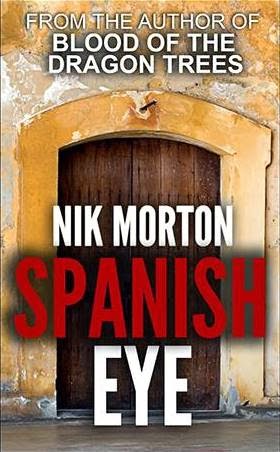
Spanish Eye contains 22 cases from Leon Cazador, half-English, half-Spanish private eye.  Its release date is 29 November, from Crooked Cat Publishing.


The vast majority of these cases are based on true events…  The short story ‘Night Fishing’ was first published in magazine format in 2006: here is a very brief excerpt:

Night Fishing


“…hold back the encroaching night of unreason.”

Dusk fled quickly, as it does out here in the south of Spain. The warm night air was humid and still. The full moon’s reflection glinted from the calm Mediterranean. Behind me, crickets chirruped but I barely heard them as I was concentrating on the little fishing boat out at sea, with its nightlight casting a circle of white around the stern. From the cliff top, I watched the three of them through 10x50 binoculars, and my fears were confirmed. Old Salvador Molina needed his strong sons to haul the net in because it seemed to contain a heavy object. My heart sank.

Sometimes, the night of unreason lurks in dark recesses, waiting to cloak the good earth, and it would seem that even this honest fisherman was not immune to the importuning of this evil night.

Well, I said it was brief…

From time to time police reports echo the Cazador tales, and this is but one of them, from the Costa Blanca News of August 23, 2013:


Often, crime syndicates don’t float items but submerge them, and they’re then marked with an unobtrusive buoy. Of course this smuggling technique is used worldwide and isn’t specific to the coast of Spain. To learn how this pertains to Salvador Molina, you’ll have to read the book…


Monday, 16 September 2013

Beginning – the hook


I’ve said it a number of times, but it’s worth repeating: beginnings of stories and novels are important. They’re the hook for the reader. 

Many film directors appreciate this too. Pull the audience in quickly and then never let go. I’ve sat through a number of movies where the start was inauspicious, plodding, revealing nothing about the characters, the environment or the story theme – and then found that eventually the story (at last!) takes hold. Nowadays, that leisurely approach rarely works in the written word. The audience, the reader, needs to be sucked in by the first paragraph or two. He or she isn’t going to invest precious time in something that doesn’t intrigue, excite interest or raise questions.

That doesn’t mean the writer should spend ages on the beginning, honing it, striving to ‘get it right’ – the beginning might well not resolve itself until the work is completed.

I’m pleased to announce that I have signed a contract with Crooked Cat Publishing for Spanish Eye, a collection of short stories about Leon Cazador, private eye. The image is taken from the Crooked Cat Facebook page announcement (it isn’t the cover): https://www.facebook.com/crookedcatpublishing


Spanish Eye makes a great companion volume to my book Blood of the Dragon Trees, set in Tenerife, also published by Crooked Cat.


These stories were previously published by Solstice, but the contract expired; an extra short story has been added, so now there are twenty-two first person tales, a couple of them award-winners, all of them previously published in magazines (though lengthened in most cases). Here below are samples of a selection of beginnings from the collection (this post would be too long to include all of them!).
 
Relic Hunters
Angel Ramos held his breath as he carefully unlatched then lifted the ornate lid off the rosewood box. A distinctive smell emerged like a palpable thing, together with a fine miasma of dust that floated in the sunbeams slanting through the hotel window. It was the aroma of old parchment or vellum that harboured the dust of centuries.
Night Fishing
Dusk fled quickly, as it does out here in the south of Spain. The warm night air was humid and still. The full moon’s reflection glinted from the calm Mediterranean. Behind me, cicadas chirruped but I barely heard them as I was concentrating on the little fishing boat out at sea, with its nightlight casting a circle of white around the stern. From the cliff top, I watched the three of them through 10x50 binoculars, and my fears were confirmed. Old Salvador Molina needed his strong sons to haul the net in because it seemed to contain a heavy object. My heart sank.
            Sometimes, the night of unreason lurks in dark recesses, waiting to cloak the good earth, and it would seem that even this honest fisherman was not immune to the importuning of this evil night.
Grave Concerns
The mass grave by the roadside was not the first in Spain to be unearthed in the last four years and it wouldn’t be the last. On each side were carobs and bright yellow and blue wild flowers, a tranquil contrast to the macabre sight before us. Men in the trench wore gauze masks over their mouths as they lifted out human bones and strips of clothing and placed them reverently on a length of tarpaulin. Behind them stood an idle mechanical earth-digger, while beyond the fields of rosemary and artichokes rose the rugged mountains, mute witnesses to what had happened about sixty-seven years ago.
        
Off Plan
I was wearing a false moustache, grey coloured contact lenses, and my hair was dyed black. My brother, Juan, wouldn’t recognize me. In fact, I had difficulty recognizing me. I was no longer Leon Cazador but Carlos Ortiz Santos. Sometimes it was necessary to wear a disguise and take on a fake name to hoodwink the ungodly. This was one of those times.
Endangered Species
He had large eyes, big ears and, surprisingly, his middle finger was very long on each hand. “He looks cute,” I said, lowering the photograph of the little aye-aye. His hair was black, and he had a long bushy tail. His eyes seemed to be expressing surprise at finding himself in a cage rather than the diminishing rain forests of Madagascar. Perhaps the daylight conditions affected him, too, which wasn’t strange really, as his kind is nocturnal. “But,” I added, shaking my head in mock concern, “my fiancée wants something a bit more exotic. Know what I mean?”
Big Noise
“You’ve come to the right person, Mr. Santos!” Darren Atkins said, speaking louder than was necessary in the tapas bar that overlooked the Plaza Mayor. “My product is the best on Spain’s south coast, take my word for it! I’m the big noise around here!” Every sentence tended to end with an exclamation. This self-styled important person was big in other respects as well. Even when I use my real name, Leon Cazador, rather than my undercover alias of Carlos Santos, I stand six feet high in my open-toed sandals; yet Atkins was a couple of inches taller than me. His Hawaiian-style short-sleeved shirt bulged because he had big muscles and shoulders. Because he had shaved his head, his big ears appeared more prominent and tended to press forward like little radar. I wondered if that feature prompted him to go into the acoustics business.
Duty Bound
A mountainous landscape populated by dragons strode out of the swathes of sauna steam and approached me. Hiroki Kuroda was tattooed over his entire torso and down to his wrists and calves. At a glance, he gave the impression that he was wearing long johns; instead, he was a walking exhibition of yakuza body art. Ray Bradbury’s Illustrated Man sprang to mind, but this was no fantasy. As a member of the yakuza, a Japanese criminal organization similar to the Mafia, Hiroki endured hundreds of hours of pain simply to show that he could. He waved with his left hand. The little finger was missing at the first knuckle.
Burning Issue
Landscape defines some towns and cities. And even the people and the small mountain town of Cocentaina were perhaps typical. So I thought as I drove Jacinto Alvarez and his wife Puri along the A7 on our approach. The town had been under siege more than once in its history and I reflected that that was how the Alvarez couple felt right now.
Pigeon Hearted
Fireworks in daytime are not particularly spectacular, but that doesn’t deter my Spanish compatriots from setting them off. The clear blue sky was momentarily sprayed with silver and red stars as the single rocket exploded above the town square. Minutes afterwards, a profusion of colours darted above our heads, but this display wasn’t the transient starburst of more pyrotechnics. The palette that soared in the sky came from garishly painted pigeons released from patios, balconies, rooftops, and gardens. In the next few minutes, the number of male birds increased to perhaps seventy.
I hope they've given you a taster for the book, due out later this year!

The late Elmore Leonard famously stated ‘never begin any story with the weather’. He meant get into the character or the action immediately. I’d agree with that – though there are other considerations. Raise a question that the reader wants answered, create a visual image that lodges in the reader’s head. The above examples probably do some of that, I believe.
 
So, that’s the end of the beginning – for now.