Search This Blog

Thursday, 18 October 2018

Book of the film - Vanity Fair


I watched the DVD of the TV six part mini-series Vanity Fair (1998), Andrew Davies’s splendid adaptation of William Thackeray’s classic tome, mostly while reading this version in the Penguin English Library (1983) edited by J.I.M. Stewart. The series featured Natasha Little as Becky Sharp, Frances Grey as Amelia (Emmy) Sedley, Philip Glenister as William Dobbin, Tom Ward as George Osborne, Nathaniel Parker as Rawdon Crawley, and the ubiquitous Anton Lesser as Mr Pitt-Crawley, among others.

For many a year I’d been meaning to read this ‘landmark in the history of English fiction’ (says Stewart). It seemed a daunting task, all 766 pages of it. As it happens, it wasn’t onerous at all. Possibly my reading was helped by the dramatisation; it was fascinating to detect swathes of speech used by Davies in his excellent screenplay.

Vanity Fair appeared in monthly numbers of an episodic novel from January 1847 to July 1848; it was published in book form in 1848 (revised 1853). He was thirty-four when he began the book.


Vanity Fair’s sub-title is ‘A novel without a hero’. However, as Thackeray writes, ‘… at least let us lay claim to a heroine. No man in the British army which has marched away, not the great Duke himself, could be more cool or collected in the presence of doubts and difficulties, than the indomitable little aide-de-camp’s wife.’ [i.e. Becky] (p353)

The term “Vanity Fair” is adopted from Bunyan’s Pilgrim’s Progress, suggesting a never-ending fair along the pilgrim’s route, loosely a playground of the idle and undeserving rich: a microcosm of several nineteenth century lives. ‘Vanity Fair is a very vain, wicked, foolish place, full of all sorts of humbugs and falsenesses and pretensions.’ (p116)

Rebecca (Becky) Sharp is penniless, cunning and attractive: ‘Green eyes, fair skin, pretty figure, famous frontal development…’ (p235) ‘She gave a sigh, a shrug with her shoulders, which were already too much out of her gown…’ (p734) She is also ‘a hardened little reprobate’ (p763) To begin with, she is determined to make her way in society. On leaving school (under a cloud) Becky joins her friend Emmy (Amelia) and stays with her family in London. Emmy is good-natured but naïve, and ‘the consummate little tragedian’ (p765). Her brother Jos is visiting and is attracted to Becky, but the potentially fruitful courtship is stymied by George Osborne, the suitor of Emmy, after an outing at Vauxhall. George’s best friend William is secretly in love with Emmy, but appreciates that she does not consider him in any kind of romantic light; he seems doomed to sustain unrequited love.

Throughout, Thackeray intrudes as the author – or puppet-master. He can be forgiven, for usually his asides are amusing or even insightful. ‘The novelist, who knows everything...’ (p389) And sometimes he has to pull himself up – ‘… But we are wandering out of the domain of the story.’ (p453)

‘… my readers must hope for no such romance, only a homely story, and must be content with a chapter about Vauxhall, which is so short that it scarce deserves to be called a chapter at all. And yet it is a chapter, and a very important one too. Are not there little chapters in everybody’s life, that seem to be nothing, and yet affect all the rest of the history?’ (p88)

Thackeray discloses his intent more than once, sometimes blatantly, sometimes subtly: ‘Such people there are living and flourishing in the world – Faithless, Hopeless, Charityless; let us have at them, dear friends, with might and main. Some there are, and very successful too, mere quacks and fools: and it was to combat and expose such as those, no doubt, that Laughter was made.’ (p117)

Thackeray employs omniscient third person point of view and author intrusion with good effect. (Though I was surprised he used the phrase ‘thought to herself’ (p229): the ‘to herself’ is superfluous, after all.)

Having failed to land a husband in Jos, Becky takes her leave of Emmy and finds employment at the dilapidated stately home Queen’s Crawley as a governess of the two daughters of Sir Pitt Crawley, a rather crude fellow (played with gusto by David Bradley); this character is the father of two sons, the cleric Pitt (to confuse matters!) and Rawdon. ‘The elder and younger son of the house of Crawley were, like the gentleman and lady in the weather-box, never at home together – they hated each other cordially.’ (p129)

Their aunt, spinster Miss Matilda Crawley, is rich and they all lust after her wealth so seek her favour… Her favourite appears to be Rawdon, however. Unfortunately, when she discovers that Rawdon has secretly married Becky, she turns against them both.

In the meantime, Amelia’s father has hit hard times and becomes bankrupt. When Dobbin encounters him, it is a sorry sight: ‘His face had fallen in, and was unshorn; his frill and neckcloth hung limp under his bagging waistcoat.’ (p240) There are many instances where the writing evokes sympathy and empathy: ‘He covered his face with his black hands: over which the tears rolled and made furrows of white.’ (p631)

I was amused to see that there was a Mrs Captain Kirk in the story… (p320) Long before Star Trek, of course! And later, we have none other than Reverend Silas Hornblower, ‘who was tattooed in the South Sea Islands.’ [A painful area of the anatomy, I imagine!] (p392)

With the help of William Dobbin, George marries Amelia but is disinherited as a result. When called to battle, he is grateful to be gone from her side [the cad!] (p355)

With the conniving help of Becky, George lived well (from his gambling prowess and by not paying his debts). Thackeray castigates his kind, who take advantage of honest traders, always promising payment, never paying it. ‘I wonder how many families are driven to roguery and to ruin by great practitioners in Crawley’s way? How many great noblemen rob their petty tradesmen, condescend to swindle their poor retainers out of wretched little sums, and cheat for a few shillings? … When the great house tumbles down, these miserable wretches fall under it unnoticed.’ (p438)

There are many memorable turns of phrase used: ‘Time has dealt kindly with that stout officer, [Colonel Sir Michael O’Dowd] as it does ordinarily with men who have good stomachs and good tempers, and are not perplexed over much by fatigue of the brain.’ (p506) Another – ‘If sarcasm could have killed, Lady Stunnington would have slain her on the spot.’ (p601)
And he has fun with names, too: Mr Wagg, Duchess of Stilton, Duc de la Gruyere, Marchioness of Cheshire, Comte de Brie and so on… (p589) and Rev. Felix Rabbits (whose wife birthed thirteen sisters! (p697)

The relationship between Amelia and Dobbin is laid bare, finally. ‘She wished to give him nothing, but that he should give her all. It is a bargain not unfrequently levied in love.’ (p776)

Despite her ‘wild and roving nature’ (p755), Becky gave Rawdon a son (though she could not bear to be with the poor boy). Amelia too had a son, named George, whose teacher was a Mr Veal: ‘And whenever he spoke (which he did almost always), he took care to produce the very finest and longest words of which the vocabulary gave him the use; rightly judging that it was as cheap to employ a handsome, large, and sonorous epithet, as to use a little stingy one.’ (p655)

Thackeray was aware of women’s plight in the man’s world he inhabited. ‘What do men know about women’s martyrdom? We should go mad had we to endure the hundredth part of those daily pains which are meekly borne by many women. Ceaseless slavery meeting with no reward; constant gentleness and kindness met by cruelty as constant; love, labour, patience, watchfulness, without even so much as the acknowledgement of a good word; all this, how many of them have to bear in quiet, and appear abroad with cheerful faces as if they felt nothing…’ (p659) Later (p663) he alludes to the ‘women for the most part who are … hospital nurses without wages…’ – in short, family carers. Still topical today, even…

Political leaks are nothing new, either. ‘When one side or the other had written any particularly spicy despatch, news of it was sure to slip out.’ (p732)

And perhaps Thackeray was cognizant of those who are easily offended (the nineteenth century sort, not the twenty-first century snowflakes): ‘… it has been the wish of the present writer, all through this story, deferentially to submit to the fashion at present prevailing, and only to hint at the existence of wickedness in a light, easy, and agreeable manner, so that nobody’s fine feelings may be offended.’ (p738) [My italics.]

The book has endured as a true classic, for many reasons, but not least because Thackeray made his characters seem real, complete with their faults. Nobody is wholly likeable, none are actually evil, but several are driven by greed, lust, or prejudice. In effect, he has shone a light on the human condition.


Wednesday, 17 October 2018

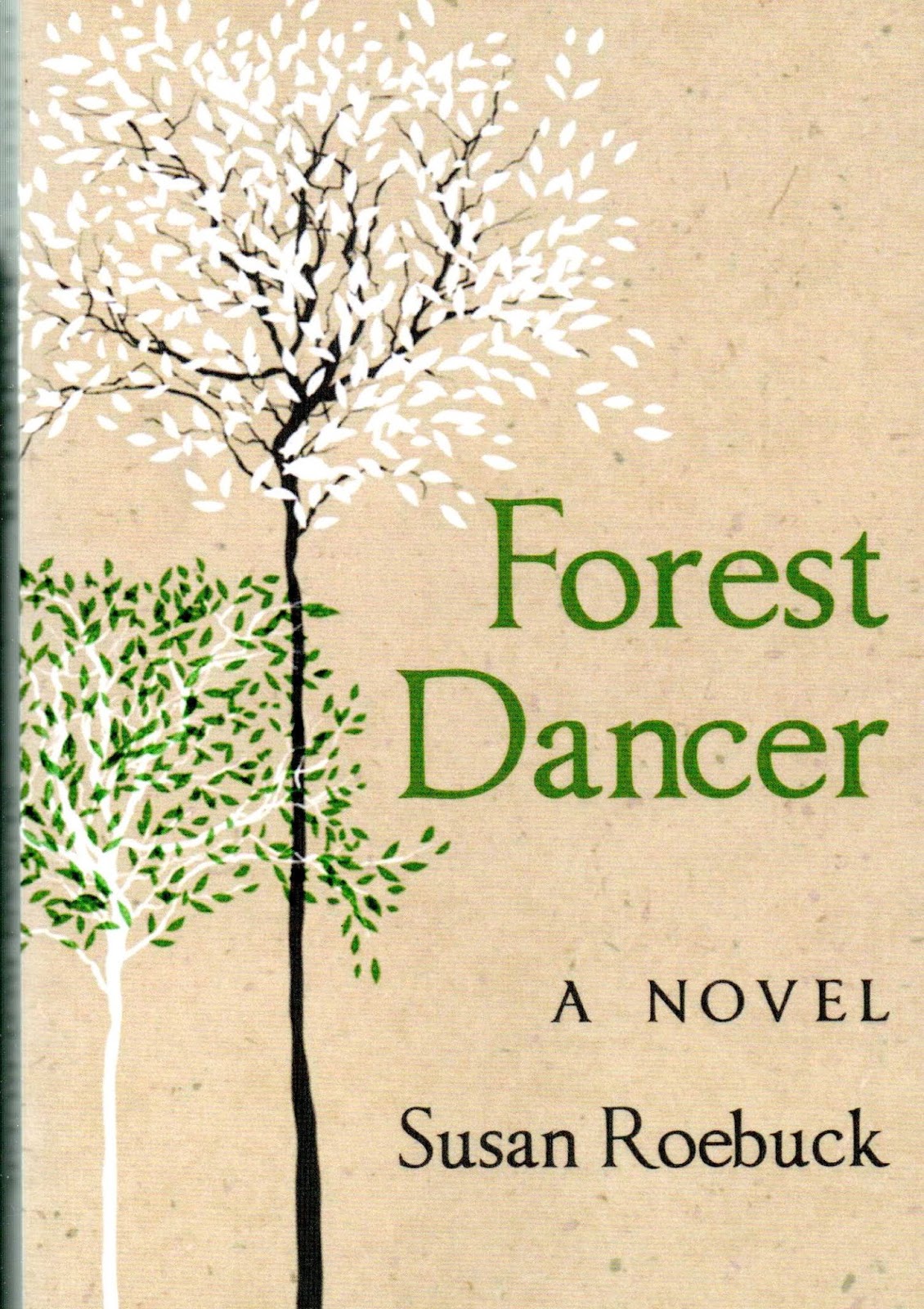
Book review - Forest Dancer


Susan Roebuck’s novel Forest Dancer (2018) is an unashamed romance and  none the worse for that.


Flora is a ballerina with back trouble who, having failed an audition, goes off to Portugal to claim the village cottage left to her by her late father. 

The book has all the ingredients to keep the reader turning the pages: interesting and varied characters, an exotic setting, mystery, corruption, humour and conflict.

While waiting for her flight from London to Lisbon, she finds herself in an overcrowded airport lounge, ‘so she sat on the floor and whiled away the time watching knees go by, trolleys bashing into each other, and braiding pieces of her hair, a habit she’d had from childhood. If she did it for long enough she ended up looking like she’d plugged herself into a light socket, and she was halfway there now' (p18). Here, she meets a handsome Portuguese man, Gil Morais, the darling of daytime TV in his country. ‘Latin Lothario, she decided.’ (p19)

We will meet Gil again, frequently, as he evolves a crackpot plot to ensnare Flora… 

Flora’s arrival at the cottage is a surprise to the people who are living there: Dina and her young daughter Raquel. Reluctant to turf them out, Flora finds accommodation at a nearby bed and breakfast place run by an English woman, Elizabeth. The only other resident is Sally, an old widow with a pet blue bird, Boris, who is partial to biting the columella of people’s noses – enough to bring water to the eyes!

Another person of interest is Marco, a strong silent type working as a Forestry Commission warden. He’s not keen on men in Armani suits, particularly if they’re investigating the viability of setting up a fracking plant in the forest.  An Armani suit: ‘First sign of a villain, in his opinion.’ (p23)  He also does odd jobs for Elizabeth and seems to have an attachment to Dina...

Apparently, there’s a saying in ballet: ‘Work to impress. Dance to express.’ (p121) And Flora does just that, taking on the task of teaching the local school children to dance in a tableau that involves protesting against the proposed fracking.

Gil’s crazy ideas about the local standing stones suggest a threat to Flora but in fact provide light amusement instead. Raquel is endearing and her plight, when revealed, is touching.

Inevitably, Flora and Marco are drawn to each other, yet misunderstandings and deceit muddy the waters for most of the book; and thus keep the reader turning the pages!

I enjoyed the humour and the affectionate descriptions that brought the characters and the village to life.

Recommended.

Tuesday, 2 October 2018

Beginnings - some samples


BEGINNINGS - PUBLISHED SHORT STORIES

I CELEBRATE MYSELF
The stench was overwhelming, a mixture of mildewed fast-food, feces, rotten fruit, used sanitary towels, crumpled tabloid sheets of the New York Daily News and God knows what. I gagged and fought back the bile that threatened to lead a revolt of my stomach as I crawled over trash in the shadows. If my husband could see me now, he’d have a fit.

NOT TO COUNT THE COST
Up to that time I thought we could cope with anything.  Until the snow struck. It wasn't the predicted heavy snowfall but a freak intense blizzard: ice spicules pummelled the canvas-covered trucks, sent up a deafening rataplan from the vehicle bonnets; the temperature plummeted to minus ten degrees.

THE END IS NIGH
All the churches in the world were full. And the synagogues. And the mosques. As an atheist I wasn’t surprised that all this prayer wasn’t working. Unfortunately, nothing else was, either. Science had no explanation. For five years now there hadn’t been a single baby born. Not one. Plants and flowers no longer bloomed. They didn’t die, they just never blossomed into flower, their leaves a dull grey.

NOURISH A BLIND LIFE
Not long now. My tenacious hold on this mortal coil is weakening but I have no regrets as I look down and for the first time in sixty years see myself, lying there, still trapped within that faithful, old husk. There is no bitterness in me; the poor body served me well enough, impaired as it is: it kept me going until I met her and fifteen years beyond.

OUTCAST
She came out of the godforsaken planet's seasonal mists, struggling under her immense weight. She wasn't welcome.

THE HOUSE OF AUNTY BERENICE
Purple was etched beneath her wide eyes. The slightly built girl in the shadowy doorway wore an eggshell-blue dress and apparently nothing else. Some people answer and look as if they're truly at home, in body and spirit; somehow, she didn't seem to belong, not here in this dilapidated house, not in shadow.

DUTY BOUND
A mountainous landscape populated by dragons strode out of the swathes of sauna steam and approached me. Hiroki Kuroda was tattooed over his entire torso and down to his wrists and calves; at a glance he gave the impression that he was wearing long johns, instead of which he was a walking exhibition of yakuza body art. As a member of the yakuza, a Japanese criminal organization similar to the Mafia, he endured hundreds of hours of pain simply to show that he could. Hiroki waved with his left hand; the little finger was missing at the first knuckle.

ENDANGERED SPECIES
He had large eyes, big ears and, surprisingly, his middle finger was very long on each hand.  ‘He looks cute,’ I said, lowering the photograph of the little aye-aye. His hair was black and he had a long bushy tail. His eyes seemed to be expressing surprise at finding himself in a cage rather than the diminishing rain forests of Madagascar.  Perhaps the daylight conditions affected him too, which wasn’t strange really, as his kind is nocturnal. ‘But,’ I added, shaking my head in mock-concern, ‘my fiancée wants something a bit more exotic. Know what I mean?’
BEGINNINGS – PUBLISHED NOVELS

THE BREAD OF TEARS
God knows, I didn’t mean to kill him. As a rule – how we religious delight in our rules! – nuns don’t kill or maim. I was just approaching the dogleg in the alley when he came rushing round the corner out of the darkness. As he thudded into me, methylated spirit fumes fanned my face in heavy gut-wrenching waves.

MISSION: PRAGUE

Foreword
The agent who called himself Mr. Swann entered the Queen’s Hotel bar at 2PM, just as he had promised. In my business I’d met a few spies and all of them were nondescript. After all, to be a good spy, you need to blend in, be unmemorable. Swann just didn’t fit that category, so I wondered if I was wasting my time on this mysterious appointment…
Chapter 1: August, 1968
Six Soviet officers stood on the balcony overlooking St. Wenceslas Square and the definition through the sniper-scope was so good that Tana Standish could detect the black-heads round their noses and the blood-shot eyes that testified to late-night celebrating with alcohol. She had ten 7.5mm rounds, more than enough to kill all of them.

MISSION: TEHRAN

Foreword
 We were in our usual booth, where we couldn’t be overheard. ‘We can’t keep on meeting like this,’ I said.
Chapter 1: Friday, September 8
Iran
Dressed in his sinister black SAVAK uniform, Captain Hassan Mokhtarian looked every inch the evil man he was. A man who deserved to die. Tana Standish could see him quite clearly through the telescopic sight, even making allowances for the poor light as dusk descended over Tehran and the city’s surrounding mountains, turning the overshadowing snow-capped cone of Mount Damavand a delicate shade of mauve. At least today the city smog didn’t obscure the peak of the volcano which still belched out sulphurous fumes from time to time and killed the odd stray sheep.

THE $300 MAN
‘$300 – that’ll do nicely!’ said Bert Granger as he finished thumbing through the billfold Corbin Molina had been encouraged to hand over. As added persuasion, Bert held a revolver in his other hand.

DEATH AT BETHESDA FALLS
James Thorp eased his sorrel horse to a halt on the outskirts of the small town of Bethesda Falls, which nestled at the base of the mountain’s foothills. He was dressed entirely in black. Black because he was in mourning. Mourning the men he had killed.

THE MAGNIFICENT MENDOZAS
Rope restraints prevented Josefa Mendoza from moving her svelte body out of harm’s way. Wrists and ankles tethered, she felt her insides churn in fearful anticipation. Her cinnamon skin was beaded in sweat. Abruptly, an enormous knife blade thudded into the wood to the left of her ear and tiny grains of sawdust powdered her bare shoulder. The sound was deafening as it hit.

Monday, 1 October 2018

Writing talk - short stories


Writing talk

Today I gave a talk to a local writing circle; it was requested that I talk about writing short stories.

The following text is more or less the gist of it, though there were plenty of adlibs, snippets and (sorry!) puns generated by the talk’s content.

About me
I started writing in the 1960s, completing my first novel in 1964 (it’s still unpublished). I joined the RN in 1965 and got involved in producing a number of ship’s magazines – a weekly output for the crew.

Eventually, I took a correspondence course on commercial writing and started to sell my work almost immediately, and landed my first sale in 1971. I couldn’t live off the sales; I kept the day job!

I sold crime, adventure, science fiction, horror and ghost stories in the 1970s. In those days, the market for this kind of short stories was quite good but on the wane. Then I got side-tracked, writing novels, which didn’t find a publisher.

But I kept writing. Life and work – and an OU degree - naturally intruded, so there were fallow periods, but I always returned to writing.

Over the years I’ve had 120 stories (111 of them are collected in 6 volumes), plus hundreds of articles published… And since 2007 I’ve had 30 books published.

In other words, I never gave up on writing.


Writing – Short stories

A need to write
If you have a burning desire to write and to be read, then a good place to begin is with short stories.

A short story requires less time commitment and has the potential to be accepted much faster than a novel that’s been slaved over for months if not years.

A short story can be written in a day; a novel can take years (though I’ve written a few in a matter of two or three weeks)…

Short stories vary in length – from the flash fiction of 500 words up to about 20,000 words.

Going beyond 20,000 and you’re in the territory of the novella. Certainly, novellas have made a comeback recently, thanks to e-readers, so if you find it difficult to contain your word-count or have too complex a story to tell, then this length may be appropriate for you for that particular tale.

But for now, let’s stick to short stories – on average from 1,000 to 6,000 words, depending on the market.

In this talk I will offer some do’s and don’ts. They’re not rules, but guidelines. There are always exceptions. But if you follow the guidelines you’ll probably improve your chances of getting an acceptance.

The market
Yes, you need to aim your story at a market – a readership. There’s nothing wrong with writing stories that don’t fit into the parameters set by magazines; but they’re going to be tales that are difficult to place (to sell) and therefore they’re less likely to find readers.

And if you’re writing, you want to be read, right? Then, logically, magazines offer you the potential readership.

Magazines are the logical outlet for short stories. There are print magazines and webzines on the Internet. Some of the latter don’t pay.

There’s nothing wrong in writing a story and not getting paid for it. Put it down to a ‘learning curve’, perhaps. That’s a decision only you can make. Some writers began by getting published without payment to build up a backlog of work and to get ‘known’. If you have many stories in you, that’s not a bad way to go. If you only have a few original ideas, then don’t squander them for free.

Also, be chary of signing away all your rights. My story ‘I deceived my husband’ was specifically written for a confessional magazine and I knew that they wanted all the rights; but that was in 1971, when I was happy to learn; I haven’t handed over all rights of my short stories since.


To reiterate, once you’ve learned your craft, you should expect payment; a man (or woman) is worthy of hire, if their words are printed. However, you could consider the advice of Mark Twain: ‘Write without pay until somebody offers pay; if nobody offers within three years, sawing wood is what you were intended for.’

Writing can be therapy and help through catharsis. You can write for any number of reasons. You don’t have to write for commercial gain, for a market. But the only measure of quality and success is either winning competitions or getting paid.

But if you’re going to take your writing seriously and you want your words to be read and enjoyed, you need to persevere and learn, writing virtually every day. Generally, the more you write, the better you become.

And don’t think that you can say something original. It has all been said before. But there are original ways of saying it. Interestingly, Mark Twain had something to say on this subject too: ‘Adam was the only man who, when he said a good thing, knew that nobody had said it before him.’

Study the market. That may entail buying a magazine or two; or subscribing to a webzine. You need to see what they’re publishing. Try not to aim blindly.

Often the market will dictate the length of the story. For magazines, see their submission rules, check their story-lengths; for other markets, follow the stipulated rules.

If you’re going to send out your stories, you’re going to have to face rejection. Rejections are not personal. Rejections are subjective, and there are many reasons why your story might not fit.

If an editor offers any comment, savour it, work on it (it’s rare, these days!) Don’t throw away rejected pieces – send them out again, or let them gather dust and come back with fresh eyes and rewrite.

The story
The market might suggest a theme or storyline: what does the magazine advertise, what are their articles or letters inside about…?

Or you might be driven by an idea or a newsworthy item; simply change the names, and extrapolate.

If the story’s topical (such as a Christmas tale), bear in mind that usually there’s a lead time of several months from acceptance to appearance in the print marketplace, though online magazines can respond much faster.

Stories can arise from simple prompts. A series of western anthologies are based on particular phrases: the most recent published book had ‘It was a dark and stormy night’ and 52 authors then wrote their 500-word story beginning with that famous line. My stories appear in the first three anthologies.

Stories can arise from competitions. While some competitions are open, without a subject, others offer a subject or theme. I recommend that you do enter writing competitions – preferably those that require no fee or a very small fee. Even if you don’t win, you will have produced a story to a deadline that has the potential to be offered elsewhere. Some of my stories began as competition entries and were subsequently sold.

Stories can result from personal experience. The secret here is to make the story interesting! Don’t fall into the trap of slavishly sticking to real events, particularly if you can liven them up; you’re writing fiction, not real-life. Real-life can be anticlimactic. Fiction requires heightened drama.

Beginning
How do you start? How isn’t so important as just sitting there and doing it; as they say, apply bum to seat and write. Anthony Burgess said: ‘I start at the beginning, go on to the end, then stop.’ While Mickey Spillane commented: ‘I write the ending first. Nobody reads a book to get to the middle.’

A writer has to read to understand story structure – whether in a novel or a short story. Many stories begin half-way through then you get the beginning as a flashback or through memories or character disclosure.

Ideally, you should start at a dramatic high-point, though not the most acute dramatic high-point – you leave that for the end.

The beginning has to pull the reader into your story – because if you don’t, then you’re likely to lose the reader. There are plenty of distractions out there, all vying for attention. The writer has to grab the reader so that once involved in the story’s world and characters, the reader won’t let go until the end.

There are countless stories and articles in magazines seeking the reader’s attention. People only have a limited time to devote to reading. They will cherry-pick what interests them. If that beginning doesn’t grab the reader’s interest, the story is dismissed. The words you’ve sweated over for days or weeks or months may only merit sixty seconds of consideration from an editor or reader. Make those first words count, make them say, ‘You’re going to enjoy this and love the characters and marvel at the plot.’ Easier said than done, true.

What kind of hook can you employ? That depends on your story. The story’s theme, place and characters can all pull in the reader.

Raise a question in the reader’s mind – a question that demands an answer, which means having to read on to find out. That question can be literal, from the mouth of a character, or hinted at by the narrative, suggesting that everything is not what it seems.

Starting a story with characters speaking is a good idea, as the reader learns a great deal through speech – the character reveals herself by the way she talks, there’s interaction between people, and there’s even a hint of eavesdropping in the character’s world.

A classic beginning springs to mind, from a short story:

‘As Gregor Samsa awoke one morning from uneasy dreams he found himself transformed in his bed into a gigantic insect.’ – The Metamorphosis, Franz Kafka.

Clearly, it must be a fantasy, but it demands the reader’s attention as we learn about Gregor’s nightmarish feelings of isolation and sacrifice.

Of course you’re not always going to manage to seduce the reader in the first sentence; if not, aim for the first paragraph, or the first page...

You should be trying to use every one of those early words and paragraphs to intrigue the reader, to elicit interest.

Don’t sit in front of a blank sheet of paper or screen, though, just because you can’t think of a good beginning.

Get the story written.

The beginning can always be changed and improved when you’ve reached the end! This is just as applicable to novel writing as well.

In my handout (see tomorrow’s blog) I’ve provided some examples of beginnings I’ve employed in short stories - and novels.

Write about what you know
You probably hear this advice frequently. Don’t take it too literally.

You probably know quite a lot about a broad spectrum of things. But what’s relevant to the character, to the story?

Don’t be afraid to do some research, even for a short story.

I shelved a couple of stories for many years until I could manage the research and do the story idea justice.

Never just rely on your own knowledge – double-check. You may be right, or memory may have played tricks.

There are very few of my stories that haven’t relied on research, whether that’s the details of sewers, Elizabethan England, survival techniques in the arctic or Soviet cosmonauts!

It’s the knowledge gleaned from your research that you’re writing about; that’s what you know at the time of writing.

But don’t info-dump swathes of ‘interesting facts’ in the story; only use it through the point of view of your characters.

Write the story
How do you do that?

It depends.

The initial impetus may have been the actual ending of the story; it may have been a character thrust into a situation, what we call an inciting incident (an event that affects the main character and snowballs); it may have been a phrase or a proverb…

Determine on the length of the story. As I’ve said, this may be forced upon you by competition rules, the periodical’s submission guidelines, or it may be left open to you, depending on the market you’re aiming at.
Choose a theme, but keep it simple.

Titles for stories can present problems for some writers. Don’t worry about yours until it’s finished; any title will do while you’re writing the story. The theme, the characters, a phrase in the text – anything might suggest a suitable title. Don’t use a title that will give away any twist ending… A title can be a play on words; a good number of my Leon Cazador stories adopt this word-play for their titles.

Limit the number of characters. Generally, six should be the maximum.

Plot the story. You need to know the idea has legs and will go the distance (the word-count you’ve decided upon or that is required).

Settle on the character point of view. Remember, first-person POV can be more intimate than third-person; but you can’t necessarily create surprises so easily with first-person…!

Write the story. Don’t stop to tinker, just get it down.

Don’t sermonise.

Respect the POV, so don’t hop between characters’ heads, which can add to reader-confusion.

Don’t linger at the end. Straight after the resolution, leave.

Don’t make it complicated, don’t spell it out; if an explanation is necessary at the end, you probably need to rewrite.

Once you’ve finished the first draft, then you can tinker, adding all the things you’ve left out in the first rush to complete the tale – depth, suspense, imagery, characterisation…

This is one aspect of the craft of writing; the polish.

If the story must meet a word-count, ensure you’re within the parameters.

Put the story aside for a day or so.

Then re-read it critically. You have to learn to step back, to read it as a fresh reader, not the writer/creator.

Do a final self-edit. Correct spelling/typing errors. Ensure you have not repeated certain words too often.

Keep a copy. Send it out. And keep a record of your submissions.

If you haven’t already, start the next story…